Civil conflict in Cameroon puts endangered chimpanzees in the crosshairs
-
 Loading...
 - Claudine Abanda
- 16 Aug 2022
- 67 Views
- 0 Like
- 0 Comment
Lazarus Nwobegai, who holds a government permit to harvest timber around Mount Cameroon National Park, knows perfectly well it’s illegal to hunt the chimpanzees and other threatened primates that live on the mountain’s slopes. But that, he says, isn’t enough of a deterrent for himself and his companions.
“We come across most of these primate species we are talking about and even hunt them,” Nwobegai says. “The paradox here is that wildlife officials and other security agencies that are supposed to prohibit us from hunting them are the ones who encourage us to hunt and give to them as bribes or sell to them to take home to their loved ones.”
More than a decade after Mount Cameroon and its surroundings were declared a protected area, the persistence of the attitudes described by Nwobegai sharply illustrate the challenges facing the park and its peripheries: the combined and growing pressures of armed conflict, population growth, agricultural incursions, weak governance, and steady demand for timber, bushmeat and other forest products.
An arc of biodiversity
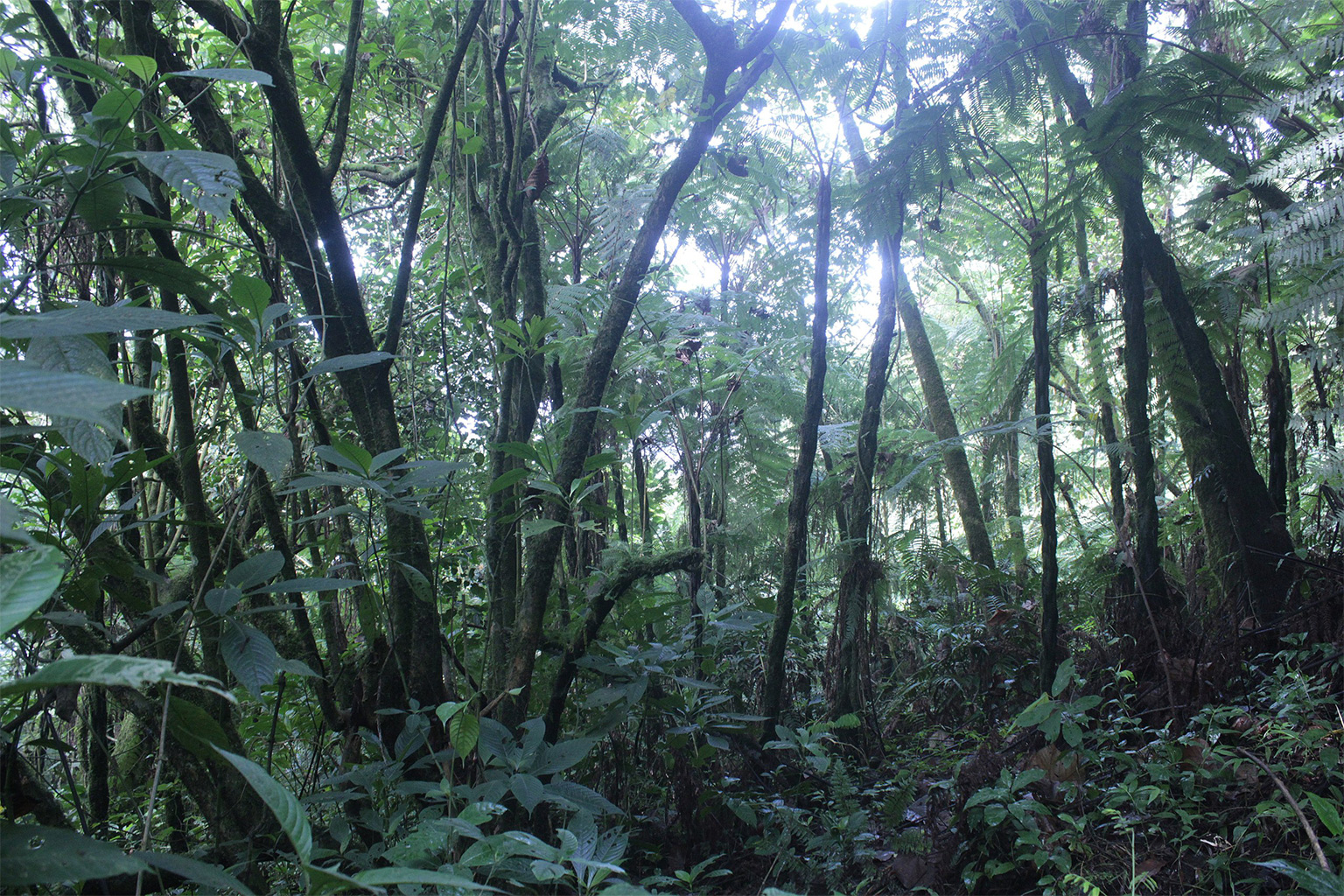
At 4,100 meters (13,450 feet) above sea level, Mount Cameroon is the highest mountain in West and Central Africa. Rising from lowland rainforest at its foot to alpine grassland at its summit, the mountain is a unique biodiversity hotspot with many endemic flora and fauna. It also hosts endangered and threatened primates, including Nigeria-Cameroon chimpanzees (Pan troglodytes ellioti), drills (Mandrillus leucophaeus) and Preuss’s guenon (Allochrocebus preussi preussi), as well as other large animals including forest elephants (Loxodonta cyclotis) and several varieties of duikers.
With the creation of Mount Cameroon National Park in 2009, 58,178 hectares (143,761 acres) of the mountain and its surroundings gained formal protection. In addition, multiple neighboring forests share some degree of protection, including the Southern Bakundo, Monono and Bomboko forests reserves, and three community forests bordering the park: Etinde, Bakingili and Woteva.
The park’s 2015-2019 management plan says that “by 2025, the Mt. Cameroon National Park ecosystem, biodiversity, environmental services and its integrity will be managed effectively with the participation of all stakeholders and will be recognized as a worldwide ecotourism destination.”
With that goal just a few years away, park authorities can count a few successes. Thomas Esoka , the park’s biomonitoring and research officer, says government pressure on illegal hunting has led to an increase in the area’s chimpanzee population. According to Esoka, there are now close to 1,000 chimpanzees in the Buea and West Coast clusters, at the park’s southern and eastern ends. Elsewhere in the park, however, numbers are uncertain. “Unfortunately, there are no figures for the Muyuka and Bomboko clusters where conflict has led to the halting of activities for about five years now,” Esoka says. Read More...