Clamorous and unconstrained, the history of rock bands playing in Alaska mirrors the state's evolution
-
 Loading...
 - Thalia Doukas
- 13 Apr 2022
- 338 Views
- 0 Like
- 0 Comment
By the early 1970s, Anchorage had finally grown large enough — important enough — to warrant regular visits by nationally known bands. This introduction to the major concert circuits was an imperfect one. Yes, there was plenty of demand, sellouts and profits for the savviest promoters. However, there were also poor sound quality, a notorious biker brawl, high costs and the occasional spectacular failure. In this way, the arrival of more famous performing artists reflected the growing pains of a rapidly evolving city.
Anchorage first boomed in the late 1910s, a surging new railroad center. In the 1940s, the city boomed again, the fortunate recipient of a new Army base. And in the 1970s and early 1980s, oil money helped transform what was, at its heart, a rough small town into a proper metropolis.
Before World War II, Anchorage’s musical entertainment tended to be locally sourced. There were exceptions, but local concerts then were produced and performed by area residents more often than not. For example, in 1921, the short-lived Anchorage Choral Society provided Anchorage with its first classical music concert. The following year, they performed a Gilbert and Sullivan musical, “Patience.”
After World War II, the rising number of bars, clubs and lounges sought to one-up each other by paying top dollar for imported lounge singers, pianists, strippers and drag queens. In many cases, these were some of the better lounge singers, pianists, strippers and drag queens that the Lower 48 had to offer. Abundant charms aside, these were not household names. A 1954 visit by the legendary Billie Holliday to play the 1042 Club was the exception rather than the rule.
In the 1960s, country music grabbed a larger hold on the city music scene, and the decade was marked by a higher quality of visiting country acts. In 1969, Roy Clark played the Red Barn in Eagle River, albeit shortly before the television show “Hee Haw” launched him to greater fame. That same year, Alaska Rep. Stan Cornelius from Anchorage introduced an ultimately successful resolution asking Gov. Keith Miller to proclaim October as “Country Music Month” in Alaska. Cornelius and Miller were both country music fans and prone to sudden renditions of Hank Williams Sr. classics.
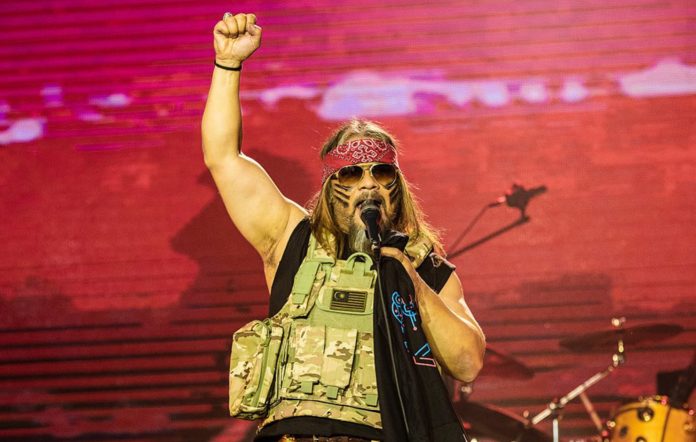
In the 1970s, the big rock and roll bands began making regular trips north. Some of the acts wanted to see Alaska or at least check it off the list of states they had played. Of course, the greatest incentive was the money to be made. On top of significant guarantees, an appearance in Alaska meant opening a new market with a lingering effect on record sales. Local promoter Steve London told Billboard magazine in 1975, “Almost every concert in Alaska results in subsequent record and tape sales on that artist. This is an excellent market.” He further claimed that Anchorage shops sold 800 combined Redbone albums and cassettes after the funk band played here.
Unfortunately, before the Sullivan Arena opened in 1983, the venue options in Anchorage were subpar and often below the established standards of the bands that played here. The nightclubs, lounges, and bars were out of the running for any of the more recognizable performers. Spenard legend Mr. Whitekeys, proprietor of the Fly By Night Club, told the Daily News in 1982, “I can’t hire the big names because we only seat 150. So, I hire the little guys, and that means I have to get out and educate the public.”
:quality(70)/cloudfront-us-east-1.images.arcpublishing.com/adn/IHSEIEFPAZHXRA6DX4ODKQF3SE.jpg)
The premier option, hard as it might be to believe now, was the West High School auditorium. The school hosted most of the biggest acts that played Anchorage through the 1970s and into the 1980s, including Canned Heat, Gordon Lightfoot, Cheech and Chong, the Grateful Dead, Bee Gees and Ozzy Osbourne.
Even in the best of times, the school was an awkward host for some of the hardest-partying bands of the era. After several incidents in the early 1970s, the school board banned rock bands from performing there, a restriction that lasted from late 1972 into early 1974. Read More...