Confeitaria Nacional: The King of King Cake
-
 Loading...
 - Tiago Santos
- 21 Mar 2023
- 49 Views
- 0 Like
- 0 Comment
n a nation with so many baking and confectionary traditions, it’s surprising that one of the most popular cakes – the bolo-rei – was imported from another country (a sweet tooth does not discriminate, apparently).
Translated as “king cake,” the bolo-rei was brought to Portugal from Toulouse, France, by one of the oldest bakeries in Lisbon, Confeitaria Nacional.
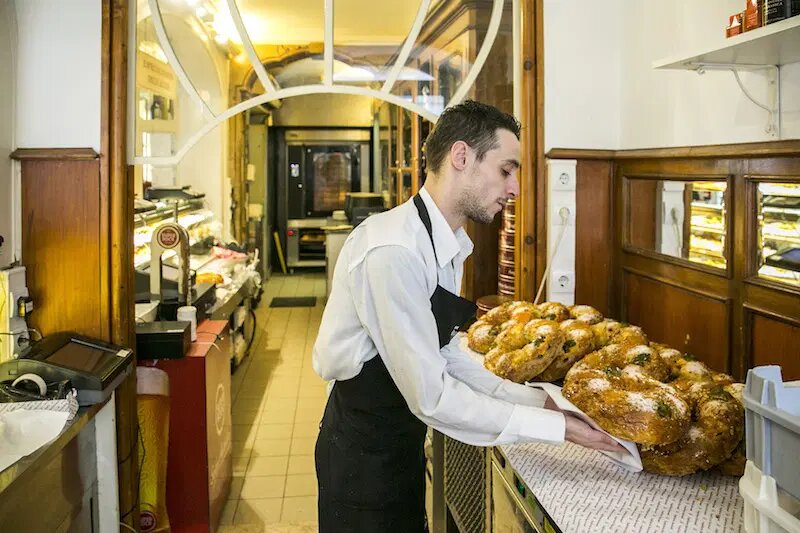
Over the years, the bolo-rei has become a staple during the festive season: ubiquitous on the table before, during and after Christmas and New Year, and certainly a must for Dia de Reis (Epiphany) on January 6, when it’s baked in its fanciest form with a nougat crown (made of caramel and almonds) and fios de ovos (“egg threads,” or eggs drawn into thin strands and boiled in sugar syrup).
Though January 6 is not an official holiday, most Portuguese will bring home a bolo-rei – either the traditional one or the one with the crown that is made especially for this day – to eat with their family. And on this day, pastelarias (patisseries) become as busy and bustling as in the lead-up to Christmas.
Similar to the ring cakes popular in France and Spain at this time of the year, the bolo-rei is a kind of brioche cake, not too sweet, covered with nuts and candid fruit, which are also mixed inside. In recent years another version made without the candied fruits and called bolo-rainha (“queen cake”) has grown in popularity. It’s a bit more expensive since it has more nuts (almonds, pine nuts, walnuts and cashews) and is sadly less colorful, but we think it tastes better without the overly sweet candied fruit.
We have Confeitaria Nacional, one of the oldest bakeries in Lisbon, to thank for this Epiphany tradition. Founded by Balthazar Roiz Castanheiro in 1829, this jewel of a bakery was opened in Praça da Figueira, a large square in the central Lisbon neighborhood of Baixa, where it still stands to this day.
His youngest son, Balthazar Castanheiro Jr., succeeded him. In 1871, he had the first ever phone line installed in Lisbon, connecting the shop to the factory (urgent calls had to be made, as pastries were – and continue to be – serious business). Not long after, he brought the recipe for bolo-rei, a cake he had tasted in Toulouse during one of his many trips across Europe, back to the city, together with a pastry chef and assistant from the region. Read More…