Home Upload Photo Upload Videos Write a Blog Analytics Messaging Streaming Create Adverts Creators Program
Bebuzee Afghanistan Bebuzee Albania Bebuzee Algeria Bebuzee Andorra Bebuzee Angola Bebuzee Antigua and Barbuda Bebuzee Argentina Bebuzee Armenia Bebuzee Australia Bebuzee Austria Bebuzee Azerbaijan Bebuzee Bahamas Bebuzee Bahrain Bebuzee Bangladesh Bebuzee Barbados Bebuzee Belarus Bebuzee Belgium Bebuzee Belize Bebuzee Benin Bebuzee Bhutan Bebuzee Bolivia Bebuzee Bosnia and Herzegovina Bebuzee Botswana Bebuzee Brazil Bebuzee Brunei Bebuzee Bulgaria Bebuzee Burkina Faso Bebuzee Burundi Bebuzee Cabo Verde Bebuzee Cambodia Bebuzee Cameroon Bebuzee Canada Bebuzee Central African Republic Bebuzee Chad Bebuzee Chile Bebuzee China Bebuzee Colombia Bebuzee Comoros Bebuzee Costa Rica Bebuzee Côte d'Ivoire Bebuzee Croatia Bebuzee Cuba Bebuzee Cyprus Bebuzee Czech Republic Bebuzee Democratic Republic of the Congo Bebuzee Denmark Bebuzee Djibouti Bebuzee Dominica Bebuzee Dominican Republic Bebuzee Ecuador Bebuzee Egypt Bebuzee El Salvador Bebuzee Equatorial Guinea Bebuzee Eritrea Bebuzee Estonia Bebuzee Eswatini Bebuzee Ethiopia Bebuzee Fiji Bebuzee Finland Bebuzee France Bebuzee Gabon Bebuzee Gambia Bebuzee Georgia Bebuzee Germany Bebuzee Ghana Bebuzee Greece Bebuzee Grenada Bebuzee Guatemala Bebuzee Guinea Bebuzee Guinea-Bissau Bebuzee Guyana Bebuzee Haiti Bebuzee Honduras Bebuzee Hong Kong Bebuzee Hungary Bebuzee Iceland Bebuzee India Bebuzee Indonesia Bebuzee Iran Bebuzee Iraq Bebuzee Ireland Bebuzee Israel Bebuzee Italy Bebuzee Jamaica Bebuzee Japan Bebuzee Jordan Bebuzee Kazakhstan Bebuzee Kenya Bebuzee Kiribati Bebuzee Kuwait Bebuzee Kyrgyzstan Bebuzee Laos Bebuzee Latvia Bebuzee Lebanon Bebuzee Lesotho Bebuzee Liberia Bebuzee Libya Bebuzee Liechtenstein Bebuzee Lithuania Bebuzee Luxembourg Bebuzee Madagascar Bebuzee Malawi Bebuzee Malaysia Bebuzee Maldives Bebuzee Mali Bebuzee Malta Bebuzee Marshall Islands Bebuzee Mauritania Bebuzee Mauritius Bebuzee Mexico Bebuzee Micronesia Bebuzee Moldova Bebuzee Monaco Bebuzee Mongolia Bebuzee Montenegro Bebuzee Morocco Bebuzee Mozambique Bebuzee Myanmar Bebuzee Namibia Bebuzee Nauru Bebuzee Nepal Bebuzee Netherlands Bebuzee New Zealand Bebuzee Nicaragua Bebuzee Niger Bebuzee Nigeria Bebuzee North Korea Bebuzee North Macedonia Bebuzee Norway Bebuzee Oman Bebuzee Pakistan Bebuzee Palau Bebuzee Panama Bebuzee Papua New Guinea Bebuzee Paraguay Bebuzee Peru Bebuzee Philippines Bebuzee Poland Bebuzee Portugal Bebuzee Qatar Bebuzee Republic of the Congo Bebuzee Romania Bebuzee Russia Bebuzee Rwanda Bebuzee Saint Kitts and Nevis Bebuzee Saint Lucia Bebuzee Saint Vincent and the Grenadines Bebuzee Samoa Bebuzee San Marino Bebuzee São Tomé and Príncipe Bebuzee Saudi Arabia Bebuzee Senegal Bebuzee Serbia Bebuzee Seychelles Bebuzee Sierra Leone Bebuzee Singapore Bebuzee Slovakia Bebuzee Slovenia Bebuzee Solomon Islands Bebuzee Somalia Bebuzee South Africa Bebuzee South Korea Bebuzee South Sudan Bebuzee Spain Bebuzee Sri Lanka Bebuzee Sudan Bebuzee Suriname Bebuzee Sweden Bebuzee Switzerland Bebuzee Syria Bebuzee Taiwan Bebuzee Tajikistan Bebuzee Tanzania Bebuzee Thailand Bebuzee Timor-Leste Bebuzee Togo Bebuzee Tonga Bebuzee Trinidad and Tobago Bebuzee Tunisia Bebuzee Turkey Bebuzee Turkmenistan Bebuzee Tuvalu Bebuzee Uganda Bebuzee Ukraine Bebuzee United Arab Emirates Bebuzee United Kingdom Bebuzee United States Bebuzee Uruguay Bebuzee Uzbekistan Bebuzee Vanuatu Bebuzee Venezuela Bebuzee Vietnam Bebuzee World Wide Bebuzee Yemen Bebuzee Zambia Bebuzee Zimbabwe
Blog Image

Converting CO2 into Chemicals with Solar Energy and Green Hydrogen

One of the most effective methods for addressing climate change is CO2 hydrogenation, which combines green hydrogen with CO2 to solve three complex issues: high CO2 levels, the temporal mismatch between solar power production and demand, and hydrogen gas storage. The catalyst deactivates quickly because the CO2 hydrogenation process requires extremely high temperatures.

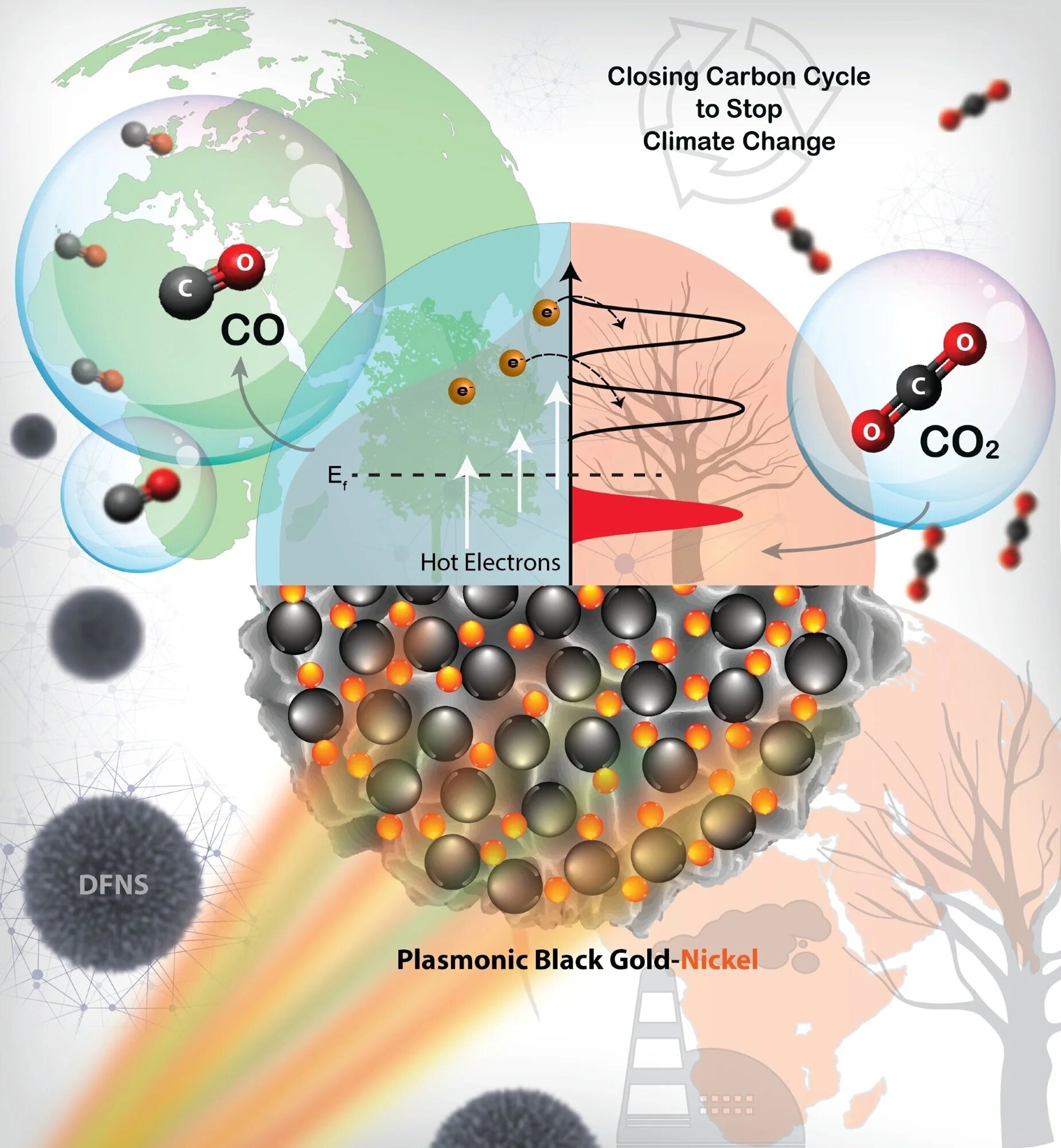
In this study, scientists at the Tata Institute of Fundamental Research (TIFR) in Mumbai investigated the possibility of catalyzing this high-temperature CO2 hydrogenation at a temperature between 0 and 10 °C by utilizing a plasmonic catalyst to excite both H2 and CO2. The team showed that plasmonic black gold-nickel effectively uses visible light to catalyze CO2 hydrogenation.

Without additional heating, the reaction occurred at temperatures ranging from 84 to 223 °C. The amount of catalytic activity was found to be doubled when compared to DPC-C4, and only DPC-C4-Ni showed measurable photoactivity.

In the flow circumstances, it demonstrated the best-reported CO production rate of 2464± 40 mmol gNi–1 h–1 and selectivity greater than 95%. The catalyst exhibited exceptionally high stability (100 hours).

The hot-electron mediated reaction mechanism was affirmed by the super-linear power law dependence on the light intensity (power law exponent of 5.6) with photocatalytic quantum efficiencies increasing with an increase in light intensity and reaction temperature, while the kinetic isotope effect (KIE) in light (1.91) was higher than in the dark.

The rapid electron injection from Au to Ni, which filled the Ni reactor with charge carriers, was demonstrated by ultrafast investigations of hot-carrier dynamics. The heated electron transfer from the gold to the nickel caused spectral signatures of such an indirect charge production, which was observed by the researchers.

Additionally, plasmon-induced high local field intensity augmentation was seen in DPC-C4-Ni in finite-difference time-domain simulations.

An in-situ DRIFTS investigation revealed that the generation of bridge carbonyl species was inhibited when the linearly bonded C=O vibrations on top of the Ni atom were stretched. By using linearly bonded nickel-CO, CO2 hydrogenation was accomplished directly. Therefore, CO desorption was effective, limiting hydrogenation to methane and producing CO selectivity of over 95%.

In addition to black gold’s superior light-harvesting abilities, the high production rate and selectivity were attributable to Ni NPs being extensively disseminated on black gold and offering a weakly bonded CO route.

Ni sites had excellent activity even at smaller particle sizes as a result of the nickel d-band electrons being excited to a higher energy level during the plasmonic damping of the black gold SPR and the hot electron transfer from the black gold to Ni filling the Ni d-band. Read More…


Previous Post

Vietnam helped with DNA-based identification of martyrs

Next Post

QUASAR Centre announces the launch of the National Quantum Communication Infrastructure Plan of Bulgaria

Comments