
Crypto market plunges hard and fast: investors are spooked
-
 Loading...
 - Aaretti Timoteus
- 01 Jun 2022
- 272 Views
- 0 Like
- 0 Comment
With the broader crypto market down 32% in the week-to-date from last Friday ($570B USD), there is one specific catalyst that has commentators using phrases like ‘crypto’s Lehman moment’. Just over a week ago UST, aka a stablecoin, plunged well below its $1 peg and by early Thursday was trading as low as $0.20. The crypto token that backs UST, LUNA, also plummeted in value from $20 billion to nearly zero.
A stablecoin is a digital asset that maintains its value closely with a stable asset; in this case the value of UST (terraUSD) should stay pegged to 1 US dollar. There are a few different ways to do this. One is to take deposits of dollars and issue new digital dollars 1-for-1. The dollars now need to be kept somewhere safe, such as held by a custodian in the case of USDC (USD coin).
Another way to collateralise your stablecoin is to take deposits of other cryptocurrencies, DAI being an example. This brings up new risk that the value of the underlying crypto could fall and cause a liquidation. If this mint/burn logic is managed by a smart contract, the asset can be called an algorithmic stablecoin.
A third way to collateralise your stablecoin is to issue a coupon. In the case of UST, there is no collateral backing the coin, rather users are entitled to a redemption in the native token LUNA, which has a floating market price. The prices of these tokens are subject to market forces, so if UST falls below 1 dollar, say to $0.95, there is an incentive to buy tokens on the open market and redeem them from the protocol for $1.00, profiting $0.05 for your trouble. As tokens are redeemed, the supply is reduced, and demand causes the stablecoin to re-peg. In theory.
UST’s popularity had been growing because of a protocol called Anchor that accepted deposits in UST and offered 20% APY in return. There has been a lot of chatter the past few months about the unsustainability of this rate-of-return and the self-collateral mechanism behind UST. To calm the crowd, in late March the Luna Foundation announced it would buy $1B in bitcoin to hold in reserve in case of a bank run. The run scenario here is that the total value of LUNA (floating price) falls below the promised redemption value of UST (set to 1). This insolvency situation could cause a bank run.
A third-party attacker (identity unknown at this point) set this crash into motion by borrowing 100K bitcoin and buying UST. At this same time the Luna Foundation was migrating its UST funds to a new liquidity pool, which meant withdrawing from the old one and depositing into a new one, leaving a window of time between the two events.
Given this opportunity, the wealthy attacker begins selling UST, flooding the market with excess supply, driving the peg down to $0.97. The Luna Foundation now needs to buy back this UST to recapture the peg (by removing supply from circulation) and must sell their bitcoin. Unfortunately, the value of their bitcoin has decreased, leaving them less overall capital to save the peg and, concurrently, starting a bitcoin price spiral. Seventy-two hours after the first de-peg event, UST had completely crashed to $0.20 on FTX.
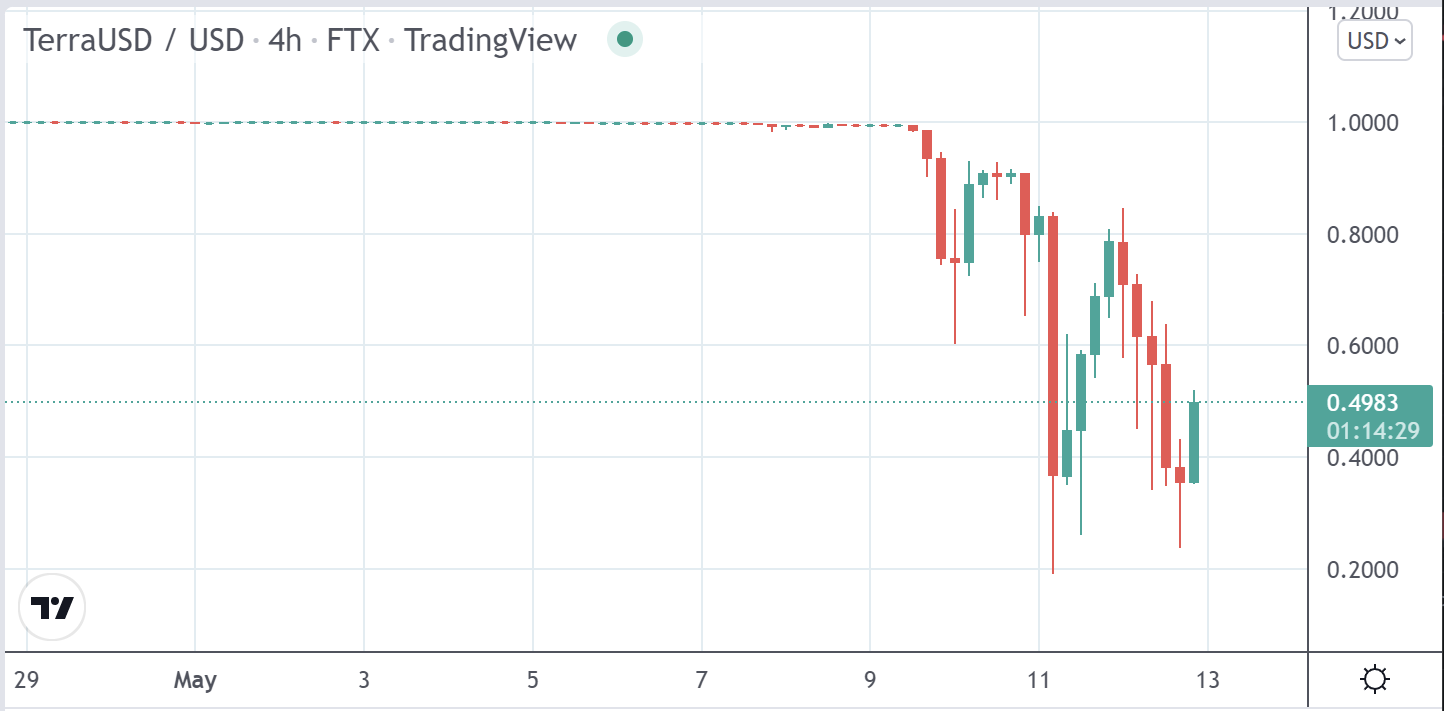
The peg is unlikely to ever be reclaimed because there is no confidence in the coupon token LUNA. As per the algorithm, when people wanted to redeem their UST, they are given freshly minted LUNA, and this excess supply has completely destroyed its value. (There are now hundreds of times the number of LUNA tokens compared to two days ago as it hyperinflates.) LUNA was a top 10 project and from its high of $119 a month ago is now trading at less than a penny for a 99.99% loss.
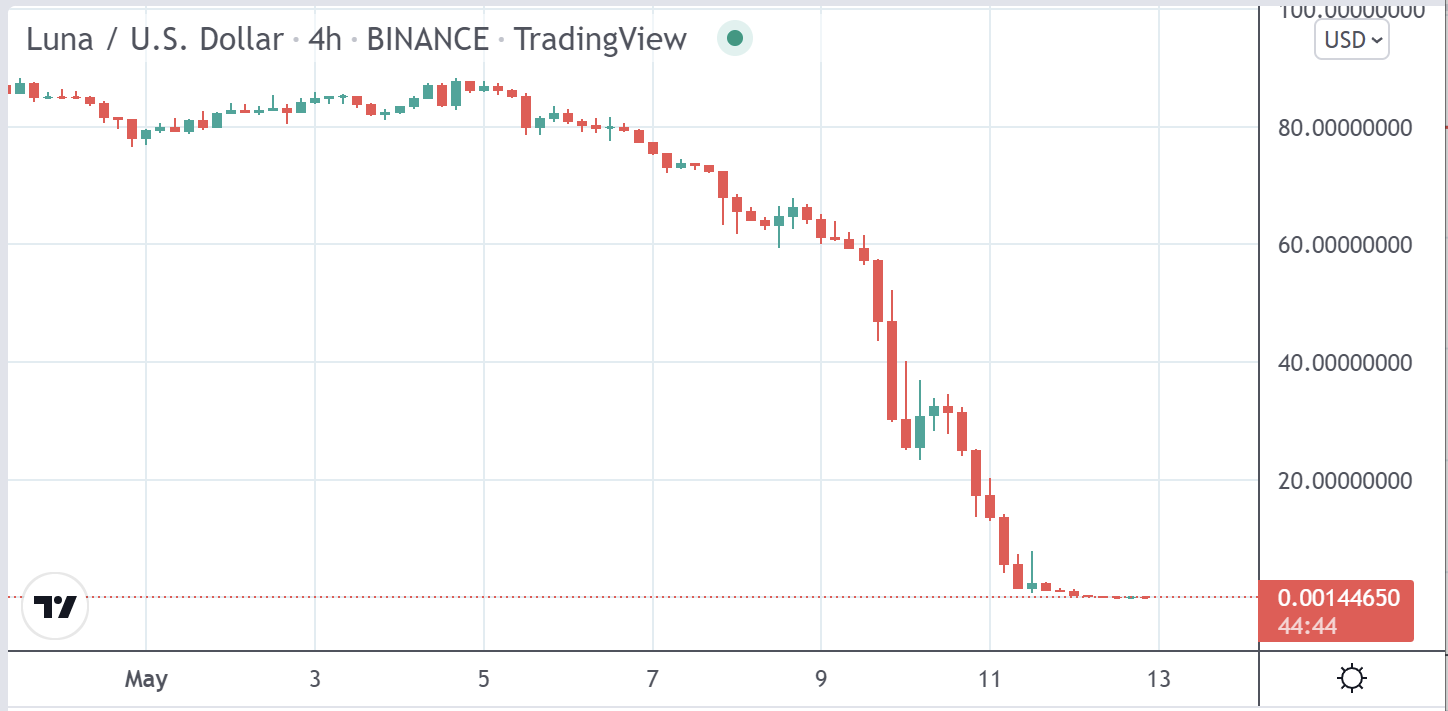
This $50B collapse, in terms of value destroyed, represents the largest stablecoin collapse yet and the largest fall for a top-tier crypto ecosystem, much of it affecting everyday crypto participants who were sold promises of stability in their UST and were not properly informed of the risk.
What lessons can we learn from this? In short, be wary of loud-mouthed, aggressive, bullying founders. Diversify your crypto as much as you’re comfortable with. And keep your ears open. Many had predicted this event was possible. Stay safe out there, anon. Read More…