Despite a retraction, a room-temperature superconductor claim isn't dead yet
-
 Loading...
 - Noah Harrison
- 12 Oct 2022
- 63 Views
- 0 Like
- 0 Comment
It may be too soon to mourn the demise of a room-temperature superconductivity claim.
On September 26, the journal Nature retracted a paper describing a material that seemed to turn into a superconductor at a cozy 15° Celsius (SN: 10/14/20). The notice rattled many people in the field. But a new experiment performed just days after the retraction supports the world-record temperature claim, say an eyewitness and others familiar with the experiment.
Superconductors carry electricity with no resistance, which means they’re useful for efficiently transmitting energy. They could save enormous amounts of energy that’s wasted in conventional metal wires. Currently they are used to create powerful magnetic fields for medical imaging and particle physics experiments, as well as serving as components in high-performance circuity and even levitating high-speed trains. But to work, superconducting materials generally must be cooled far below 0° C, and many to temperatures close to absolute zero, or -273° C.
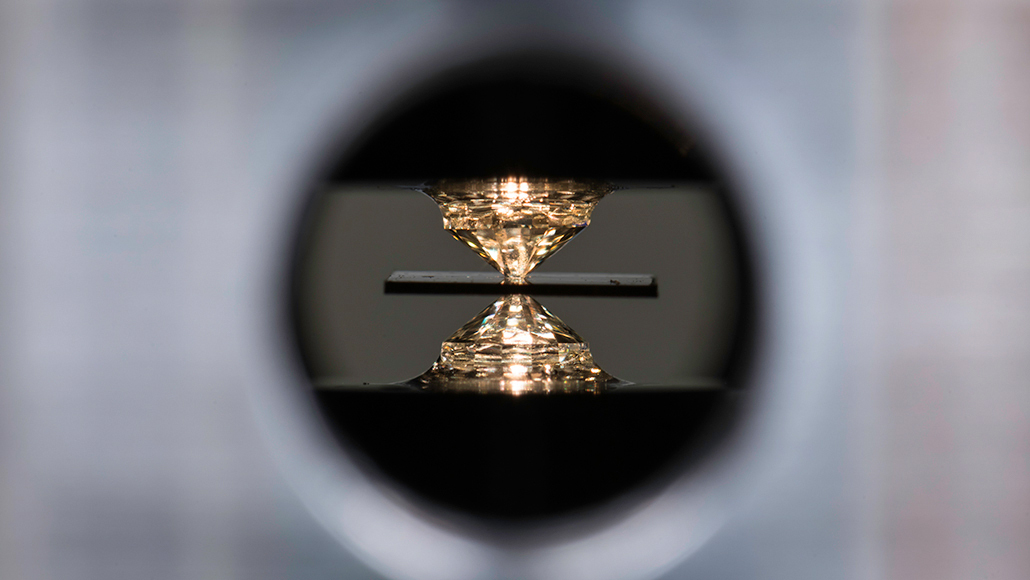
When researchers announced in 2020 that a sample made of hydrogen, sulfur and a bit of carbon became a superconductor at record-shattering temperatures, dreams of room-temperature superconducting seemed to be on the verge of coming true. One hitch was that the material had to be under enormous pressures, about 2.6 million times atmospheric pressures — roughly the pressure found in parts of Earth’s core. Still, the discovery hailed a potential scientific and technological revolution. Read More…