Discover The National Flower of Chile: Lapageria
-
 Loading...
 - Maria Ortiz
- 01 May 2023
- 68 Views
- 0 Like
- 0 Comment
Its tender appearance is deceptive – this vine flower is really strong and long-lasting
This article will introduce you to the national flower of Chile and explore its cultural significance. But first, let’s learn a little bit about Chilean geography. Chile is a geographically diverse and unique country on the western coast of South America. The country is approximately 2,700 miles (or 4,300 kilometers) long, with its northern edge bordered by Peru and Bolivia and the country’s land extending to South America’s southern tip, at Cape Horn. Chile is known for having a long, slender shape and geography dominated by the Andes mountains. However, the country is also defined by extremes. The northern part of the country is tropical. The southern part is subantarctic and very cold.
Chile is also subject to extreme weather events and natural disasters, from volcanic eruptions to tsunamis, earthquakes, floods, droughts, and storms. In this unique part of the world, Chile is home to approximately 30,000 different species. About a quarter of these are endemic to the country. In fact, the central and southern parts of Chile are considered a hotspot for biodiversity and a region where you can find hundreds, and potentially even thousands, of native species not found anywhere else in the world.
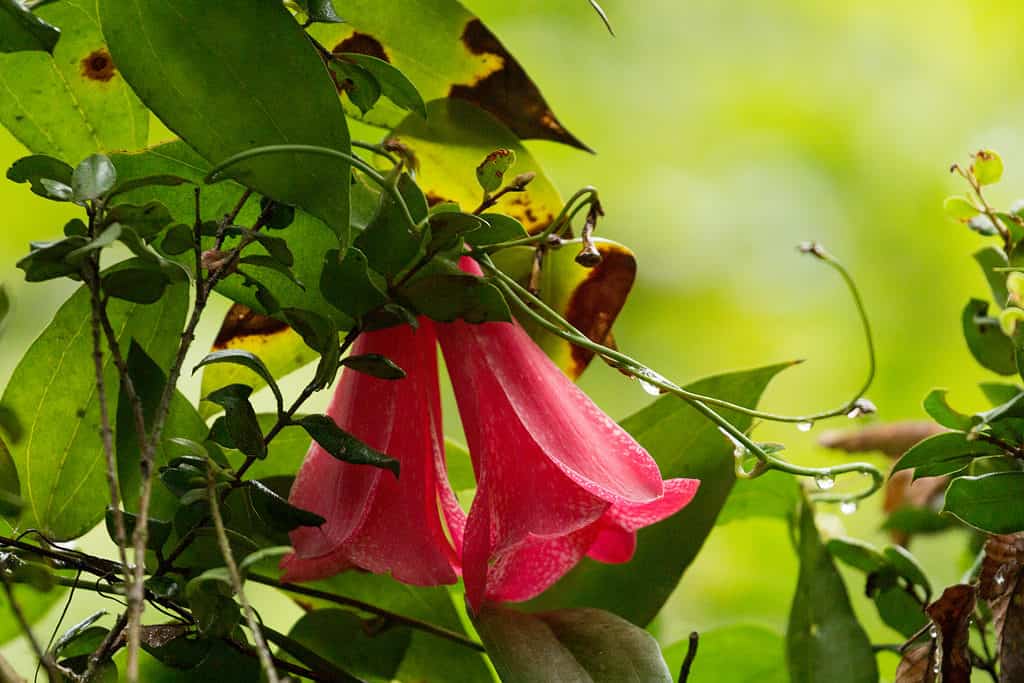
Among these species is the national flower of Chile: the lapageria. This flowering plant appears in the forests in the country’s southern regions, where numerous species of plants grow in temperate rainforests. As the national flower of Chile, the lapageria was chosen to represent the country’s biodiversity, a landscape of extremes, and the culture of the people. The rest of this article will explore the lapageria in greater detail. Let’s learn all about this beautiful plant, Chile’s national flower, together now!
What is Chile’s National Flower?
The national flower of Chile, the lapageria, is a species of climbing plant that grows in the country’s temperate rainforests. The lapageria is also commonly called the Chilean bellflower or known as a “copihue.” The word “copihue” is derived from the Mapuche language, which is an indigenous language spoken by the Mapuche people of Chile and Argentina. Read More..