Does new decree mark the end of judicial independence in Tunisia?
-
 Loading...
 - Oliver Johnston
- 18 Feb 2022
- 397 Views
- 0 Like
- 0 Comment
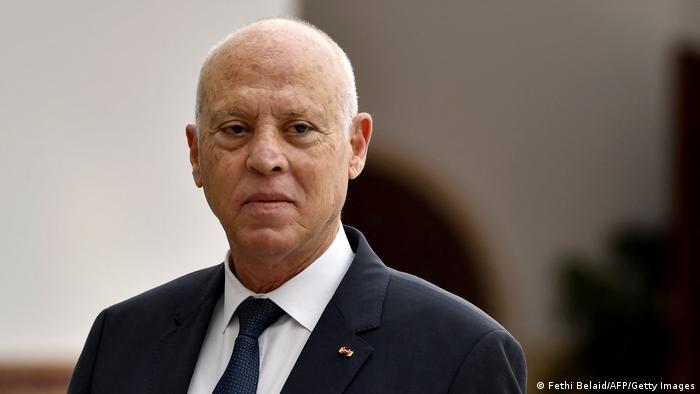
President Kais Saied’s new decree establishing a temporary judicial authority to replace the dissolved Supreme Judicial Council continues to draw widespread criticism in Tunisia in a setback for the rule of law.
In a statement released on Monday, the High Judicial Council (HJC) fully rejected the presidential decree, considering its provisions an “attack on the independence of the judiciary” and denouncing “a violation of the fundamental rights of magistrates”.
The Tunisian Association of Young Judges called the provisional judicial council “simply a lawless” structure that is not based on any legal or constitutional text, and reiterated its position on the illegitimacy of the decree condemning a “blatant” violation of the constitution in the chapters concerning the judiciary and rights and freedoms.
The decree allows the president to control appointments, promotions, transfers and postings of judges, and further bans the judiciary from going on strike.
“The president either directly appoints or influences the appointment of all the members of the temporary judicial council, which facilitates the subordination of the judiciary and individual judges to the president,” Said Benarbia, MENA regional director at the International Commission of Jurists (ICJ), told Al Jazeera.
He stressed that, under the decree, Saied has wide powers to influence the management of the career of judges, and “most worryingly” the power to request the removal of judges and even to act, in some instances, as a disciplinary body in charge of removals.
“It’s clear now that the executive has a lot more authority over the courts and judges, including disciplinary proceedings against them,” Zaid al-Ali, an independent scholar who focuses on constitutional reforms in the Arab region, told Al Jazeera.
He suggested the transfer or posting of judges to different, far locations is an issue of particular concern that magistrates may take into consideration in their future handling of cases, which the executive could potentially use as a retaliatory disciplinary measure if a judge’s decision is not in line with the president’s.
“It’s possible that from now many judges, before issuing rulings, will carefully consider what implications decisions that the executive doesn’t like might have, and whether or not they could lead to swift actions against them,” said al-Ali, who also works at the International Institute for Democracy & Electoral Assistance (IDEA) as a senior adviser on constitution-building in the Arab region.
‘Billions and billions’
Saied earlier this month called the Supreme Judicial Council a “thing of the past”, and accused council members of taking “billions” in bribes.
“In this council, positions and appointments are sold and made according to affiliations,” said Saied. “You cannot imagine the money that certain judges have been able to receive, billions and billions.”
The newly issued decree has been met with wide opposition from various sectors of Tunisian society.
Benarbia remarked if the president can suspend the parliament and dissolve the HJC by decree, he would not hesitate to use decrees to dissolve political parties, civil society organisations, and independent media groups.
Hours after the order was published on Sunday, more than 2,000 protesters gathered in central Tunis as part of a rally organised by the moderate Islamist Ennahdha – the biggest party in the now-suspended parliament – and the Citizens Against the Coup collective. Read More…