Efforts to Tame Inflation Commendable
-
 Loading...
 - Eucabeth Farah
- 24 Jan 2022
- 416 Views
- 0 Like
- 0 Comment
The continual battle against inflation has to address some underlying economic fundamentals, mainly the growth in money supply, which can be sorted out by economic reforms and the desire of the authorities for a "soft landing" that keeps growth rather than a sudden downturn.
But much of the pressure, and the slowness of the decline in inflation rates comes from other sources that are not connected to economic fundamentals, and in particular from speculative behaviour, some deliberate and akin to profiteering while some is a reaction to fear of being left in the lurch.
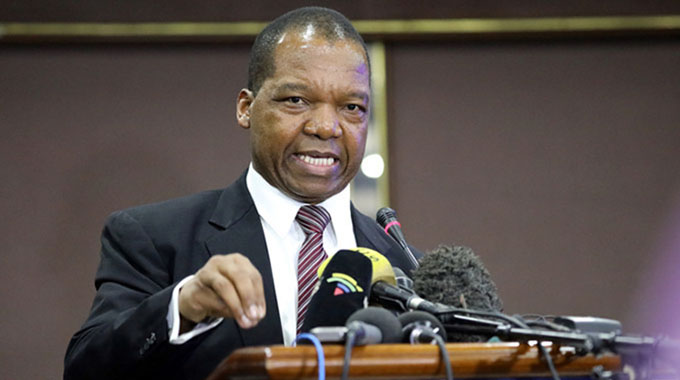
So the meeting at the end of last week between the Reserve Bank of Zimbabwe (RBZ) and the leaders of the manufacturing and retail sectors was important in finding out what people are thinking, why they act as they do and what can be done.
At the heart of the problem, at least at the heart for those who yearn for greater stability and a more normal environment rather than those trying to maximise profits, is the black-market exchange rate.
While some major businesses start with actual costs when working out their prices, and then add their standard margins, others simply set a US dollar price and then convert to local currency using the black market rate, which does not have much grounding in reality.
But some of those doing this are major businesses, and so their decisions affect all of us.
There are those, as Reserve Bank Governor Dr John Mangudya noted, who see US dollars as a medium of exchange within Zimbabwe rather than as the global trading currency needed for imports.
And even when converting currencies see the black market, a much smaller market than the real ones, as setting their exchange rate rather than the weekly auctions.
So we get, even when we are talking about locally-made goods whose foreign currency components are supplied by the auctions, pricing using the black market rates on their costs that they have converted into US dollars even when they are in local currency.
Dr Mangudya noted that up to 85 percent of the goods on supermarket shelves are now locally manufactured or locally produced. That means the retailers can buy them for local currency, the same local currency they get from their own customers, and the producers can buy their currency on auction and can cost with actual costs and apply fixed margins.
All of that means that inflation rates should be declining. Prices will still be rising regularly because inflation is far from being beaten down to low single figures, and that is even reflected in the bids presented at the auctions which show buyers on that market expect exchange rates to be roughly inflation neutral, neither pushing nor trailing inflation, which is rational.
Instead Dr Mangudya noted that some retailers price according to the black market rates, even when their costs are not in foreign currency, and we would go further and note that a range of manufacturers do the same and pass those higher costs onto the retailers who have little option, but to pass them onto their own customers.
Matters are made worse, even among those who do wish to operate within the environment of actual costs, that they fear that with inflation they will not be able to meet their replacement costs. A serious manufacturer or retailer is not extending credit and realises that they will be paid soon after the latest batch of goods has been made and dispatched, or soon after it goes on the shelves, since they do not keep several months of supply in a warehouse.
So modest inflationary price changes can be absorbed into the normal mark-ups. But when they hear what others are doing, and hear the predictions about the black market rate, they can become afraid that they might be selling goods below the actual cost. Read More…