Egypt and Iran to exchange ambassadors this year in landmark move towards normalising ties
-
 Loading...
 - Lotta Koskinen
- 24 May 2023
- 72 Views
- 0 Like
- 0 Comment
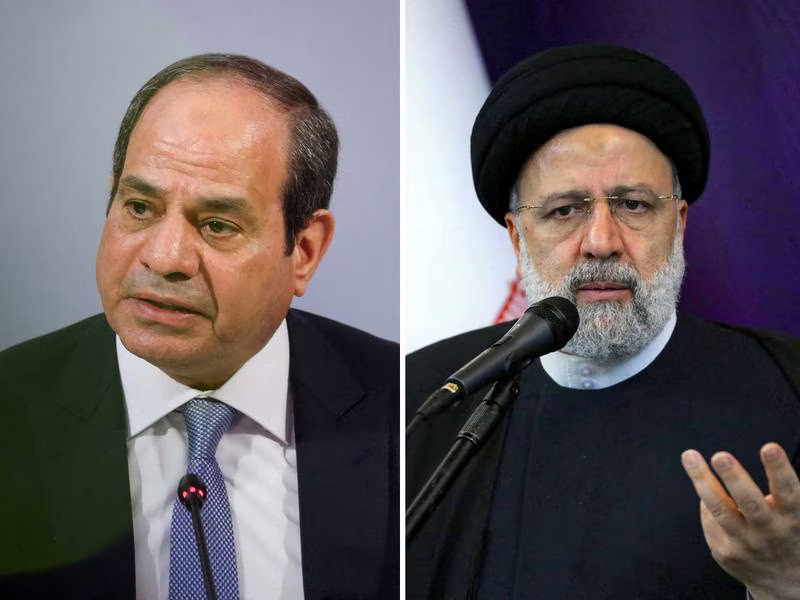
Egypt and Iran are poised to engage in a diplomatic breakthrough by exchanging ambassadors in the coming months. This positive development is the result of Oman's mediation efforts to normalize relations between the two influential regional powers, according to Egyptian officials as reported by The National.
Confirming the news, two officials disclosed that a meeting between President Abdel Fattah El Sisi of Egypt and his Iranian counterpart, Ebrahim Raisi, has been tentatively agreed upon. It is expected that this meeting will take place before the end of the year.
The recent visit of Oman's ruler, Sultan Haitham bin Tarik, to Egypt played a pivotal role in facilitating discussions between Sultan Haitham and President El Sisi regarding Cairo's relations with Tehran. Oman, known for its close ties with non-Arab Iran, has frequently assumed the role of mediator in regional conflicts involving Iran and other governments, both in the Arab world and the West.
Iran has expressed its desire for improved relations with Egypt, which is the most populous Arab nation. While the Egyptian government has remained silent on the matter, regional media has been reporting on the potential thaw in relations between the two countries in recent weeks.
According to the officials, the normalization of relations with Iran would ensure Tehran's cooperation in Cairo's efforts to strengthen economic and commercial ties with influential countries like Iraq, Syria, and Lebanon, where Iran holds significant influence.
Additionally, Egypt aims to persuade Iran to reduce or cease its support for Hamas and Islamic Jihad, the two main militant Palestinian groups based in the Gaza Strip, which shares a border with Egypt. This approach is driven by the understanding that frequent hostilities between these groups and Israel not only pose a security threat to Egypt but also hinder efforts to reconcile them with the Palestinian Authority in the West Bank. Such reconciliation could pave the way for the resumption of long-stalled Palestinian-Israeli negotiations.
Since March, mid-level diplomats and intelligence officials from Iran and Egypt have been engaged in discreet consultations to facilitate the normalization of relations. The most recent round of talks took place earlier this month in Baghdad, where the Iraqi government, known for its close ties with Tehran, hosted the discussions.
In addition to bilateral matters, the talks addressed the need to reduce tensions in regions where Iran wields significant influence, such as Yemen, Lebanon, and Syria. This involvement often manifests through support for allied Shiite governments or armed groups.
If Cairo and Tehran manage to improve their relations, it would add a new dimension to the ongoing regional realignment that is reshaping the political landscape in the Middle East. Notably, Saudi Arabia recently agreed to restore diplomatic ties with Iran, which had been severed in 2016, easing a major source of tension in the region. Furthermore, Egypt and Turkey, who have been at odds for the past decade, have also been taking steps to normalize their relations.
:quality(70)/cloudfront-eu-central-1.images.arcpublishing.com/thenational/6UOIY63SC3IIIQJ2AZU3NECSII.jpg)
The eight-year conflict in Yemen, where Iran has supported the Houthi rebels against the internationally recognized government backed by a Saudi-led coalition, has significantly deescalated amidst diplomatic efforts to end the war. Moreover, Syria, where Iran and the Tehran-backed Lebanese group Hezbollah hold considerable influence, has been readmitted to the Arab League after being suspended for over a decade. The attendance of Syria's president, Bashar Al Assad, at the recent Arab summit in Jeddah, Saudi Arabia, marked a significant milestone.
Cairo's decision to readmit Syria into the Arab fold has been warmly welcomed by Iran. Nonetheless, relations between Tehran and Cairo, a close ally of the United States, Saudi Arabia, and other Gulf countries, have been strained since the 1979 Islamic revolution, which resulted in the ousting of Iran's Mohammad Reza Pahlavi. Pahlavi's burial in Egypt, alongside his family members, has been a source of tension between the two nations.
Furthermore, the naming of a street in Tehran after Khaled Al Islambouli, an Egyptian army officer responsible for assassinating Egyptian President Anwar Sadat during a military parade in 1981, further exacerbated the deteriorating relations. Despite repeated requests from Cairo, Iran has refused to remove Al Islambouli's name from the street.
Recent tensions have also arisen due to Egypt's concerns over Iran's perceived interference in the internal affairs of Arab nations like Iraq, Syria, Lebanon, and Yemen. President El Sisi's government has indicated its willingness to support its Gulf Arab allies and benefactors in the face of external threats, making veiled references to Iran.
While Saudi Arabia closed its embassy in Tehran in 2016, Egypt has maintained diplomatic representation in Iran since the Islamic revolution. However, its mission in Tehran is currently run by a charge d'affaires. Conversely, Iran has a fully functioning embassy in Cairo.