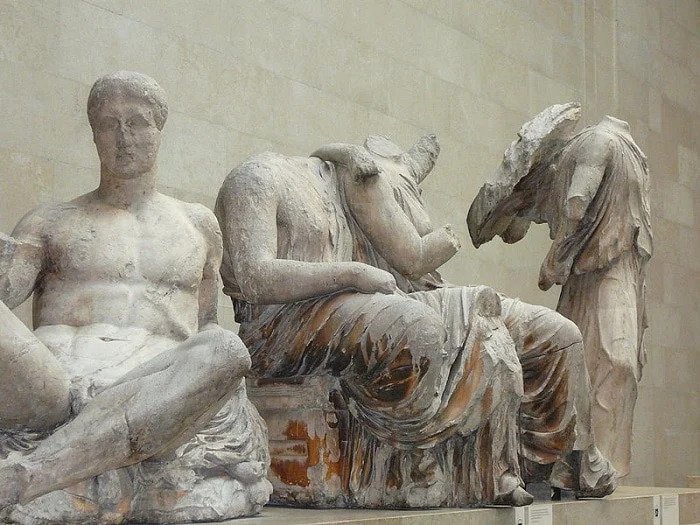
Eight Magnificent Greek Works of Art Found in Foreign Museums.
-
 Loading...
 - Alban Dupont
- 21 Apr 2022
- 323 Views
- 0 Like
- 0 Comment
The Parthenon Marbles, currently held at the British Museum, are by far the most famous of all the ancient Greek works of art displayed in museums outside the country and are surely the most controversial.
But many other equally magnificent pieces of Greek art are displayed in various museums around the world, and sometimes these priceless treasures are overshadowed by our focus on the lost Marbles.
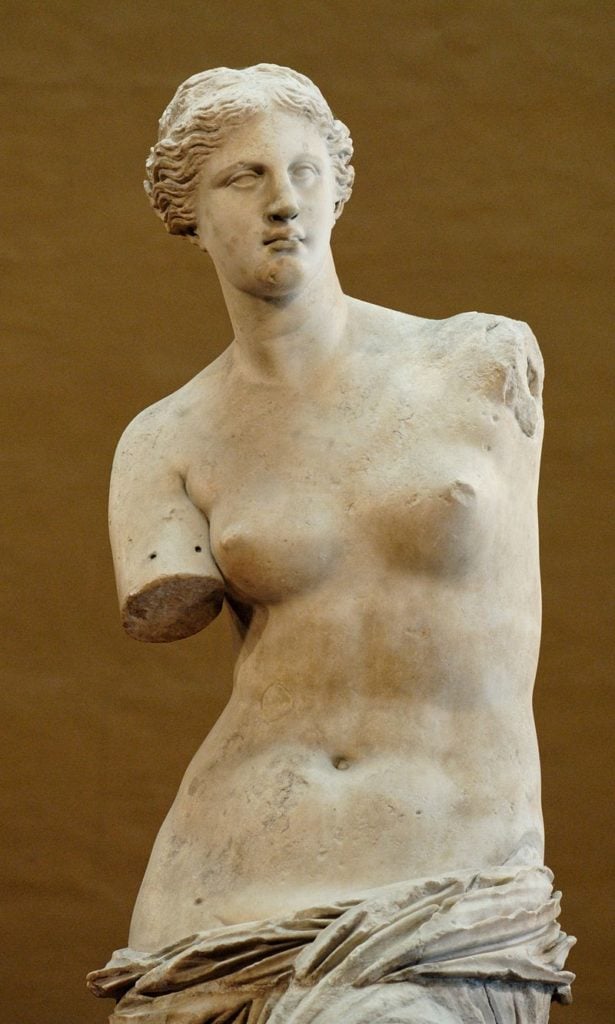
The Venus de Milo, a Greek goddess at the Louvre
Discovered on the island of Milos in 1820, the Venus de Milo is one of the most exquisite examples of ancient Greek sculpture. Immediately recognizable by her missing arms, the iconic sculpture remains shrouded in mystery.
Her arms have never been discovered to this day, and there is a healthy debate about who the sculpture portrays. Is it Aphrodite, who was often shown half-naked, or the sea goddess Amphitrite, who was venerated on Milos?
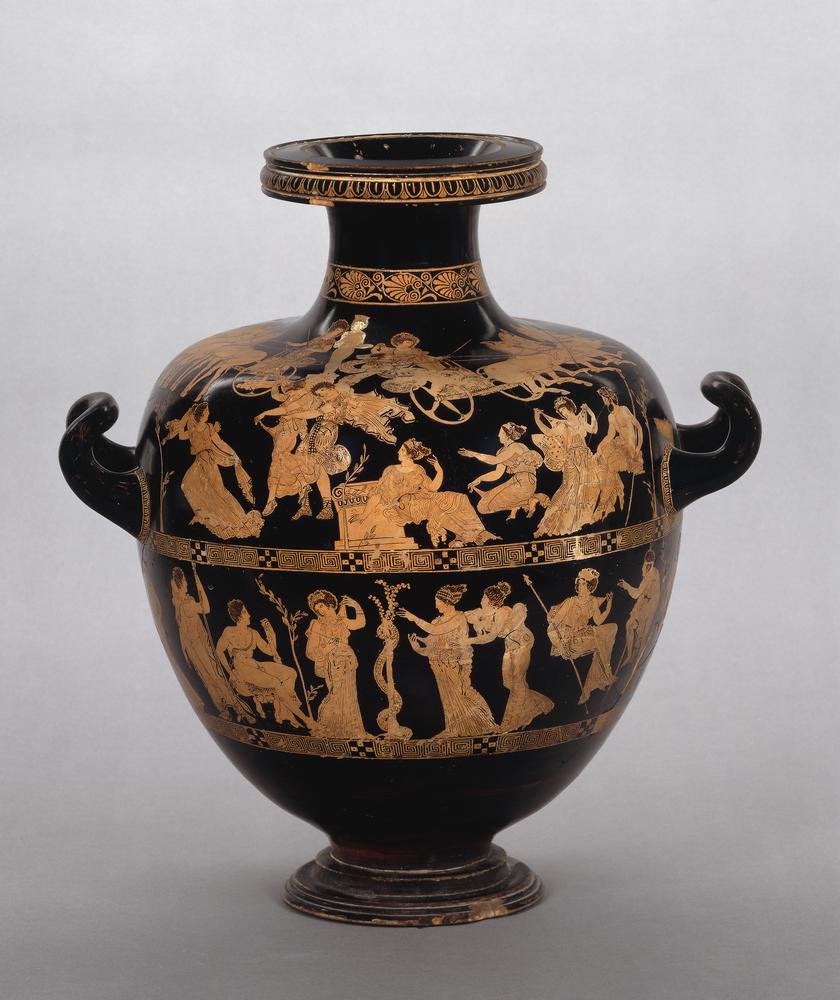
A stunning Greek red figure Hydria in the British Museum
This vase is the finest object in the first collection of Greek vases assembled by Sir William Hamilton and sold to the British Museum in 1772.
The figures depicted on the vase are divided into two zones.
The upper zone illustrates the abduction of the daughters of Leukippos by Castor and Polydeukes with Aphrodite conniving in the abduction while the lower zone depicts Herakles performing his final labor.
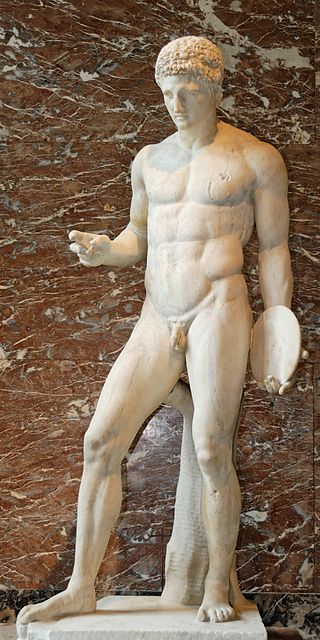
Discophoros at the Louvre Museum
This discus thrower is a reproduction of a lost bronze original created by the Greek sculptor Naucydes at the beginning of the fourth century BC.
The athlete is portrayed adjusting his position at the very instant before the throw.
This statue was part of the collection of antiquities at the Villa Borghese in Rome, where it stood with three other athletes around “The Gladiator,” which also entered the Louvre at the same period.
This occurred in 1808, when Napoleon Bonaparte purchased the collection from his brother-in-law, Prince Camillo Borghese.

The Nike of Samothrace, a masterpiece of Greek art
The Winged Victory of Samothrace is widely considered to be one of the most celebrated sculptures in the entire world.
Unearthed in 1863 on the small, beautiful island of Samothrace in the northwest Aegean, it is one of the Louvre’s most visited sculptures. However, you can find a faithful replica of the sculpture on the island today. Read More...