Empty classrooms, staff shortages: Spanish schools feel the effects of omicron

In Spain, where schools have remained open despite a surge in coronavirus infections fueled by the highly contagious omicron variant, centers are reporting growing numbers of teacher and student absences, and struggling to handle daily workloads with strained resources.
In some centers, educators are simultaneously teaching two groups, running from one classroom to the next. Others are putting in long days to cover for absent colleagues who have not been replaced because substitutes have also called in sick or are hard to find.
In many schools, it’s not just teachers who are conspicuously absent from classrooms, it’s students as well. And it’s not just the children who have tested positive, but also those whose families have decided not to send them back out of fear of contagion, despite health protocols that recently determined that there is no more need to quarantine an entire class with fewer than five positive cases. Increasingly, teachers are posting the class work online because they don’t know how many students are going to show up.
The Spanish Education Ministry and regional governments – which have devolved powers over education – have been issuing positive messages for the past week in a bid to reassure teachers, students and parents alike that schools are safe. They have argued that on average only 3.2% of all teachers are staying home, with a few regions experiencing peaks of 5%. The unions are talking about 6% and even 10% in some cases.
But the statistics conceal widely divergent situations in individual centers. Vicent Mañes, president of Fedeip, the Spanish federation of public schools providing early and elementary education, said that so far there are no staffing shortages at his school in Catarroja (Valencia). But at Dr. Puigvert secondary school in Barcelona, the situation seems to change from one hour to the next. “On Wednesday at 1pm, we got a call from a substitute teacher who’d been assigned to our center,” said the principal, Txeli Segué. “At 3pm, he phoned again to say he’d tested positive for Covid.”

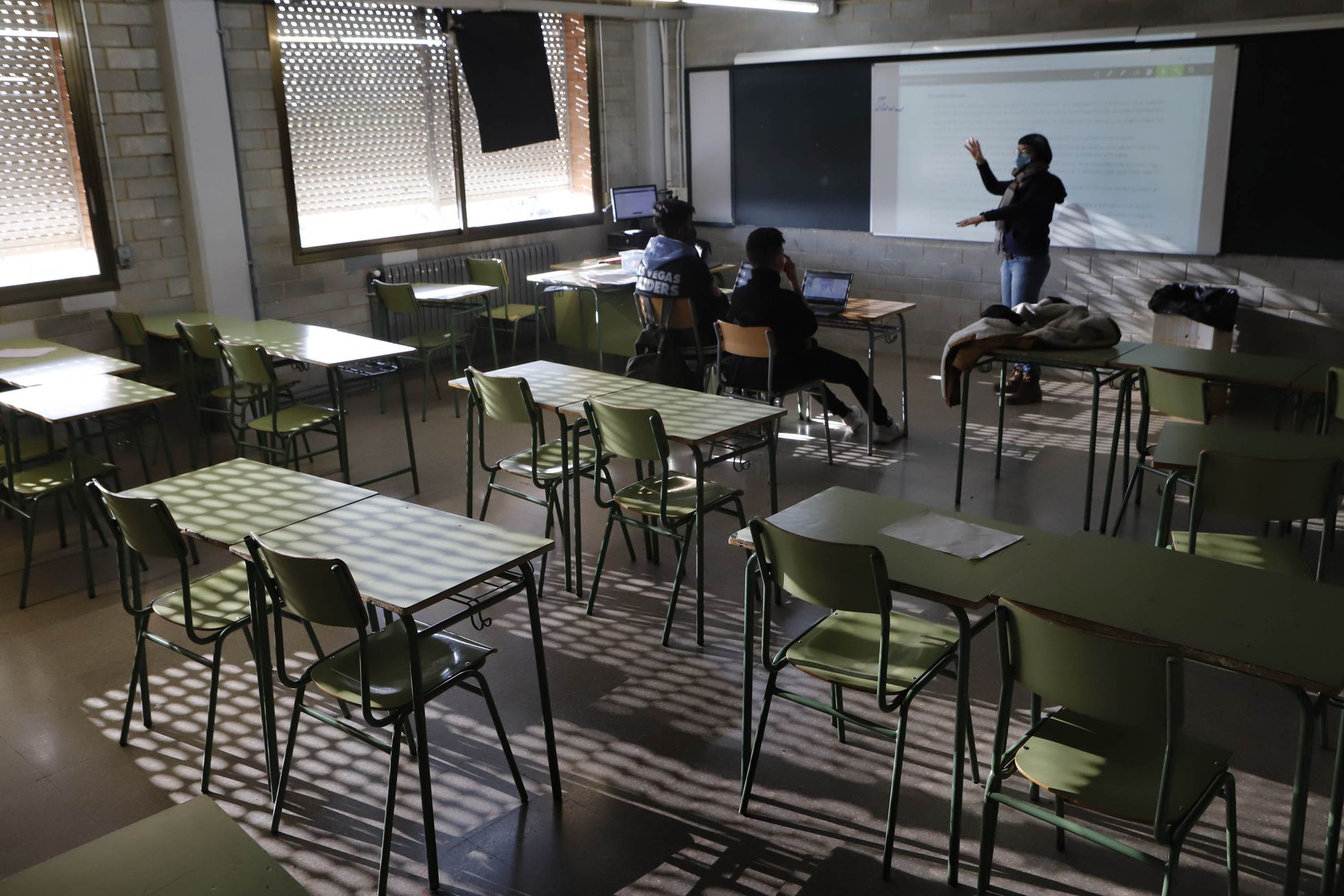
At this school located in the Sant Andreu district of the Catalan capital, the first week back from the holiday break ended with around 10 teachers calling in sick with coronavirus (out of a total of 71) and around 50 students in self-isolation (out of 665). In a classroom of 15-year-olds, the Spanish language teacher only had two students on Friday; there had been one positive case the day before and most of the other kids had decided to stay home even though it is not required.
One floor up, nine students in their first year of Bachillerato (a two-year, pre-university program) were staring at their computer screens. Their technology teacher was not physically there, but instead teaching the class from home after testing positive for coronavirus.
This particular school has seen it all, including the odd case of long Covid among the teaching staff and even a death. And next week might be even worse: Marcela de la Rosa, the school secretary, figures that at the present rate, in a few days half the staff will be infected. Read More…