Ending overfishing would stop the population declines of endangered bycatch species about half the time
-
 Loading...
 - Havel Romero
- 16 Mar 2021
- 1190 Views
- 0 Like
- 0 Comment
Healthier fish stocks. Higher catches. Profits from fishing. Is there a way to achieve these holy grails of commercial fisheries without harming endangered species that are caught incidentally?
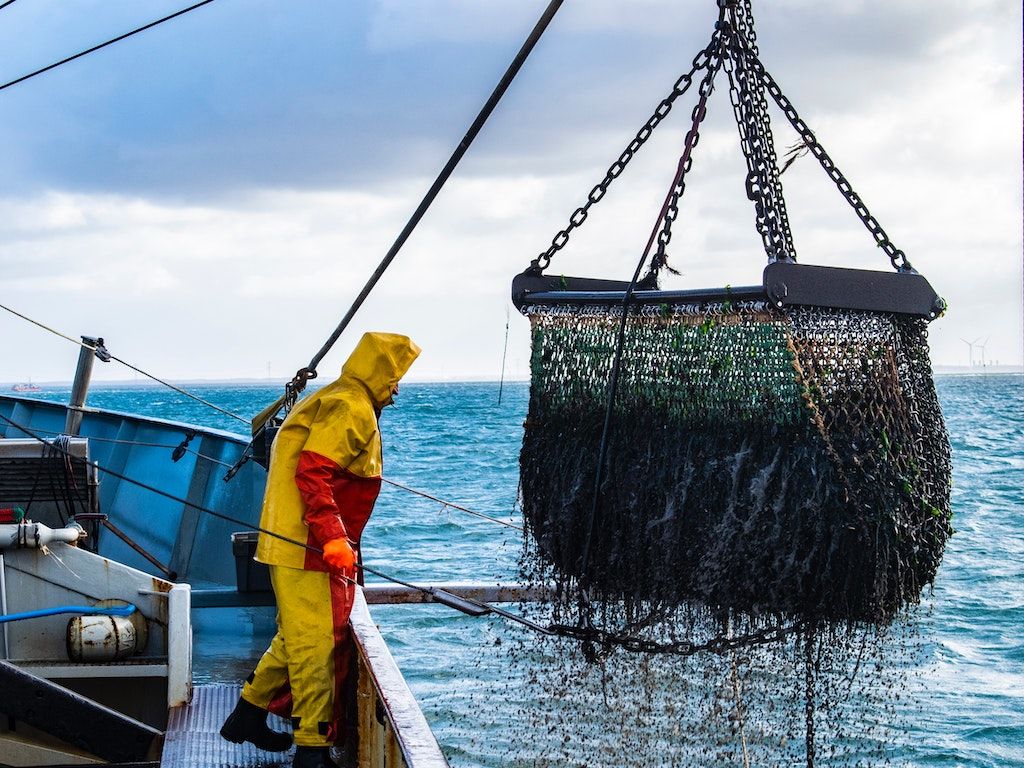
A new UC Santa Barbara-led study has found that may indeed be possible about half the time. According to the research group's analysis, ending overfishing would also promote population recoveries for many endangered species ensnared accidentally as bycatch -- the unwanted fish and other marine creatures caught during commercial fishing for a different species. The team's findings appear in the journal Science.
"Many large animals, including marine mammals, turtles and birds, are threatened by bycatch," said lead author Matt Burgess, a postdoctoral scholar in the Sustainable Fisheries Group at UCSB's Bren School of Environmental Science & Management. "We tend to think that we can only save these species by either dramatically improving our gear or by constraining our fisheries. But this project demonstrated that wasn't always the case. In about half the cases, overexploiting these mammals, turtles and birds occurs because we're also overexploiting the target species."
The study examined how much fishing pressure needs to be reduced to maximize profits in the 4,713 fisheries that produce most of the world's catch -- and to halt the population declines of 20 marine mammal, sea turtle and sea bird populations threatened as bycatch. The researchers also identified which fisheries might be causing the bycatch for each population.
To account for the many uncertainties in each of these aspects, the scientists simulated 1,000 possible scenarios. In each, they asked what fraction of the 20 threatened bycatch populations would begin to recover if all fisheries adopted efforts that would maximize their profits. For each bycatch population that would not recover under such efforts, the investigators then asked how much profit the fisheries would have to give up to enable recovery of the bycatch population. In 95 percent of the simulated scenarios, the analysis demonstrated that between seven and 13 of the bycatch populations could be saved from decline at a cost of less than 5 percent of the maximum profit.
"Maintaining productive fisheries and protecting threatened bycatch species are two of the primary goals of fisheries policy," Burgess said. "We found that about half the time we can accomplish these goals together with the same management actions."
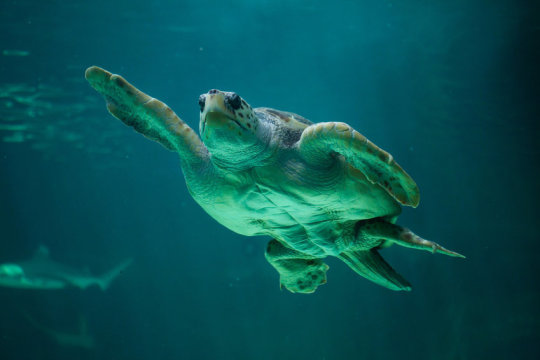
For some populations like the eastern Pacific leatherback turtle, that bycatch is unsustainable but so, too, is the fishing pressure on many of the target species. "For many species, you actually get a 'win-win,' where building higher stocks of fish in the ocean leads to higher fishery profits and recovery of endangered species," said co-author Christopher Costello, a Bren professor and co-principal investigator of the Sustainable Fisheries Group.
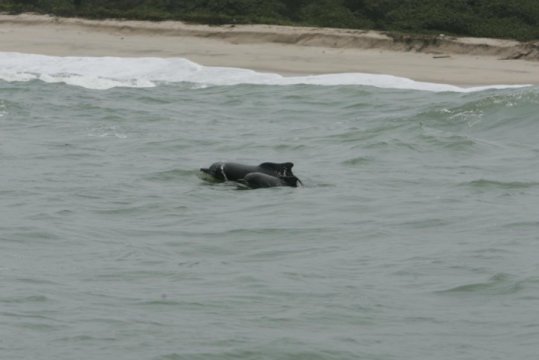
To save the other half of the bycatch populations, fisheries would either have to reduce fishing so much that they would give up a lot of their profits or substantially improve their fishing technologies to better avoid bycatch. "These bycatch populations either need total or near-total elimination of bycatch to survive, like the vaquita porpoise from the Gulf of California," Burgess explained. "Or they are caught in fisheries that already exploit their target species relatively sustainably, as may be the case for the New Zealand sea lion."
"Recognizing the benefits of rebuilding fisheries to endangered populations allows us to also focus attention on other key sources of endangered species mortality, like egg poaching, invasive species, pollution and habitat loss," said co-author Rebecca Lewison of San Diego State University.
All of the data and computer code from the study is publicly available online. "We did this so that our analysis will be fully transparent and reproducible by others," said co-lead author Grant McDermott of the University of Oregon. "This is gradually becoming the norm in science, which is great."