Everything You Need to Know About Threading Face Lifts
-
 Loading...
 - Alanyo Montes
- 18 Jul 2022
- 104 Views
- 0 Like
- 0 Comment
As we age, our skin naturally loses its firmness due to dwindling collagen and elastin production. Because of this, fine lines, wrinkles, and facial folds begin to form. And, living in a world obsessed with beauty (especially now in the age of Instagram and TikTok), it can be easy to look in the mirror and wish your face was a bit more lifted. While there’s absolutely nothing wrong with aging, there’s also nothing wrong with wanting to do something about it. And that’s precisely why facial cosmetic treatments like threading facelifts are on the rise. Unlike Botox and fillers, thread lifts aren’t as universally discussed, so we chatted with a few plastic surgeons for everything there is to know about the trendy treatment—including benefits and risks.
What Is a Threading Facelift?
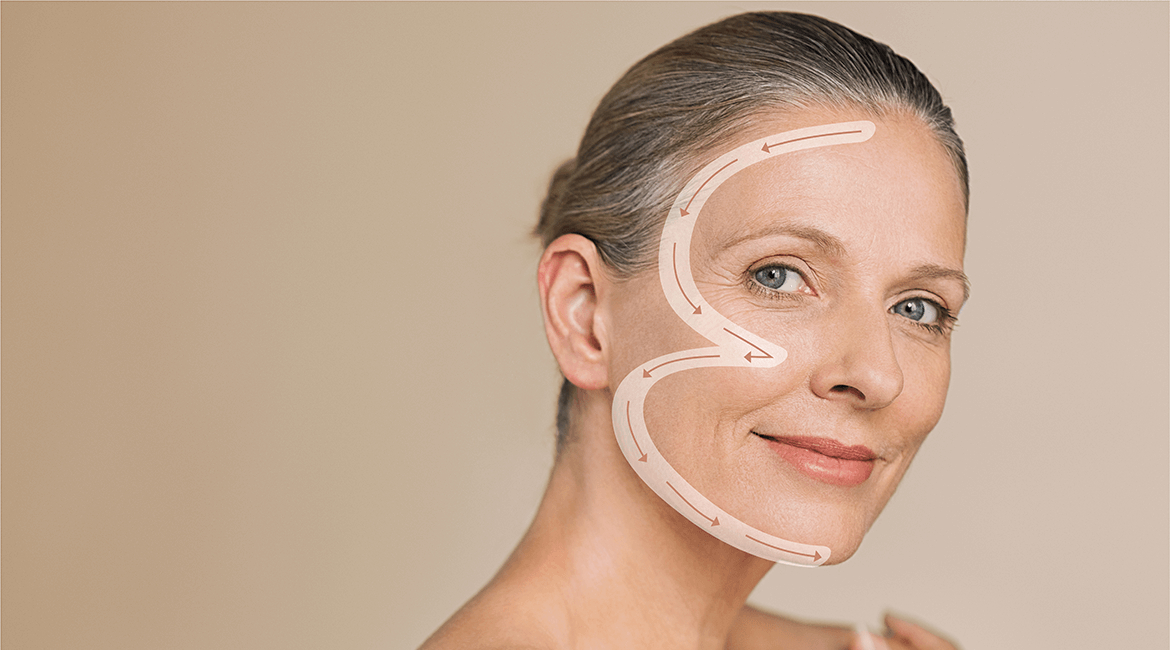
Threading facelifts (aka thread lifts) are facelifts that utilize threads to promote lifting. “Thread lifts are minimally invasive, resorbable suspension sutures with bi-directional cones,” explains board-certified plastic surgeon Julius Few, who is a world leader in aesthetic plastic surgery and pioneer in minimally invasive aesthetics. “The sutures lift and reposition subdermal tissue while the bi-directional cones hold the suture and facial skin in an elevated position.” According to Few, both the suture and cone material are made with glycolide/L-lactide (PLGA), which stimulates fibroblasts for gradual collagen maturation over time. “They are designed to reposition volume in the mid-face with a goal of a natural-looking result,” he adds.
Do Threading Face Lifts Hurt?
Given threading face lifts literally thread sutures through the skin, you might assume that they’re incredibly painful. However, according to board-certified plastic surgeon Dr. David Shafer, threads are usually placed using local anesthesia, so patients typically don’t feel much at all.
“Tiny needles (similar in size to Botox needles) are used to inject numbing medication, which numbs the surrounding skin,” he explains. “That said, the threads themselves generally don't hurt but there is some poking with needles to inject the numbing medication—similar to any procedure which uses local anesthesia.”
Benefits of a Threading Facelift
Instant lifted results
Boosts the body’s natural production of collagen
More affordable than invasive facelifts
Relatively painless
“A threading facelift provides an immediate facelift effect as well as a regenerative effect for progressive and natural results,” Few says. “A huge part of the patient appeal is that the outcome is immediate, with results getting better over time. Data from Aesthetic Surgery Journal and The Journal of Drugs in Dermatology (JDD) found that patients are highly satisfied with thread lifting outcomes (Silhouette InstaLift).”
What’s more, Few points out that studies show that thread lifts boost the body’s production of natural collagen, which may account for the long-lasting improvements in skin quality.
Of course, with benefits come downsides, too. Namely, how long the results last. “The downside of threading facelifts is the longevity of the results and that threads can't accomplish what a surgical facelift can in terms of tissue distribution, removal of excess skin, and the degree of results,” Shafer says. “Threads are also static, meaning they don't stretch or accommodate the natural animation or movements of the face.”
Additionally, threading is a controversial procedure among many surgeons. According to Dr. Dara Liotta, a board-certified dermatologist and Byrdie review board member, many experts believe that threading may cause scarring, dimpling, and visible irregularities in the long run. "It can make facelifting surgery more difficult later on," she says. With all medical procedures, it's best to consult with your doctor to see if threading is right for you.
The Best Candidate for a Threading Facelift
According to Shafer, the best candidate for a threading facelift is someone with moderately loose skin who is looking for a short-term pick-me-up. Few adds on to this, noting that the ideal candidate is a man or woman, typically 35 years or older, who hopes to lift the mid or lower third of their face.
Facial plastic surgeon Dr. Sarmela Sunder has another take. “The best candidates for thread lifts are patients who are just starting to notice some collagen loss and would like to boost the structure of their skin,” she says. “It is ideal for patients who are starting to feel as if the skin is starting to lose some of its tautness, not for people who actually have skin that is visibly sagging.”
How to Prepare for a Threading Facelift
Considering threading face lifts are a minimally invasive cosmetic procedure (despite literally threading sutures through the skin), prep is quite approachable and the same as what you would expect for any injectable treatment.
“Refrain from taking any type of blood thinners, supplements, blood thinning vitamins, NSAIDS, and green tea for two weeks prior to the appointment as these may all cause increased bleeding and bruising,” Sunder says, noting that patients may want to take a Tylenol immediately prior to the appointment to make the experience more comfortable.
Additionally, Few says that cutting back on alcohol can have the same bruise-avoidant effect.
Lastly, if you have an active infection in their face/skin or a recent or upcoming dental surgery, Shafer says that you should delay the treatment for another time. “Patients should also prepare for moderate bruising and swelling. While usually very minimal, there is no way to completely predict how someone will look after the procedure,” he adds.
What to Expect During a Threading Facelift Treatment
During the actual thread lift, Sunder says patients should expect for the treatment area to be cleansed, assessed, and marked as to where the threads will be placed. Once finalized, topical numbing cream will be applied and/or injectable local anesthesia is placed. Read More...