Exotrail signs launch agreement with Isar Aerospace
-
 Loading...
 - Sauvo Hiltunen
- 03 Nov 2022
- 67 Views
- 0 Like
- 0 Comment
Exotrail, a French company developing orbital transfer vehicles, has signed a contract with German launch vehicle developer Isar Aerospace for multiple launches over the next several years.
The companies announced Nov. 3 they signed a launch services agreement to launch Exotrail’s spacevan vehicle on Isar’s Spectrum rocket on multiple missions between 2024 and 2029. The launches will take place from Andøya, Norway, and Kourou, French Guiana. The companies did not disclose a specific number of launches or the value of the agreement.
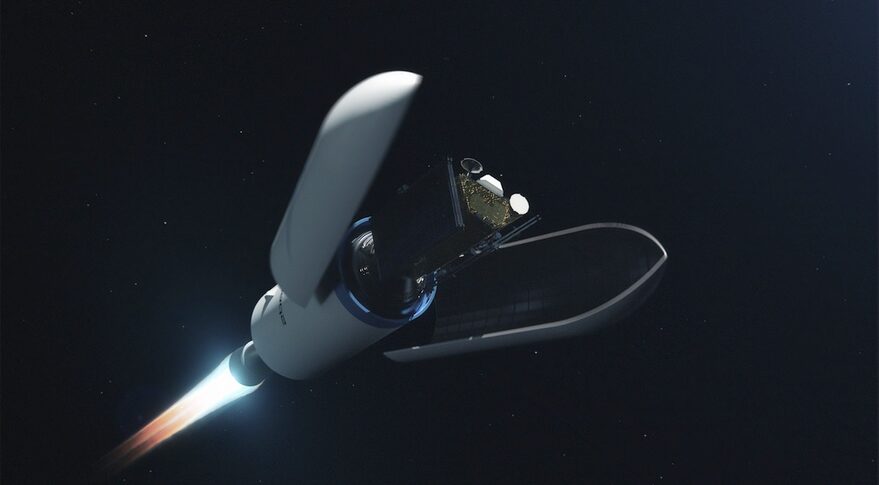
Exotrail will use the launches for a service it calls spacedrop for delivering smallsats to their desired orbits. That uses the spacevan orbital transfer vehicle (OTV) the company is developing, which in turn uses electric propulsion systems and software the company currently offers to other customers.
“The contract with Isar Aerospace enables us to consolidate our spacedrop service by offering more launch opportunities to customers looking for bespoke and competitive access to LEO and GEO orbits,” Jean-Luc Maria, chief executive of Exotrail, said in a statement.
Exotrail has primarily been known for its work on electric propulsion systems. That included an agreement announced in September with Airbus to provide Exotrail thrusters for future Airbus Earth observation satellites.
A service like spacedrop, though, has long been part of the company’s plans. “When we started in 2017, we did so as a logistics company,” said David Henri, chief product officer of Exotrail, in an interview in September during World Satellite Business Week. “People know us mostly for propulsion, but we’ve been doing more than that from the beginning.”
He said Exotrail sets itself apart from others developing orbital transfer vehicles because of its in-house development of electric propulsion. That translates into increased payload capacity and performance, including the ability to perform larger orbital plane changes that would be desirable for customers deploying a satellite constellation. Read More...