Filipino Snacks: 15 Popular Snacks You Need to Eat for Merienda in the Philippines

In fact, one of the most common greetings in the Philippines (even among strangers) is kain na or kumain ka na? This literally translates to “let’s eat” or “have you eaten?” In some instances, the person being invited to eat isn’t really expected to accept, but it’s considered good manners to offer anyway.
Filipino snacks (aka Pinoy snacks) are a big part of Filipino food culture and this is best exemplified in the light afternoon meal known as merienda. I’ll get to it in more detail below but merienda in the Philippines basically refers to any small meal – both savory and sweet – that’s typically eaten between lunch and dinner.
In this article, I’ll describe some of the most popular Filipino snacks that locals eat for merienda. Kain na!
WHAT IS FILIPINO MERIENDA?
The word merienda literally translates to “snack”. It’s a food tradition that’s practiced in different countries like Spain, Portugal, Italy, Argentina, Croatia, Morocco, and Brazil. Being a colony of Spain for over 300 years, it’s clear that Filipinos inherited the tradition from the Spanish though it’s a custom that’s beloved by many cultures around the world.
In Filipino cuisine, merienda is typically enjoyed sometime in the mid-afternoon, around 3 or 4PM. It’s a light snack that can be savory or sweet and is meant to tide you over until dinner.
Most if not all Filipinos who were raised in the Philippines grew up eating merienda. Even Filipinos who grew up in the diaspora are familiar with it because it’s a custom that their parents likely took with them.
Growing up in the Philippines, you just expect to have merienda everyday, even if you’re visiting a friend’s house over the weekend. It’s as common an eating habit in the Philippines as breakfast, lunch, or dinner.
THE BEST FILIPINO SNACKS
There are many different types of Filipino snacks that people enjoy for merienda. It can vary from household to household but these are some of the most common.
1. Turon
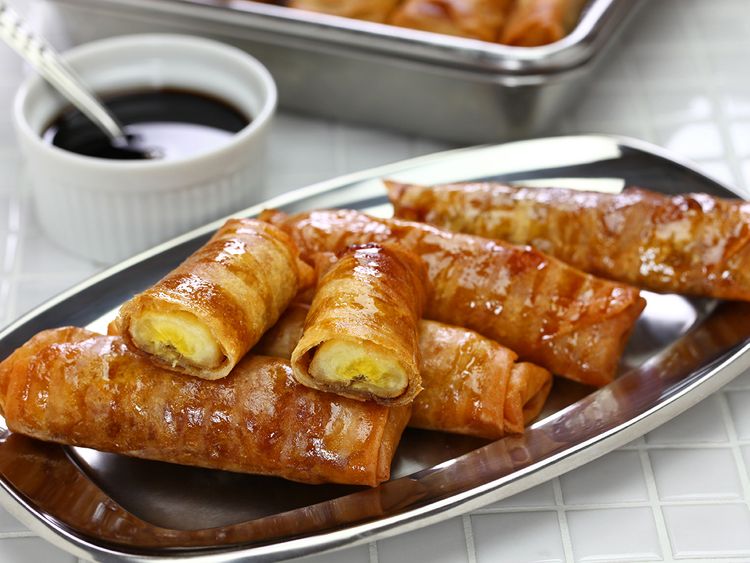
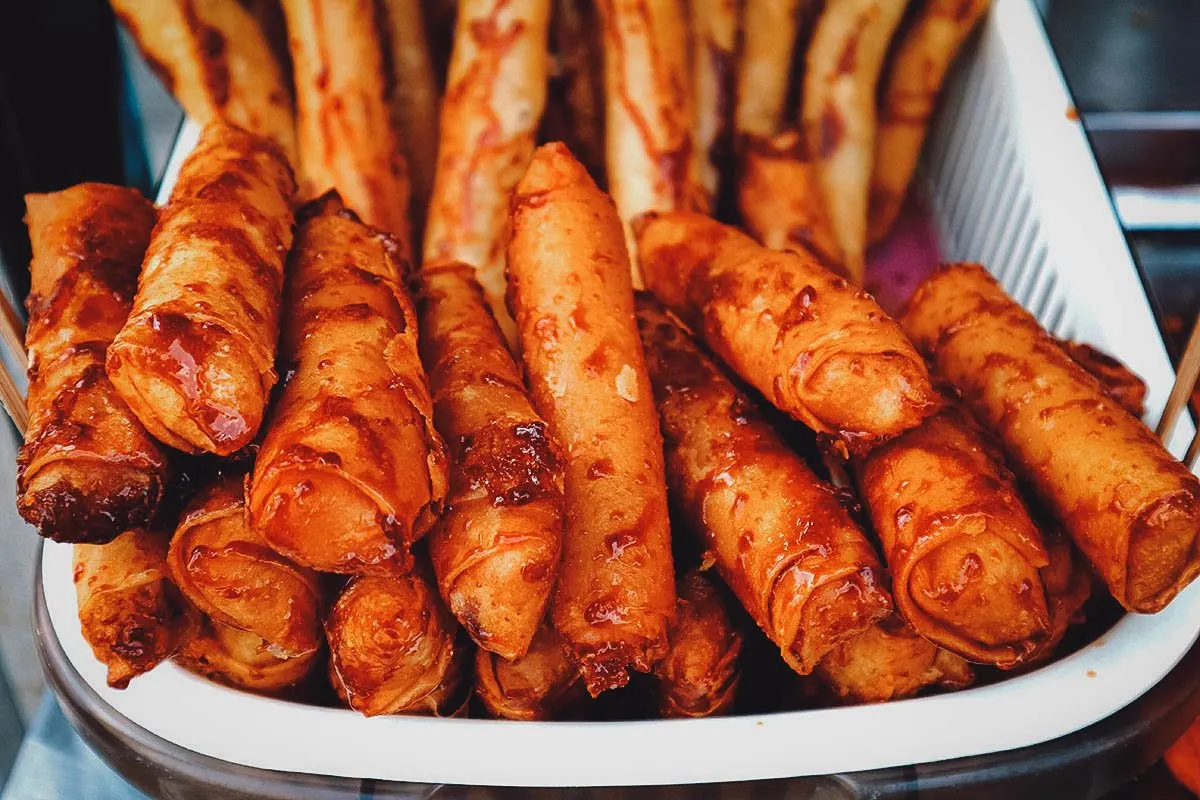
There’s no better way to start this article on popular Filipino snacks than with turon, a delicious dish made with thin slices of plantain coated in brown sugar and then deep-fried in lumpia wrapper. It’s a sweet and crunchy Filipino snack that’s also commonly eaten for dessert or sold as street food in the Philippines.
Many Filipinos have fond memories of turon because it’s something we grew up eating. In fact, whenever my US-based brother visits the Philippines, it’s one of the first dishes he looks for. Cheap and easy to make, it’s Filipino comfort food at its most delicious.
Like many people, turon is personally one of my favorite Filipino snacks. Eaten at room temperature, it’s always filled with plantain but some versions can be made with a thin sliver of langka (jackfruit) as well. At restaurants, it can be served warm with a scoop of vanilla ice cream for dessert. It’s so delicious.
Speaking of dessert, if you have a fondness for the sweeter things in life, then be sure to check out our article on traditional Filipino desserts.
2. Banana Cue
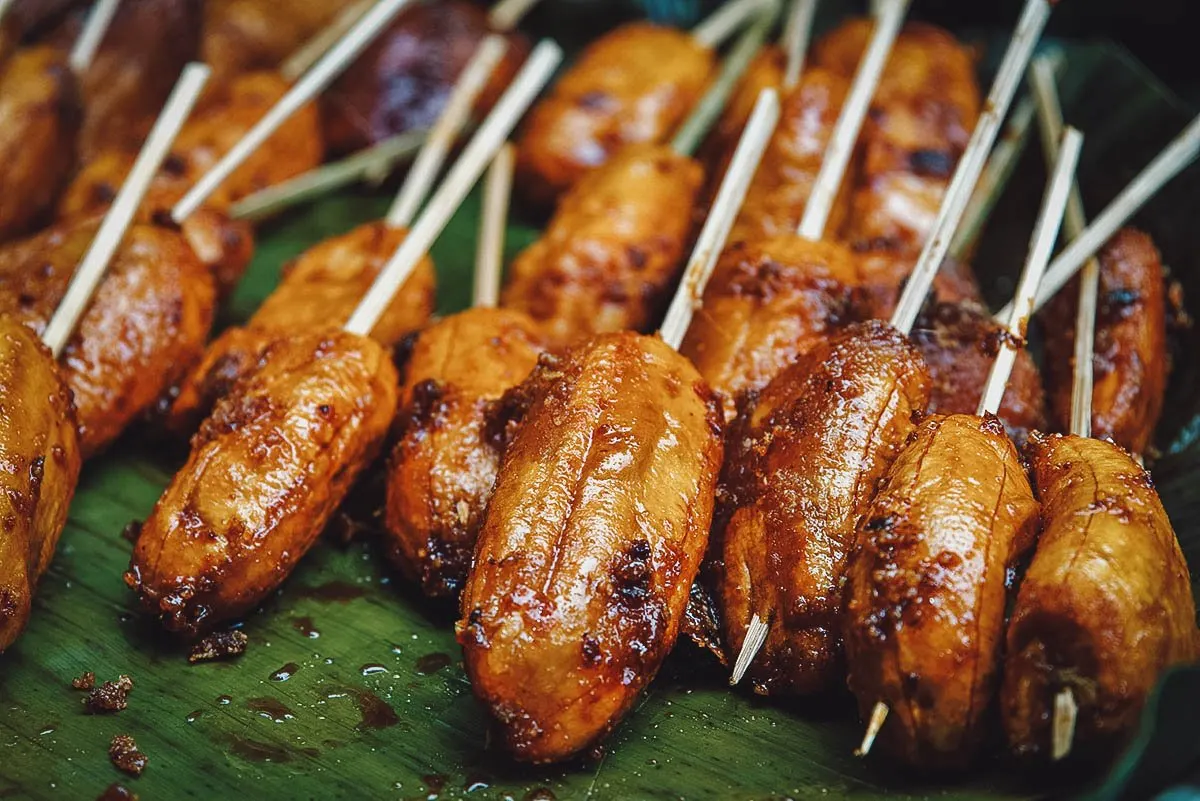
Turon may be the most popular plantain-based Filipino snack but not far behind is banana cue (or banana q). It’s a very similar dish except the plantains are skewered whole and then coated with brown sugar before being deep-fried.
Both are commonly sold as street food though banana cue may be less frequently made at home. At least that’s how I remember it. It’s even less common to find it on dessert menus at Filipino restaurants.
3. Puto / Kutsinta
Puto is one of the most iconic foods in the Philippines. When you think of dishes that best represent Filipino culture and cuisine, puto is one of the first things that comes to mind.
Puto refers to a steamed rice cake made with slightly fermented glutinous rice dough (galapong). Traditionally, they’re made with glutinous rice soaked in coconut milk but more modern versions are often made using glutinous rice flour instead.
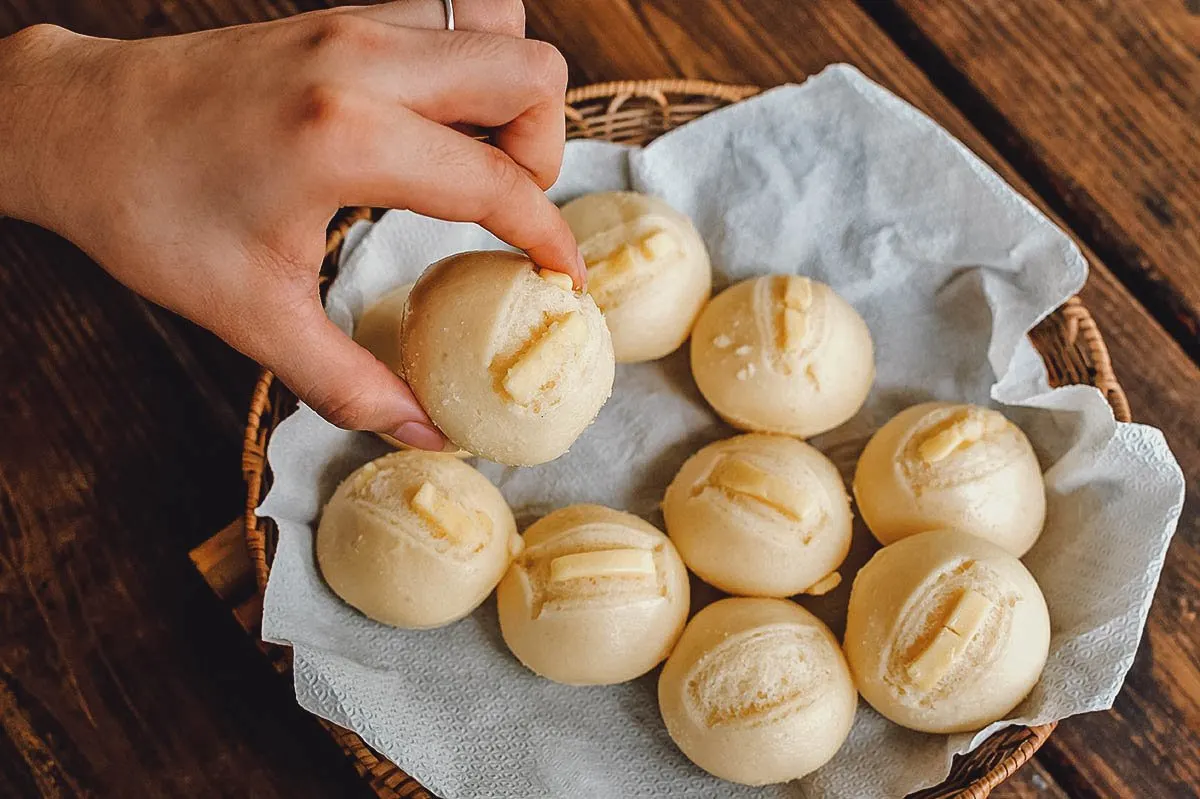
The most common versions of puto are small in size, about the diameter of a golf ball, and muffin-shaped. They’re typically plain white but they can come in different colors as well depending on what other ingredients they’re made with like ube, pandan, or queso (cheese).
Pictured below is a basket of puto enriched with cheese. Note the thin sliver of cheese on top. Not all puto is made with that sliver of cheese.
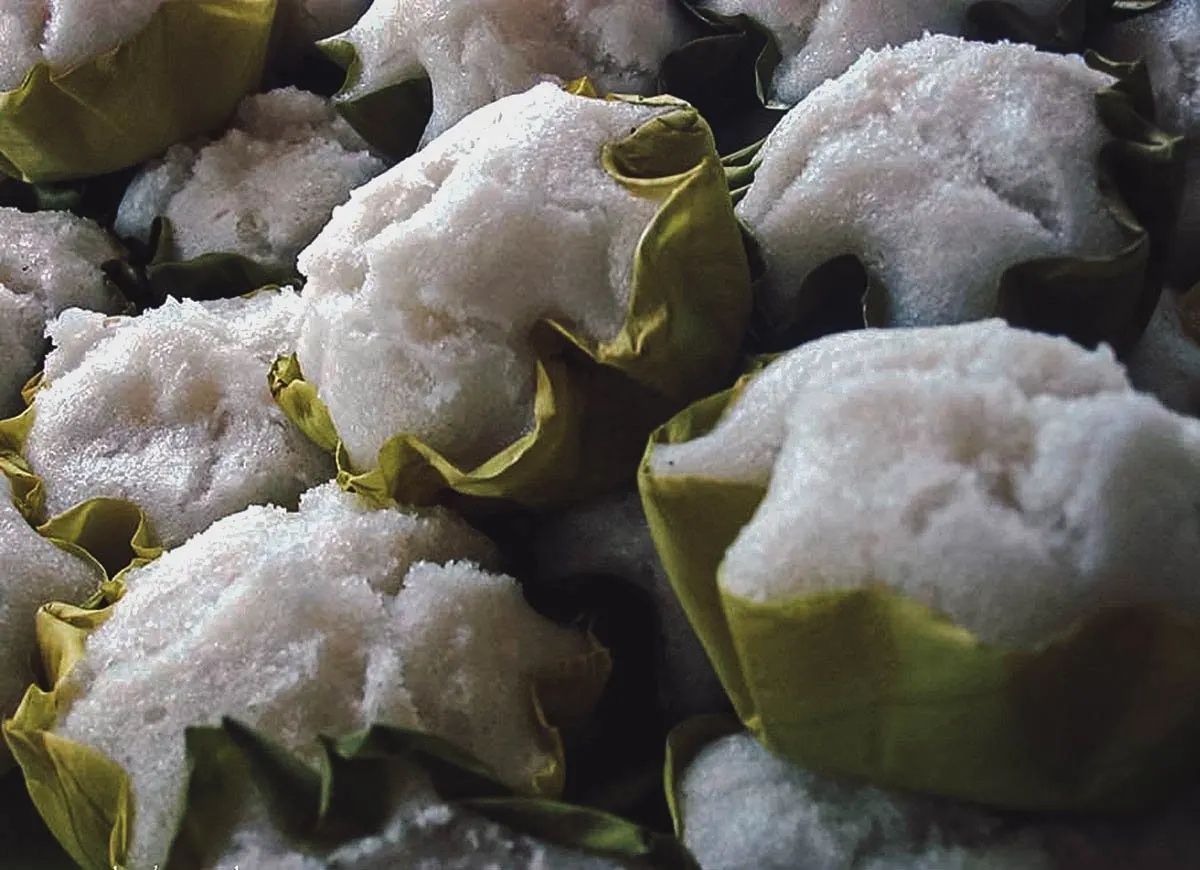
Bite-sized puto is the most common but it can be made in other sizes as well. The version of putong puti (white puto) pictured below is palm-sized and individually wrapped in banana leaves.
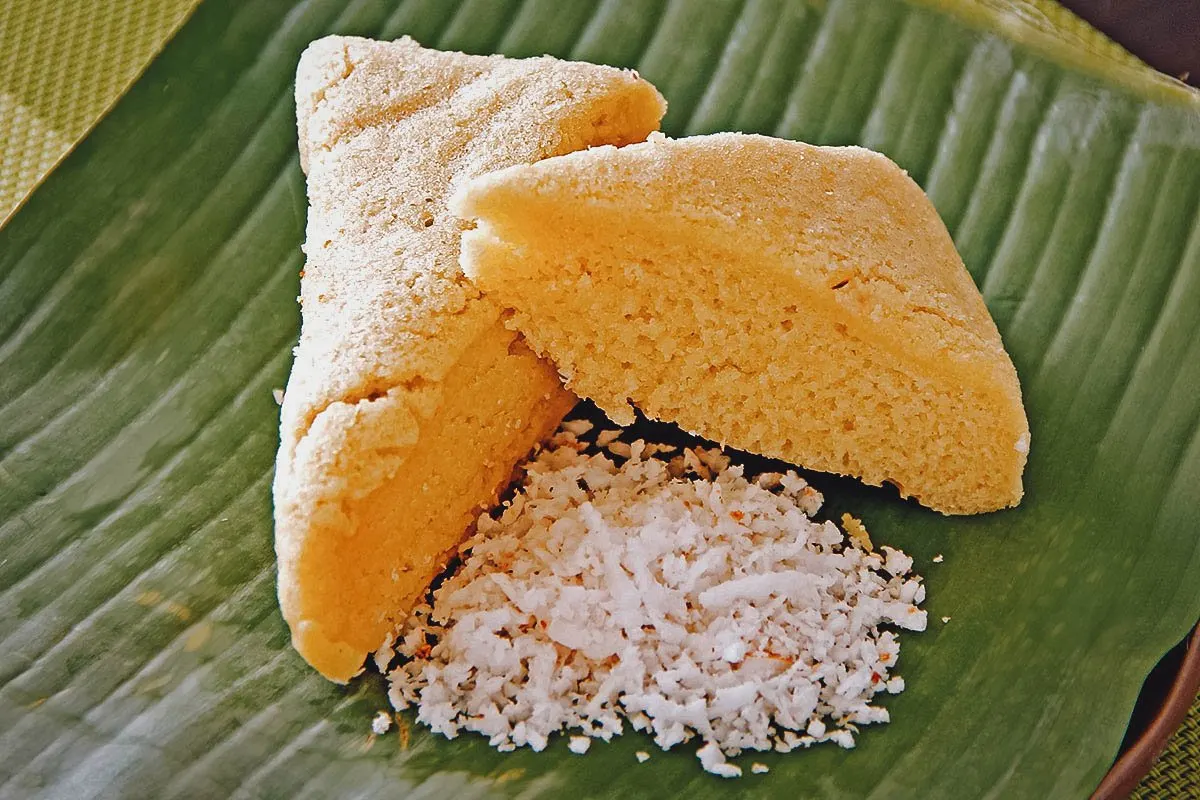
Puto can also be made into larger sizes, about the same diameter as an average cake or pie. These larger versions of puto are meant for sharing. They’re sliced into wedges and served with grated coconut.
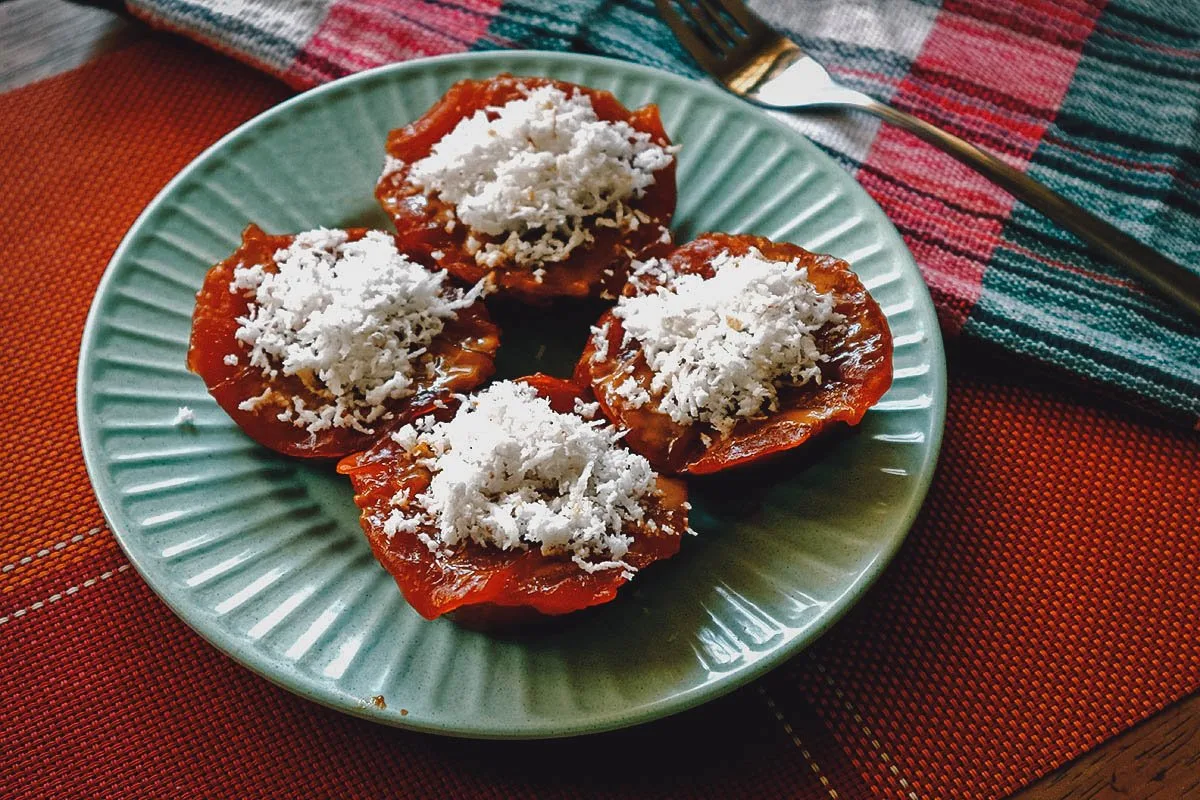
What you’re looking at below is kutsinta, a variation of puto made with lye, annatto (achuete) seeds, and brown sugar (instead of white sugar). Lye gives kutsinta a much stickier and chewier texture while the annatto gives the rice cake its signature deep orange color.
The classic white version of puto is very often sold with kutsinta. Whenever my mom would bring home puto, they would always come with a separate packet of kutsinta. I like them both a lot but kutsinta has always been one of my favorite Filipino snacks.
Sticky, chewy, and a little sweet, kutsinta is absolutely delicious, especially when topped with grated coconut. Like puto, it can be enjoyed for dessert but it’s more commonly consumed as a mid-day snack.
4. Suman
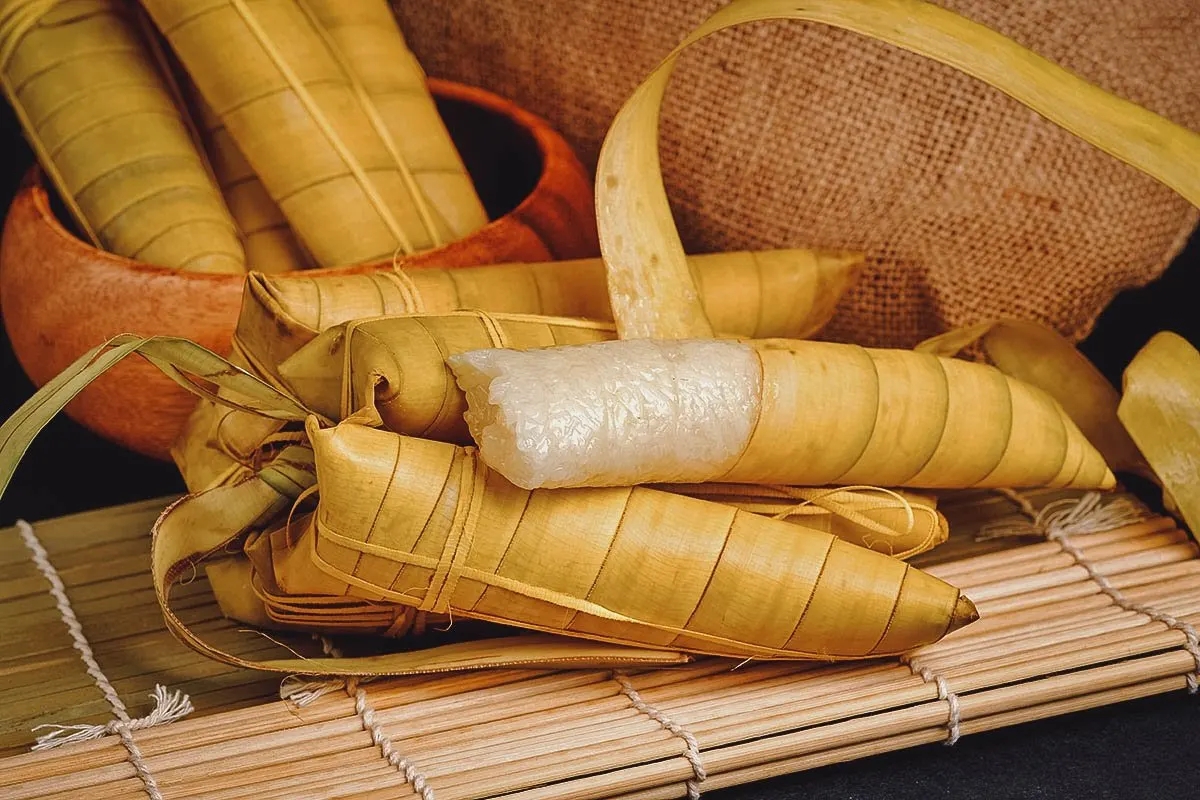
Like puto, suman is an iconic Filipino snack that’s one of the most culturally representative dishes in Filipino cuisine. It’s made with glutinous rice cooked in coconut milk which is then wrapped in banana leaves before steaming.
Suman is one of the most beloved Filipino snacks but it’s also commonly eaten as breakfast food. Very sticky in texture, it’s typically served warm with a sprinkling of sugar on top or drizzled with latik, a type of caramelized syrup made with coconut cream.
The most common version of suman is cigar-shaped (pictured below) but it can be made in different shapes and varieties as well.
5. Mangga’t Bagoong
Because of our love for fried foods and all things sweet, I’ll admit that Filipino snacks aren’t the healthiest. If you want to snack on something that’s healthier and guilt-free, then you may want to try mangga’t bagoong. As innocuous as green mangoes are, I say that with some trepidation because bagoong is an acquired taste and not for everyone.
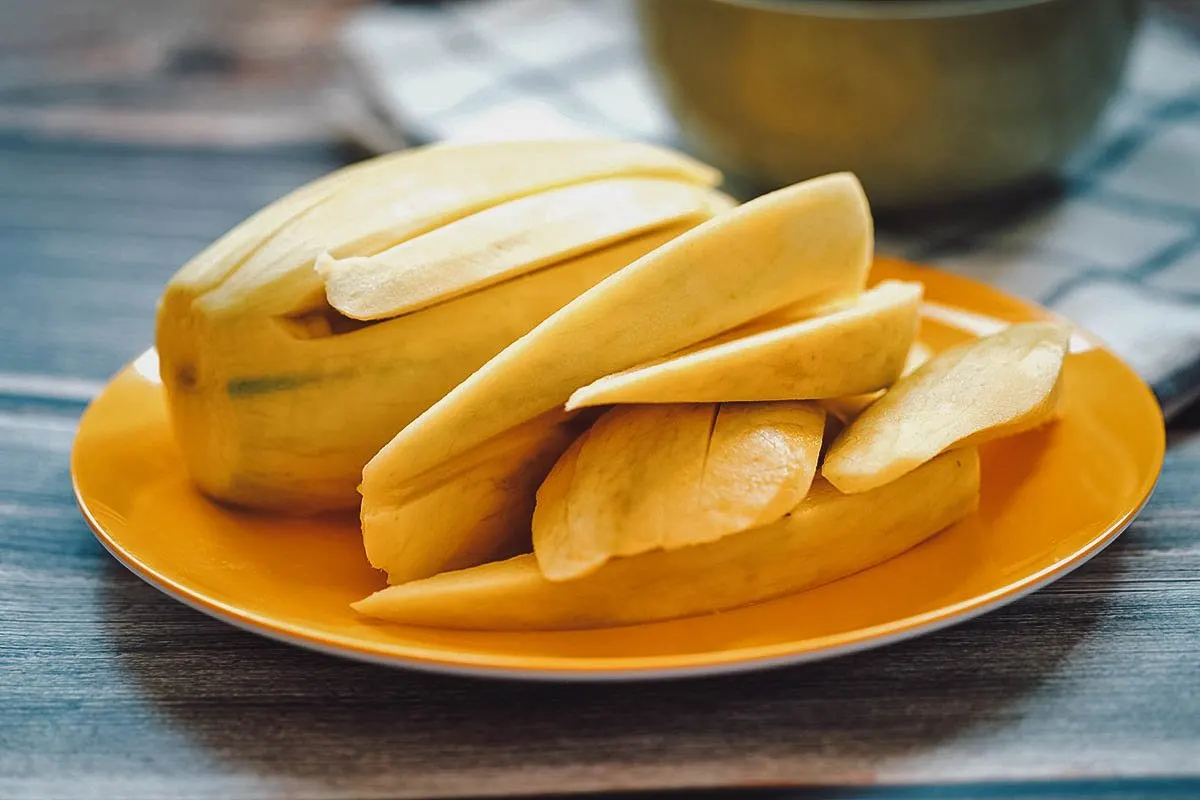
Mangga literally means “mango” but in this case, it refers specifically to unripe green mango. Crunchy and sour in taste, it’s cut into slivers and often enjoyed as a snack with an extremely pungent condiment made from fermented shrimp or krill called bagoong. Salty, savory, a little sweet, and fishy, it’s a popular condiment that exists in many countries throughout Southeast Asia like Vietnam, Thailand, Malaysia, Singapore, and Indonesia.
Mangga with bagoong may not be for everyone but it’s a punch of flavor and texture that anyone with an adventurous palate will surely enjoy. It’s definitely one of the healthier Filipino snacks out there which is probably why it’s preferred more by women. Pregnant Filipino women often crave for mangga’t bagoong.