Food Trends for 2022
-
 Loading...
 - Oscar Hayes
- 01 Apr 2022
- 360 Views
- 0 Like
- 0 Comment
With the new year comes new insights as to what foods will be trending in restaurants, the topic of cooking shows and articles, and what we can expect to see on supermarket shelves. Each year, many sources predict which ingredient or region of the world will be center stage in recipes and dishes, which takes some deciphering to identify those most likely to be of great interest and have the most relevant impact. We have included a list of the more prevalent trends suggested by top industry associations and organizations and those that appear in several other reputable lists.
What is impacting food trends?
Each year, at least one external force encourages us to seek one or two particular items to use in meals we create at home or when selecting a menu item at a restaurant. With the continuation of COVID-19 disrupting our households, the supply chain, leisure activities, etc., consumers continue to seek foods that promote health, emotional wellbeing, and mood-boosting.
Though COVID-19 impacts travel, our interest in authentic ethnic flavors has not subsided. Consumers are trying to "find ways to experience tastes from other countries outside their homes" and gravitating toward foods from foreign lands to deal with not being able to easily travel abroad to taste the dishes.
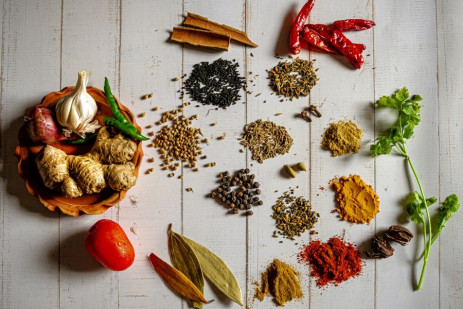
Reports have also indicated that we will continue to be interested in all things plant-based (PR Newswire, 2021), alternative proteins (IFTa, 2021), innovative ways to reduce food waste (upcycling) (IFTb, 2021), and sustainable food production methods . In many cases, these trends are not mutually exclusive, and there is overlap between two or more. For example, spices trending in 2022 are often associated with trending ethnic cuisines and have potential health benefits, while traditional production of certain trending foods are noted as being sustainable. Thus, food trends are no longer strictly associated with just an ingredient or a flavor, but rather how consumers live their lives, what they aspire to be, and their environmental concerns. In 2021, EatingWell.com reported "views on articles related to food waste are up 1,242%" compared to 2020 .
Ethnic flavors
Each year, Pinterest releases its predictions for the upcoming year based on what users search for on the social media platform. In addition to food, they publish predictions regarding travel, art, crafts, fashion, and more. Based on data gathered from October 2019 through September 2021, the company believes that "Ancestral eats" will be noteworthy in 2022, as determined by the year-on-year increase in Pinterest searches related to specific food terms.
The following describes the percent increase in searches for the term: "Filipino recipes authentic," a 35% increase in searches over the previous year, "Norwegian recipes traditional," a 120% increase, and "South African recipes traditional," a 150% increase. Consumers searched for "Arabic food traditional" two times more and three times more for "Traditional Russian food" during the October 2019 through September 2021 period than the previous year. A quote from the Predictions report provides insight as to how businesses can use these data: "If you're a food and beverage brand...Help people replace the modern meal with global cuisine. Inspire them to turn a basic chicken dinner into a South African or Filipino delicacy with specific spices and ingredients".
Other resources, such as MSNBC, report that Filipino flavors will be important in 2022. The source also notes that "traditional flavors" from Vietnam and Singapore are also "gaining a stronger hold on everyday eating" (Fernstrom, 2021). We can also expect to see more North African and Western African foods on supermarket shelves and restaurant menus.
Blending these flavors
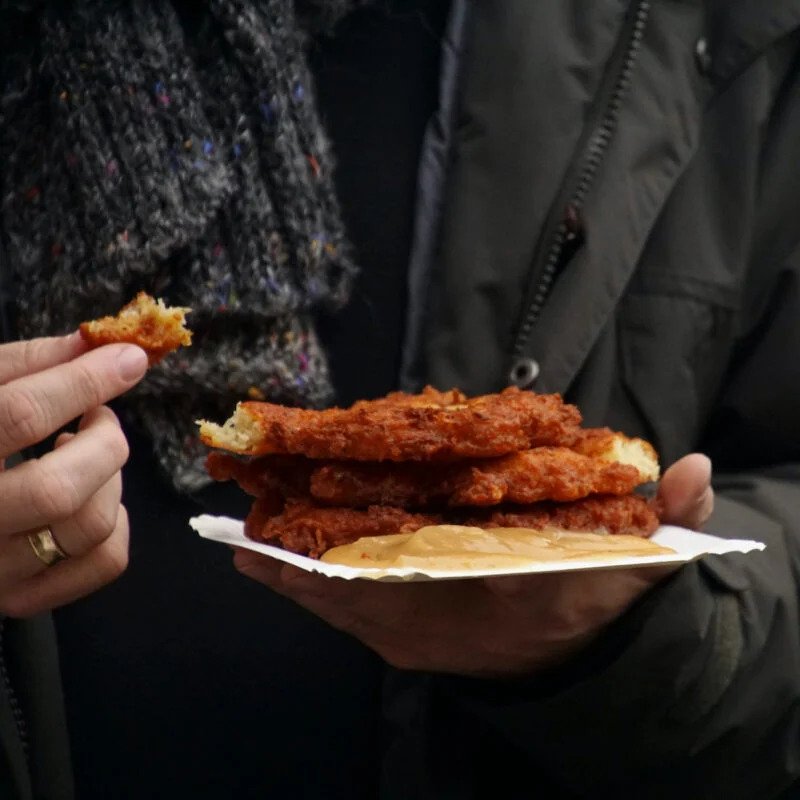
Several sources describe an increased presence of dishes that combine popular "American" items with flavors and inspiration from other countries. For example, Datassentials lists Indian pizza with authentic "Indian flavors, ingredients, species" . At the same time, Nutritionaloutlook.com quotes Jennifer Zhou, Senior Director of Product Marketing at ADM, that we will see "complementary flavors through a mashup of cultures like Mexican-Korean burritos, Chinese-Peruvian bao buns, Greek quesadillas, or Banh Mi pizza" . We will also see turmeric, one of the herbs and spices The Fresh Market, Inc., a U.S. supermarket chain, indicates will trend in 2022. The herb supposedly has antioxidant and anti-inflammatory properties, and we can expect to see it used in "cereals, sauerkrauts, and plant-based ice cream sandwiches". It should be noted that these claims have been questioned – as "scientists have published the most comprehensive critical review yet of curcumin—concluding that there’s no evidence it has any specific therapeutic benefits, despite thousands of research papers and more than 120 clinical trials"
As with years past, we will see the influence of flavors from specific regions within a country become the focus of menu items and recipes. Instead of generally describing flavors as "Indian," no matter where they derive from in the country, we are likely to see Indian food with more regional influence from Gujarat, Kerala, Kashmir, Tamil Nadu, and the Awadh area. Read More...