Forests & finance: Setbacks for a rare bat, and progress for an oil pipeline
-
 Loading...
 - Fumo Aderito
- 03 Apr 2023
- 71 Views
- 0 Like
- 0 Comment
Newly described bat from Mozambique mountain under threat, researchers say
A forest that harbors Mozambique’s most recently identified species of mammal could disappear within the next two years as small-scale farmers fell trees to grow potatoes and other crops.
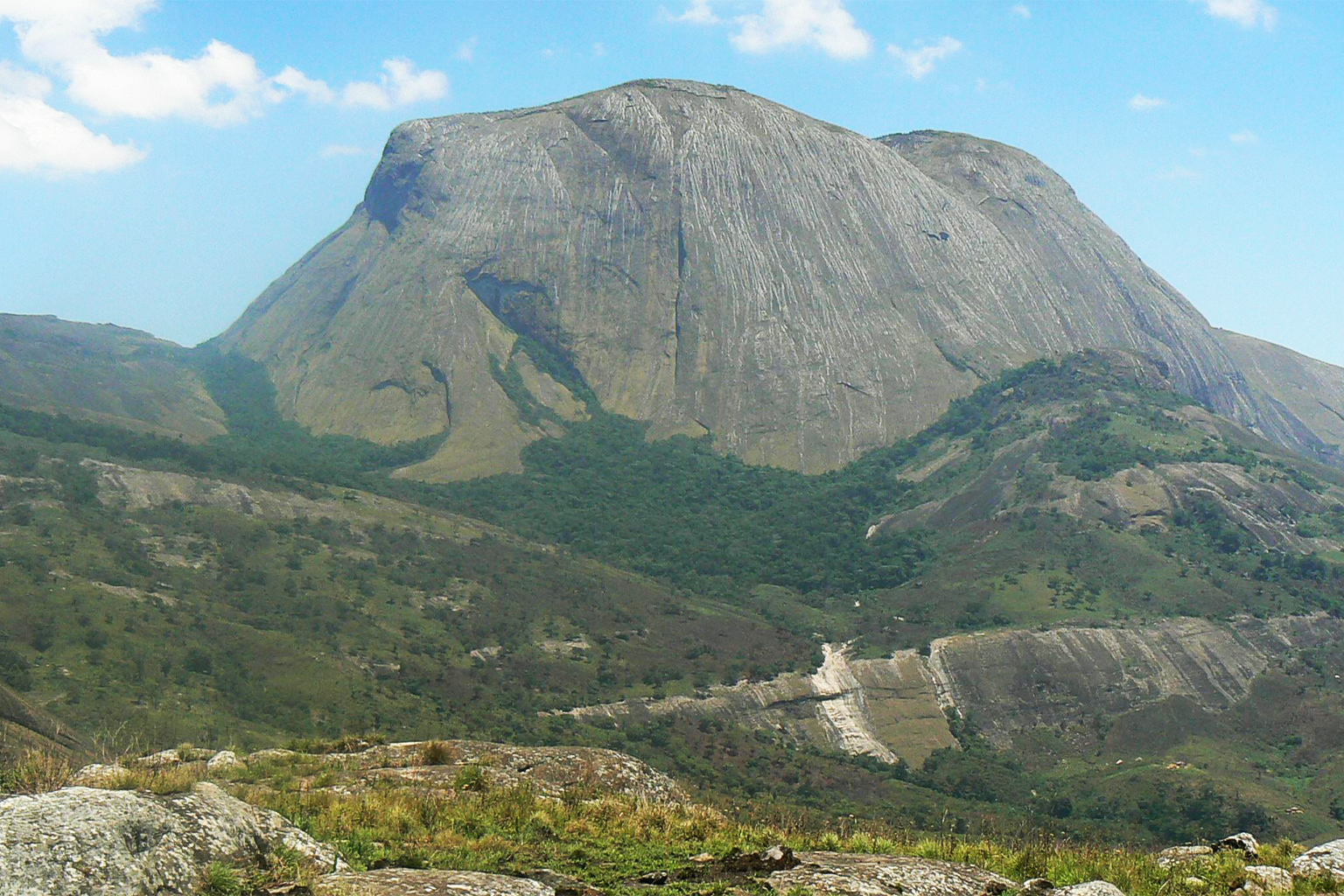
The Namuli horseshoe bat (Rhinolophus namuli) is named after Mount Namuli, a granite mountain, or inselberg, in the country’s northern Zambezia province. At more than 2,400 meters (7,900 feet), it’s the country’s second-highest peak.
But only fragments of the moist evergreen forest growing on its flanks remain, and the bats, which were collected by a research team more than a decade ago in forests higher than 1,200 m (3,900 ft), may soon be without a home.
“Mount Namuli is severely threatened, and the natural forests have been heavily degraded, even since we first went there in around 2006,” said Julian Bayliss, the co-author of a recent paper in Acta Chiropterologica describing the new species.
“Since that time a lot of the forest, maybe 75%, has been destroyed.”
Farmers clear-cut small patches of forest to access the rich loamy soils beneath it that are perfect for growing so-called Irish potatoes. But the soil’s fertility only lasts for three to four years, after which the farmers move on to another patch.
Bayliss and his co-authors estimate that at current rates of loss, the forest could disappear entirely by 2025.
Namuli horseshoe bats belong to a group known for the horseshoe-shaped structures on their faces that send out soundwaves to help them navigate and catch flying insects. The species has also been recorded in northern Malawi and in southern Tanzania. But by naming the bats after Mt. Namuli, the scientists hope to highlight the rich diversity of life within its remnant forest patches and the need to protect what’s left of them.
Efforts are underway to promote sustainable agriculture and alternative livelihoods to try to slow the rate of deforestation. Conservation group Legado and partners are working to create a community conservation area and secure land rights for many of the roughly 24,000 people who live around the mountain and use its resources. Read More…


