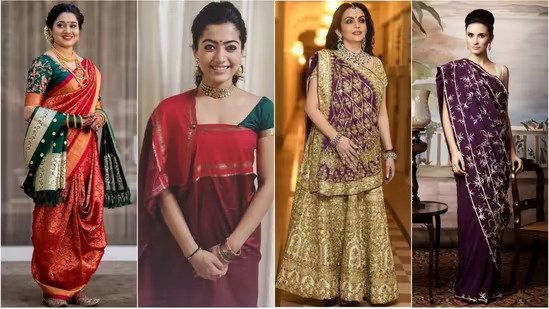
From Maharashtrian to Nivi drape: 6 stunning traditional saree draping styles from states of India
-
 Loading...
 - Mahit Iyer
- 17 Jan 2023
- 63 Views
- 0 Like
- 0 Comment
Whether you're a saree enthusiast or simply interested in learning more about India's cultural heritage, this guide is sure to be informative and enlightening. Check out some of the most popular traditional saree draping styles and explore the cultural significance behind each one.
Whether you're a saree enthusiast or simply interested in learning more about India's cultural heritage, this guide is sure to be informative and enlightening. Check out some of the most popular traditional saree draping styles and explore the cultural significance behind each one.
Sarees have been a quintessential part of Indian culture for centuries, and the way they are worn, or draped, holds great significance in different regions of the country. Each state has its own unique way of draping a saree, reflecting their cultural heritage and traditional customs. From the simple and elegant Nivi drape to the intricate and elaborate Bengali drape, the various traditional saree draping techniques are a testament to the rich cultural diversity of India. Whether you're a saree enthusiast or simply interested in learning more about India's cultural heritage, this guide is sure to be informative and enlightening. Let's take a closer look at some of the most popular traditional saree draping styles and explore the cultural significance behind each one.
The Maharashtrian saree drape, also known as "Kasta Sari" or "Maharashtrian Nauvari Sari" is a traditional saree draping style that is popular in the state of Maharashtra in India. This style of draping a saree is typically worn by women from the Marathi community. The key feature of this drape is that it is worn in a way that the saree is tucked into the waistband at the back and then wrapped around the legs, which gives it a lungi-like appearance. Read More…