From war to the catwalk: Ecuadorian independence inspiring fashion designers
-
 Loading...
 - Samantha Elliot
- 13 May 2022
- 301 Views
- 0 Like
- 0 Comment
From war to the catwalk. That is the jump that has been made by the military uniforms of the soldiers who 200 years ago secured Ecuador’s independence and which are now providing the inspiration for a group of young Ecuadorian fashion designers for a collection reflecting freedom and emancipation.
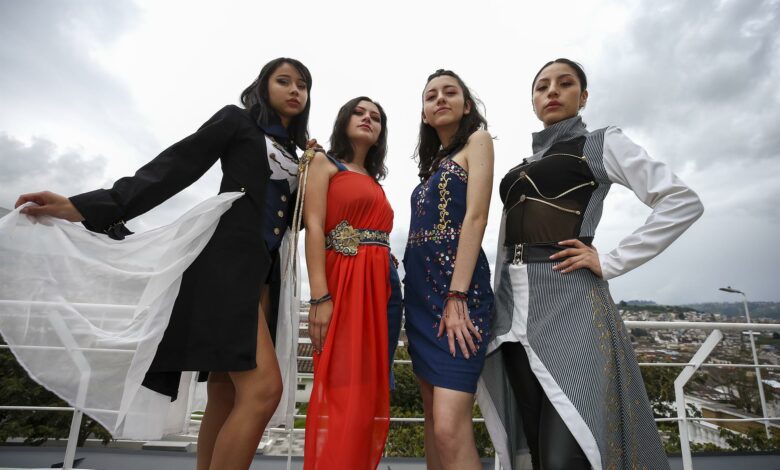
Big buttons, high collars, golden braids and trim, among other iconic elements of military outfits at the start of the 19th century, have been reinterpreted by the design students at the Yavirac Institute in Quito’s historic center, all with an eye toward creating contemporary garments with an heroic look.
That is their special tribute to the 1822 Battle of Pichincha, which was fought on the flank of the volcano giving the battle its name and the bicentennial of which will be commemorated on May 24 as one of the most important days in Ecuadorian history.
And it’s on the slopes of Panecillo, the Ecuadorian capital’s iconic mountain, where this version of the haute couture of the independence army commanded by Antonio Jose de Sucre will be displayed on the catwalk at the Yavirac Institute on Thursday in a fashion show along with other garments inspired by the country’s emblematic birds.
Despite the militaristic and masculine look, there are a number of very feminine designs in the collection, with many of them paying tribute to the heroines of Ecuadorian independence, including Manuelita Saenz, Manuela Espejo and Rosa Zarate.
“Some were behind the troops. They are known as the ‘huarichas’ and accompanied the revolutionary armies to support them as nurses and cooks, but also at critical moments they dressed as soldiers to fight,” Ramiro Sarria, a lecturer who monitored the creative work that went into the outfits, told EFE.
The design inspired by Manuelita Saenz is a dress of denim fabric that combines elements of both feminine and military outfits of the epoch to provide a neoclassical look, Miriam Rocha, one of its creators, told EFE.
While a false sleeve covers the left arm as a feature of the epoch, a kind of organza tunic hangs from the shoulder to the right side, with golden appliques to suggest the epaulettes and shoulder boards worn by soldiers, along with a belt with gold trim of laurel leaves.
On the other hand, other creations inspired by the hussars and grenadiers use synthetic leather to evoke the long high-collared coats worn by the regiments in an elegant and stylized version in black and white with buttons and braided cording on the chest. Read More…