German oil and gas: A key side actor in the Russian energy saga.
-
 Loading...
 - Annette Monet
- 22 Apr 2022
- 336 Views
- 0 Like
- 0 Comment
In many places, grass has covered the past, literally. Museum director Stephan Lütgert scrapes aside a patch of green with his shoe to reveal a metal pipe; a few steps away, the grass hides a pile of oil sand that has melted into a black, tarlike asphalt blanket. "Our museum stands in the middle of the remains of an oil field," Lütgert says proudly.
Anyone visiting the German Oil Museum, however, will not only find traces of an oil field with horse-head pumps and abandoned drilling rigs, but will also discover — upon closer inspection — that they are at the birthplace of the German oil industry.
First oil bores worldwide
Of all places, it was here, in the otherwise inconspicuous village of Wietze, near Hanover, in Lower Saxony, says Lütgert, that the world's first oil bores were drilled in 1858-59 — even before oil wells were drilled in the United States. Later, the "black gold" brought the small moorland village somewhat of an oil mania.
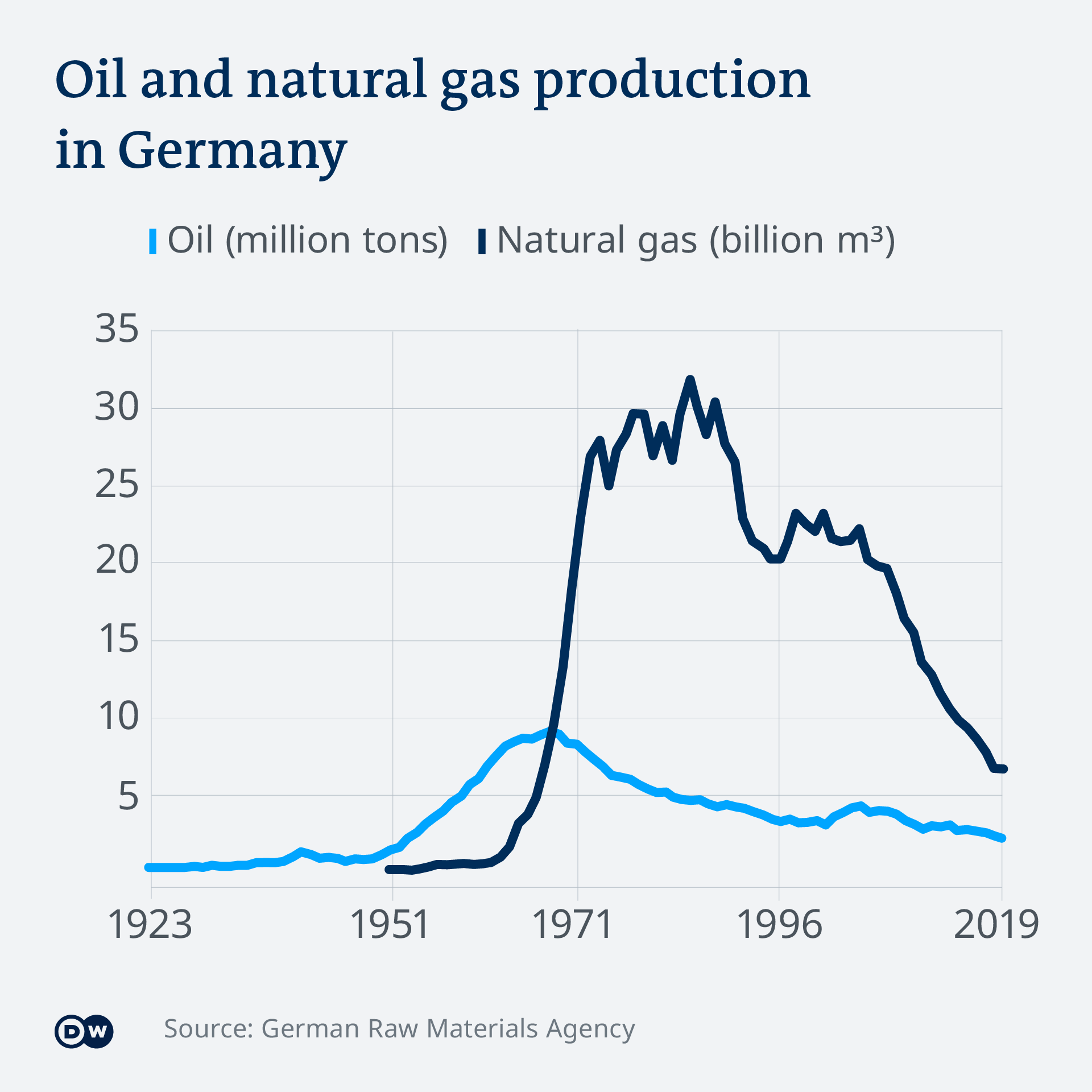
At present, Germany relies on imports to meet over 70% of its energy needs. The country's domestic production covers just 2% of its crude oil consumption, and 6% of natural gas consumption, a trend pointing downwards amid fast depleting oil and gas fields and the absence of any major recent discoveries.
If Germany imports even more oil from other countries, a complete break from Russian oil would be possible by the end of the year, the government has said.
Berlin is finding it much more difficult to shun Russian gas. It is true that Germany now obtains only 40% of its gas from Russia instead of about 55% before the war. But a complete shift, the German government says, is not possible until the summer of 2024 — and only if less energy is consumed.
Would it help if Germany were to produce more of its own oil and gas? That was once the case in Wietze.
Wietze's oil rush
It all began quite unspectacularly when Georg Konrad Hunäus came across oil during his test drilling in 1858 in Wietze. Hunäus, a professor at the time, had rather hoped for coal. At that time, oil was used as wagon grease, as a medicine — it only gained in value later, as petroleum in lamps and fuel for engines.
But when, four decades later, another well in Wietze struck oil, the timing was right: An oil rush swept the village.
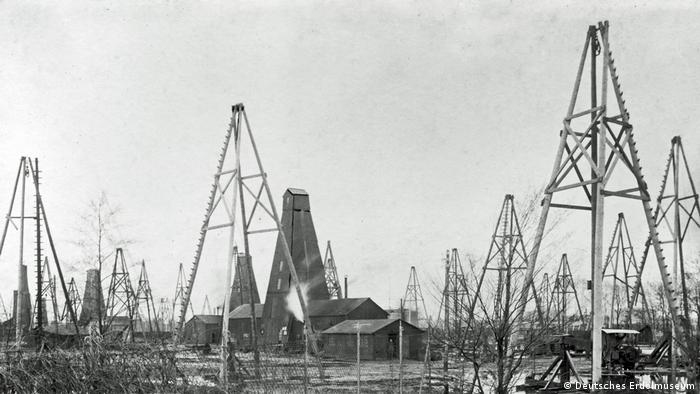
Museum director Lütgert climbs a 54-meter (178-foot) metal rig at the edge of the museum and gestures expansively at the grassland in front of him and the farmhouses in the distance. "This is where the rigs used to be," he says.
Within a very short time after the discovery, administrative buildings sprouted up in the village, and so did a train station and a refinery. Soon, a network of pumps, pipes and more than 2,000 boreholes covered the meadows; a network of kilometers of railroad tracks crisscrossed the landscape.
It's around this time that the "Wild West," as Lütgert calls it, creeps into the nondescript hamlet. Brawls, knife fights and shootings become all too frequent. But for some old-established farmers with a well-suited plot of land, the oil rush becomes a blessing. Even today, the partly magnificent farmsteads bear witness to the wealth that oil brought to Wietze.
By the beginning of the 20th century, oil companies, lured by larger, more successful oil fields elsewhere, started falling out with Wietze.
"Oil deposits are finite — you get to see that again on a small scale in Wietze," Lütgert says.
After oil stopped gushing out of the wells in Wietze, mining was moved underground for a few more decades, where miners extracted oil sand from the earth in a network of tunnels nearly 100 kilometers (60 miles) long. But by the 1960s, when protective tariffs were abolished, it was no longer economically viable to extract oil in Wietz. Oil from abroad became cheaper.
Germany depends on oil and gas imports
At the height of the oil boom in Wietze in 1909, 113,000 metric tons (124,560 short tons) of crude oil were produced there — ridiculously small quantities when one considers Germany's hunger for crude oil today. In 2020, Germany consumed just under 95 million tons of crude oil, according to the German association for natural gas, petroleum and geothermal energy, only a fraction of which was produced in the country. In terms of natural gas, Germany consumed 87 billion cubic meters of gas, of which 94% was imported.
"We have always been import-dependent, at least since the postwar period," says Andreas Seeliger, professor of energy economics at the Niederrhein University of Applied Sciences.
No other country in Europe consumes more oil and gas, most of which comes from Russia.
With Germany transitioning away from Russian oil and gas, local oil and gas producers stress the gap cannot be completely bridged with domestic production in a country like Germany with limited natural resources.
"No one is expecting the indigenous production alone to replace the gap that may open up; however, every barrel counts, and every molecule counts," says Robert Frimpong, managing director of Wintershall Dea Germany, the largest oil producer in the country — which, incidentally, was also involved in the now shelved Nordstream 2 pipeline project. Read More...