German-Polish history schoolbook project attracts criticism
-
 Loading...
 - Melissa Grenier
- 12 Jul 2022
- 110 Views
- 0 Like
- 0 Comment
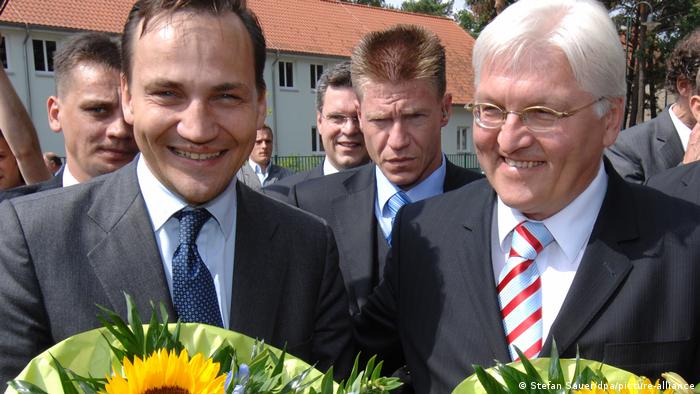
Speaking at European University Viadrina in autumn 2006, Germany's then-Foreign Minister Frank-Walter Steinmeier outlined an initiative to strengthen German-Polish ties."Maybe would not be impossible to launch a joint German-Polish history book in the medium term that promotes better mutual understanding," he said.
His idea could not have come at a worse time. Poland was governed by Jaroslaw Kaczynski, of the national-conservative Law and Justice (PiS) party, which distrusted Germany and showed little interest in the undertaking.
That changed in autumn 2007, when a new government took charge in Warsaw, and Polish Foreign Minister Radoslav Sikorski finally gave the go-ahead for the four-volume textbook project. In May 2008, Sikorski and Steinmeier announced its official start. The Joint German-Polish Textbook Commission, founded in 1972, played an important role in assisting both governments in realizing the project, which was meant to ensure German and Polish schoolbooks promote neither biased nor nationalist narratives.
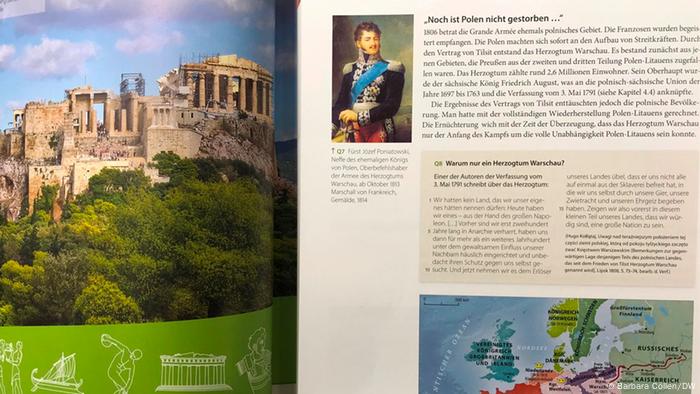
In 2016, German and Polish leaders celebrated the publication of the first volume in the "Europe. Our History" series. Four years later, the fourth and final edition was published. But the political mood in Poland had changed once more since then, as PiS has taken over once again.
Divisive fourth volume
Nevertheless, the four-volume textbook has been accredited for use in schools throughout Germany — except for in Bavaria. Poland also licensed three volumes for teaching purposes, except for the final edition, covering the period from the outbreak of World War II up until the present.
Polish decision-makers have often instrumentalized this particular period of history to discredit political adversaries at home and abroad. Several Polish experts gave the textbook a negative review. A report commissioned by Poland's Education Ministry come to a similar verdict. The fourth and final edition of the textbook series had not, therefore, been licensed for Polish schools.
"Multiple perspectives and an openness towards controversy are the strong points of the German-Polish textbook," said Peter Gautschi of the University of Pedagogy in Lucerne, Switzerland.
He praised the book for contrasting Germany's and Poland's different approaches towards reflecting on and coming to terms with their history. Yet this is precisely what bothers Polish decision-makers. Read More…