Germany checks one NATO box, leaves another open
-
 Loading...
 - Devin Whelan
- 08 Apr 2022
- 333 Views
- 0 Like
- 0 Comment
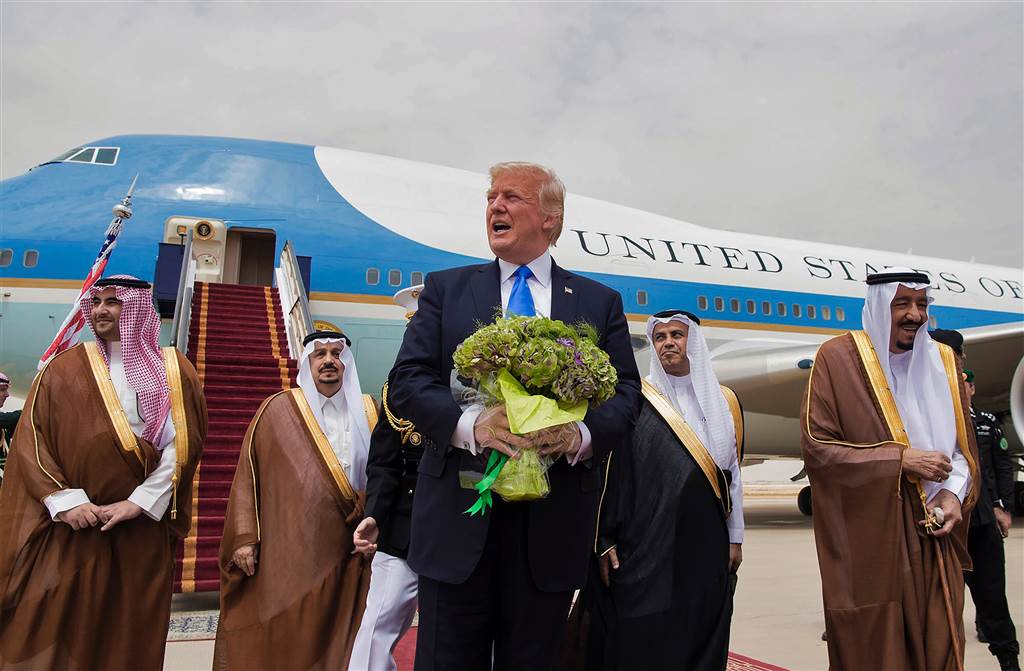
Gun-shy Germany was long an embarrassment to its security establishment, and an annoyance to more than one US president. Ambassadors from Washington have, with varying levels of finesse, pressed their German counterparts to get serious about defense.
It's one task US President Joe Biden's new top diplomat in Berlin, Amy Gutmann, may not need to concern herself with as much. She was just settling in here when Russia's invasion of Ukraine did more to change German security and foreign policy than many years of nudging from allies.
"It was a remarkable coincidence," Gutmann told an audience at Berlin's Free University this week. "One of my goals was to urge Germany to get to 2% NATO commitment: check."
2% vs. 20%: NATO's spending guidelines
NATO members agreed in 2014 to put 2% of their GDP towards national defense within ten years. Germany was slowly making its way to that threshold, but through 2021 remained one of the only major economies still falling short, according to NATO documents.
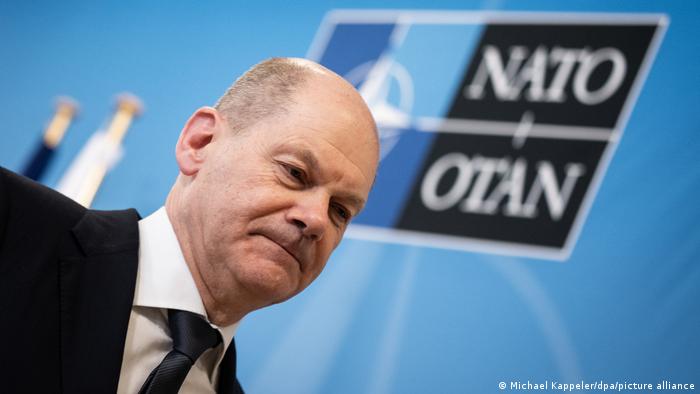
In his address last month to the Bundestag, Germany's parliament, Chancellor Olaf Scholz pledged to address that shortcoming, starting with €100 billion ($110 billion) in extra spending for the armed forces.
"It is quite certainly something that a country of our size and our significance within Europe should be able to achieve," he said.
Another spending guideline from the 2014 agreement has received less attention. That sees allies committing 20% of their annual defense budgets to "major new equipment." Here, too, Germany has been a laggard — one of just four allies still not hitting the mark.
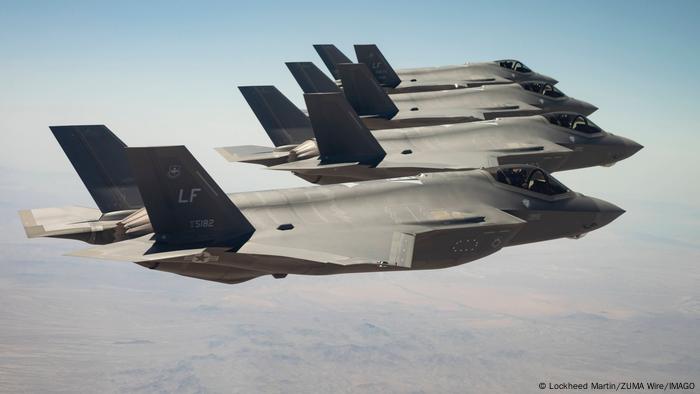
Scholz did not explicitly mention the second guideline, but the political discussion in the weeks since has focused on big-ticket items such as the nuclear-capable F-35 attack aircraft, Israeli-made missile defense, and armed drones.
"This is all about investment in hardware, because we've been under-serving and under-equipping and underfunding everything that flies, swims and moves," Thomas Kleine-Brockhoff, the German Marshall Fund's vice president, told DW. "I would say the 20% [benchmark] is probably a minimum."
The simplicity of the GDP target has helped make it the bigger talking point, he added, but it's the equipment target that ensures money goes into "real investments." Read More...