Germany Faces Workforce Shortage, Threatening Economic Growth
-
 Loading...
 - Samaantha Isaac
- 07 Jun 2023
- 68 Views
- 0 Like
- 0 Comment
Andre Schulte-Suedhoff, a 46-year-old executive, recently found himself on the production line at his family-owned factory near Munster. It was an unusual sight, as he hadn't worked on the line in over two decades. However, with a shortage of up to 15 staff members and the risk of financial penalties for failing to meet a deadline, he had no choice. Schulte-Suedhoff's company, Schuko, is just one of many in Germany facing increasing bottlenecks that are starting to have a detrimental impact on businesses across the country.
"The main missing input is labor," Schulte-Suedhoff lamented, emphasizing that the demand for their products far exceeds their current capacity.
According to projections by a German government research institute, Germany's workforce, currently standing at 47 million, is expected to stop growing very soon, if it hasn't already. This marks the culmination of an economic super cycle that transformed Germany from a war-torn nation into a manufacturing powerhouse and one of the wealthiest countries globally. The era of continuous workforce expansion, which contributed to improving living standards for successive generations of Germans, is coming to an end.
Earlier this year, the development bank KfW declared, "Those days are over," highlighting the crumbling foundation for further prosperity growth. Without a significant shift, Germany's labor force will shrink significantly in the coming years, jeopardizing economic growth, increasing inflationary pressures, and presenting particularly daunting challenges for manufacturing firms like Schuko, which serve as the backbone of Europe's largest economy. Over the next decade, the labor supply is projected to decrease by 3 million people, a decline of 7%, unless a substantial influx of migrants can replace retiring Germans.
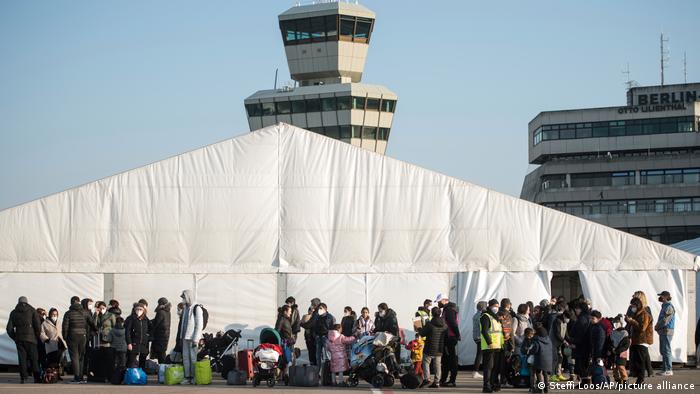
To maintain current levels, Germany needs to welcome 400,000 newcomers annually. While this target has been achieved at various points in the past, the surge in migration during the refugee crisis, particularly from countries like Syria and Ukraine, has left voters skeptical of claims that migration can stimulate growth. Despite promises made in 2015, only around half of the refugees who arrived during that period had secured employment five years later.
Schulte-Suedhoff compares the situation to climate change, a slow-motion disaster that policymakers have been aware of for years. However, he believes that the proposed solutions are inadequate and that insufficient attention is being given to this critical issue.
Germany's working-age population reached its peak at the end of the previous century, but the country managed to postpone demographic decline for a while due to the influx of millions of immigrants and increasing female workforce participation. However, both of these trends are now waning, coinciding with the retirement of the post-World War II baby-boomer generation.
Consequently, the economy must rely on improving the productivity of its existing workforce to drive growth. As a result, overall economic expansion is unlikely to exceed 1% for decades, according to projections from Bloomberg Economics. The International Monetary Fund shares a similarly pessimistic outlook, with Kevin Fletcher, who led a recent IMF mission to Germany, stating that the challenges posed by an aging population will only intensify in the years ahead.
Policymakers have two primary levers at their disposal: increasing the number of workers and maximizing the potential of the existing workforce. However, both options are fraught with difficulties. While migration has been a significant benefit to Germany's economy, the influx of workers from central and eastern European countries is slowing down as living standards in those regions catch up with Germany's.
There has been a rise in visas issued to skilled workers from India, the Philippines, and Indonesia in the past decade, and Labor Minister Hubertus Heil has pledged to make every effort to attract skilled workers. Additionally, Heil, accompanied by Foreign Minister Annalena Baerbock, is currently visiting Latin America to recruit highly qualified individuals.
Officials and executives are also striving to encourage more Germans to enter the workforce and contribute to the economy, moving away from the sidelines.