Get started with boudoir photography
-
 Loading...
 - luke grace
- 20 Apr 2023
- 55 Views
- 0 Like
- 0 Comment
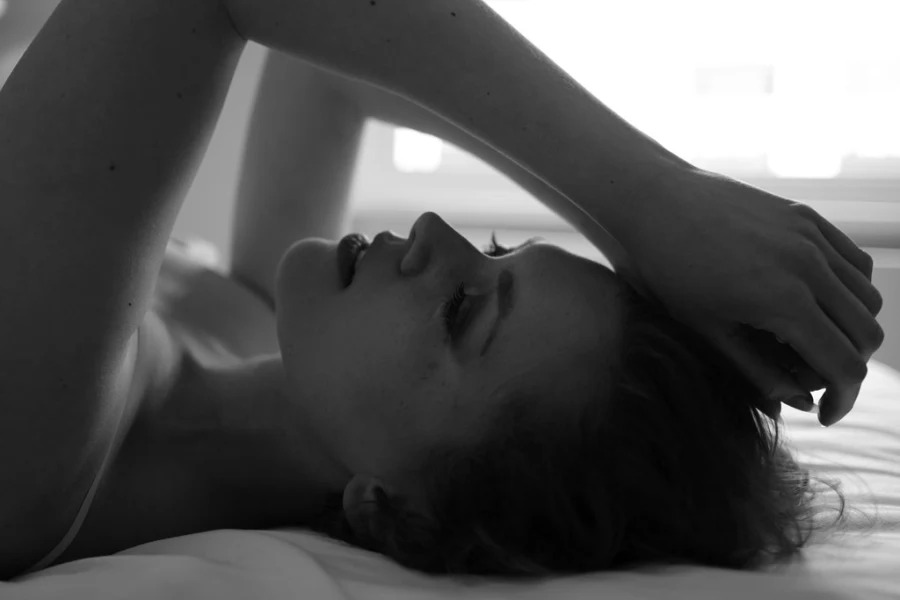
Boudoir photography is booming and many photographers have made it a business. Experienced boudoir photographer Damien Lovegrove shares his expertise in the Fujifilm X system with a DSLR user looking to master this genre
London-based photographer and visual artist LA Creativity shoots portraits and weddings and has recently expanded her repertoire into boudoir photography. As the owner of a Canon EOS 5D Mark III she has also been looking at switching to a smaller, lighter mirrorless kit and has been eyeing up the Fujifilm X camera and lens range.
So we thought it would be a good idea to introduce LA Creativity to Damien Lovegrove, who is not only one of the UK’s most respected boudoir photography practitioners and teachers, but he also made the transition over from Canon DSLRs to Fujifilm some years ago and is something of an X-system expert. We set up a photo shoot in London for Damien and LA with a selection of models and lovely prime lenses.

‘I’ve used Canon’s full-frame EOS R6 mirrorless camera shooting weddings, and it’s a great camera,’ explains LA. ‘It’s really fast, and the image quality is great, but I’m drawn to the look, feel and size of the Fujifilm system. The fact that it’s APS-C is not an issue for me – for seven out of the ten years that I’ve been a photographer I’ve used a cropped-sensor Canon DSLR. For me it’s not so much about the sensor, it’s about the glass. If you’ve got good glass on the front then even on a cropped sensor you’re going to get quality images. You may not be able to enlarge them quite so big, but I’m not making billboards.’
The kit they used
We brought two very different cameras to the shoot for LA to try: an X-T4 and an X-S10. At 465g the X-S10 is considerably smaller and lighter than the 607g X-T4, and also leaves a much smaller hole in the wallet. But both cameras feature the same 26MP APS-C sized BSI-CMOS sensor with image stabilisation, and both come with a three-inch articulated screen, though the X-T4 boasts additional features such as a higher-resolution EVF and weather-proofing to justify its higher price.
More importantly, both cameras offer a very different user experience. Whereas the X-T4 follows Fujifilm’s traditional user interface, with 35mm SLR style shutter speed dials and aperture rings, the X-S10 uses the PASM interface more familiar to DSLR users – making it, in theory, an easier camera for users like LA to transition to. Read More…