Historic coalition marks paradigm shift for French left ahead of June legislative elections
-
 Loading...
 - Lotta Koskinen
- 10 May 2022
- 306 Views
- 0 Like
- 0 Comment
After days of sometimes heated debate, France’s leftist foes buried the hatchet last week, agreeing on a leftist coalition ahead of June's parliamentary polls. The Greens (Europe Écologie-Les Verts or EELV), the French Communist Party (PCF) and the Socialist Party all signed off on a May 4 accord with Jean-Luc Mélenchon's La France Insoumise (France Unbowed or LFI), with only the Trotskyist New Anti-Capitalist Party (NPA) begging off from the deal.
The agreement sets out a joint slate of campaign proposals and apportions shares of constituency nominations to all the allied parties, who have pledged to field a single coalition candidate in each of France's 577 legislative districts next month.
The deal marks the first time in 25 years that the French left has come together to contest the first round of the legislative elections in lockstep. In 1997, the so-called Plural Left joined forces to win a legislative majority, elevating Socialist heavyweight Lionel Jospin to the post of prime minister for five years while conservative rival Jacques Chirac held the French presidency, a power-sharing scenario known in France as “cohabitation”.
Next month's election results will decide how the history books treat this new leftist coalition, but proponents are already eager to liken it to previous iterations: The Popular Front of 1936, for one, is still remembered fondly as a fount of social progress – including paid vacation, the 40-hour workweek (down from 48) – under leader Léon Blum. The Common Programme of 1972, another leftist meeting-of-the-minds, proved fundamental to Socialist François Mitterrand's rise to the Élysée Palace nine years later. The next chapter for 2022's leftist bloc has yet to be written – but the degree to which any union seemed unthinkable just three weeks ago has lent it the lustre of history in the making.
Ahead of April's presidential election, Mélenchon's main leftist rivals, Green candidate Yannick Jadot and Socialist candidate Anne Hidalgo, were scathing on the campaign trail. As Russia invaded Ukraine, Jadot accused Mélenchon of obliging Vladimir Putin. Hidalgo, meanwhile, went so far as to label the charismatic far-leftist an "agent", an "ally" and a "supporter" of the Kremlin strongman.
But the presidential election's April 10 first round had the effect of clarifying the balance of power on the French left. Mélenchon parlayed a mixture of genuine voter conviction and a persuasive pitch for tactical voting into a 21.95 percent score at the ballot box, just 422,000 votes behind far-right leader Marine Le Pen who won a place in the April 24 final duel against Emmanuel Macron. Mélenchon's relative triumph relegated the other leftist forces to also-rans: the Greens’ Jadot scored a mere 4.63 percent, Communist candidate Fabien Roussel 2.28 percent and Paris Mayor Hidalgo, of the once mighty Socialist Party, garnered a miserly 1.75 percent of the vote. Those scores established Mélenchon and his La France Insoumise party as the pivotal force of France's left wing – a kind of sweet political revenge for Mélenchon, himself a former Socialist who struck out on his own in 2008, not least over disagreements with party brass over the European Union.
"The presidential election really confirmed the status of La France Insoumise as the principal force on the left," said political analyst Pascal Perrineau. "The situation was different in 2017, when Mélenchon already scored well (19.58 percent in the first round). His strategy then was to go it alone in the legislative elections while the Socialist Party still had a case to make and could at the time aspire to obtaining a parliamentary group under its own steam," explained Perrineau, a professor at Sciences Po, the political science institute in Paris. Obtaining a parliamentary group in France's National Assembly, key to a party's influence in the lower-house chamber as well as to its financing, requires winning at least 15 seats nationwide.
Five years on, the state of play is very different. The 2022 presidential election opened the eyes of the leftist parties in two ways. For one, the appetite for unity among leftist voters is known to be high – 84 percent of left-wing sympathisers in a May 4 poll by the Elabe firm said they were in favour of an alliance between the top four left-wing parties. But also, for the Socialist and Green parties in particular, it became clear that there was consensus to be found in a programme that breaks with Macron and his neoliberal agenda.
Socialist Party turns its back on recent history
As such, the alliance agreed by the left-wing parties does give top billing to proposals from Mélenchon’s far-left LFI party: a €1,400 monthly minimum wage, a monthly allowance for young people, a price freeze on basic necessities, re-establishment of the wealth tax, the repeal of Macron's flat tax on capital gains, the deployment of “ecological planning” to transition to a greener future, and a push for the establishment of a Sixth Republic, an institutional revamp meant to tip powers away from the executive and towards parliament and the people.
But the most remarkable aspect of the joint measures is surely the about-face made by the Socialists. In pushing for retirement at age 60 and consenting to the repeal of a labour code revamp that was pushed through under Socialist former president François Hollande, the party is clearly turning its back on Hollande's 2012-2017 term in the Elysée Palace and his social-liberal line.
Hollande, for his part, says he "rejects the accord in substance and even on the [allocated] constituencies", as he told regional daily La Montagne last week. The former French president had already warned that an accord between the Socialist Party and La France Insoumise would call into question "the very principles that are the foundations of socialist engagement", telling France Info radio on April 28 that such an alliance would lead to the "disappearance" of the Socialist Party.
Among Socialist proponents of the coalition deal, the response to Hollande's remarks was cutting. "I have trouble imagining that my main preoccupation today would be to listen to what François Hollande has to tell us about what the left is and what loyalty to socialism is," Corrine Narassiguin, the party's No. 2, told Radio J on April 29. "I'd prefer to listen to what the voters told us in the first round of the presidential election. That was a very strong and very clear message."
While the Socialist, Green and Communist parties all agree that Mélenchon should become prime minister if the left wins a legislative majority in June, the accord inked last week is not certain to translate as a working agreement for a coalition government. Remarkably, the four left-wing parties didn't see fit to issue a joint statement on the coalition they agreed, historic as it was; instead, each bilateral agreement gave rise to an ad hoc communiqué from the parties involved – allowing, conveniently, for different wordings tailored to suit each faction's interests.
One issue in particular elicited plenty of debate throughout the coalition negotiations: The notion of willfully flouting European economic and budgetary treaties to suit the coalition's agenda. Green party chief Julien Bayou – who authored a 2018 book entitled "Désobéissons pour sauver l'Europe" (Disobey to Save Europe) – was quick to sign on with LFI on that matter, as long as pulling France out of the EU was off the table. But the prospect of breaking with EU treaties gave the Socialist Party pause. The term "disobedience" was subject to intense debate, not least between Socialist chief Olivier Faure and LFI's Mélenchon. In the end, the terminology the two parties settled on in their joint press release was oblique, to say the least.
"Some speak of ‘disobeying’ and others of temporarily contravening, but the objective is the same: The ability to fully apply our shared programme of governance and to thereby respect the mandate the French people will have given us," the document affirmed.
The Socialists' equivocations aren't surprising. After all, the party's agreement with Mélenchon's far-left faction marks a major turning point in the French political landscape. By falling into step with Mélenchon, Socialist party leader Faure signed off on the leftward shift of his party's centre of gravity – even veering to the extreme left, according to the deal's most fervent critics.
The left’s changing of the guard
In so doing, the Socialist leader caught flak from what remained of the party's veteran heavyweights, dubbed "the elephants". Hollande was clear in his opposition while a former Socialist prime minister (Bernard Cazeneuve) and a former Socialist president of the National Assembly (Claude Bartolone) took the extra step of quitting the party to make their point. Former party chief Jean-Christophe Cambadélis, meanwhile, called on "the Socialists to reject this accord in every manner possible" and Socialist former cabinet minister Stéphane Le Foll positioned himself as "ready to lead the campaign" of potential Socialist dissidents in June.
"The reaction of the elephants is understandable," said Perrineau. "With this accord, the Socialist Party will become an auxiliary to La France Insoumise. As such, it's a total break with the history of the Socialist Party, which had previously been the central force. From now on, the left will redefine itself around the radical force that LFI represents," the professor added.
Negotiations between LFI, the Greens, the Communists and the Socialist Party were also about divvying up constituencies (indeed, some opponents say that it was the deal's overriding goal). Each party earned assurances that it could form an official group in the National Assembly – key to maintaining any political influence – with at least 15 lawmakers elected per party from surefire winnable districts. And despite initial reluctance from LFI, each party is certain to secure public financing as all four will run candidates in at least 50 legislative races – the threshold for unlocking state subsidies: The Greens got the coalition's green light to stand in 100 districts, the Communists in 50 and the Socialists in 70. La France Insoumise gets the rest: More than 350.
LFI's allies also got their way on the coalition's new name. Mélenchon was pushing for the "Popular Union" but in the end they agreed to cover all bases by calling it the "New Ecological and Social Popular Union" (NUPES) to represent the assorted forces involved.
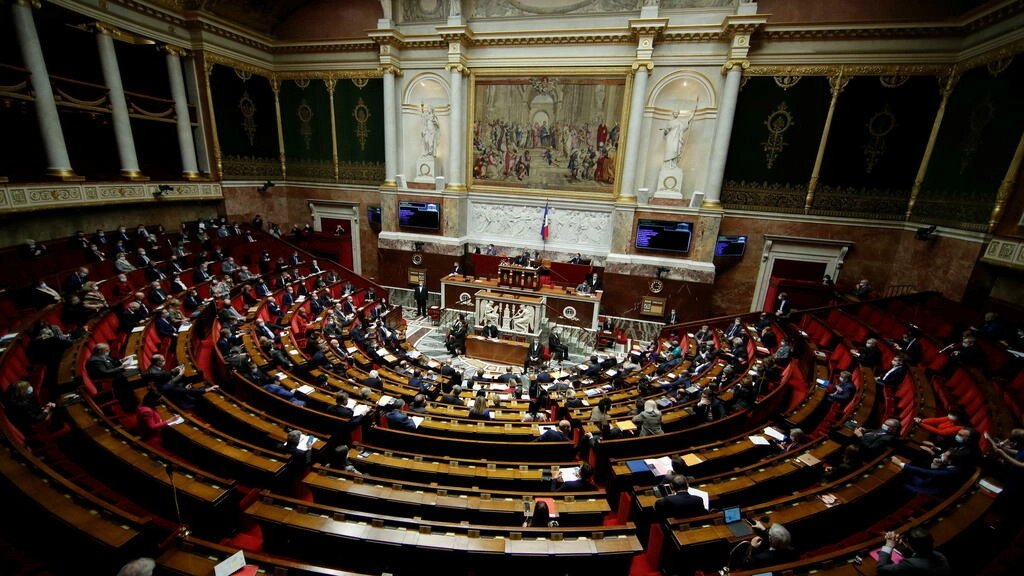
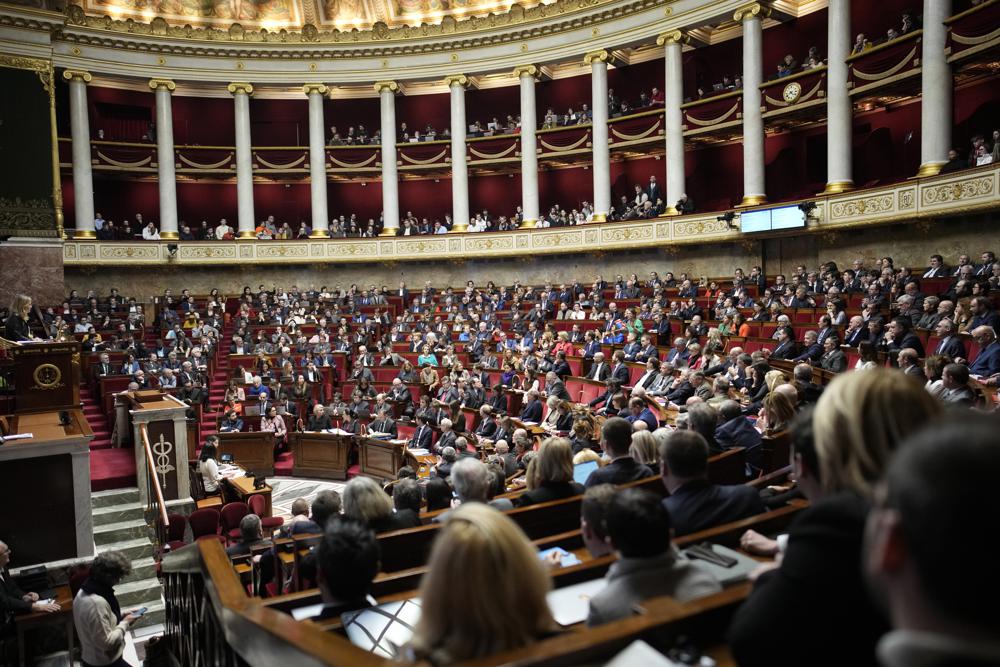
It remains to be seen how the alliance will do at the ballot box. The left has its sights set on winning a legislative majority, but that prospect appears highly optimistic under the circumstances. Since France made the shift to five-year presidential terms (down from seven) in 2002 and rejigged the calendar to have legislative elections follow the presidential vote, the country's freshly elected leader has always won the legislative majority he needed for governing.
Still, Mélenchon is not to be underestimated after so far managing the political tour de force of maintaining his supporters' hopes intact and keeping leftist mobilisation high, despite falling short in the presidential race. Even before ballots were cast in the April 24 run-off for France's top job, Mélenchon was campaigning to be elected as the country's prime minister – technically anathema in France, where it is the president who names the prime minister (although the nominee must enjoy the confidence of lower-house lawmakers). Mélenchon even managed to insinuate himself into the proceedings on election night, making a nationally televised speech some 20 minutes after polls closed. Read More...