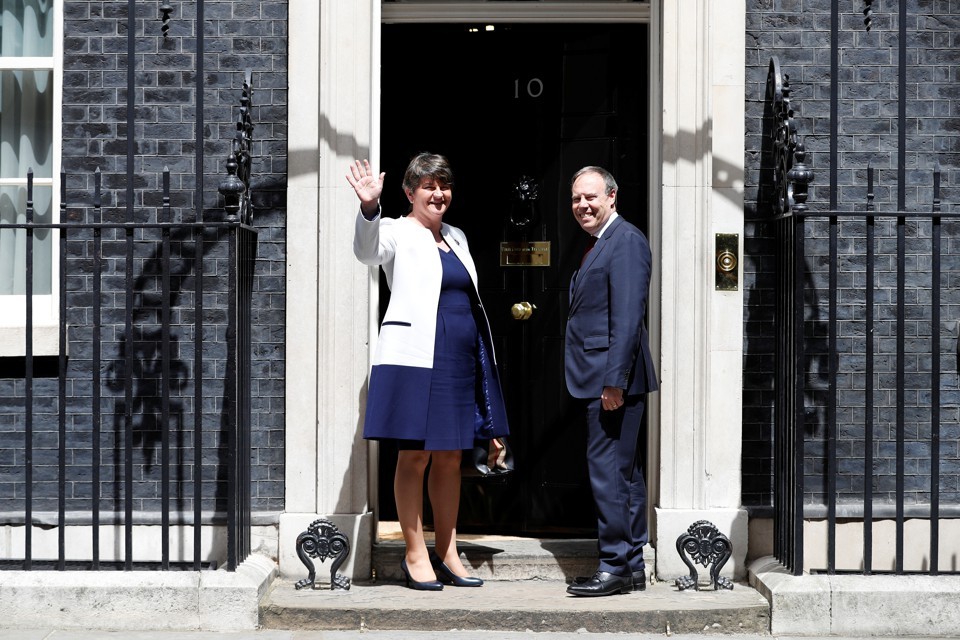
How a Small Northern Ireland Party Became a U.K. Powerbroker
-
 Loading...
 - Havel Romero
- 14 Jun 2020
- 820 Views
- 0 Like
- 0 Comment
A fiercely socially conservative party founded by a Protestant religious radical and sworn to defend Northern Ireland’s place in the United Kingdom has unexpectedly found itself holding the balance of power in Britain.
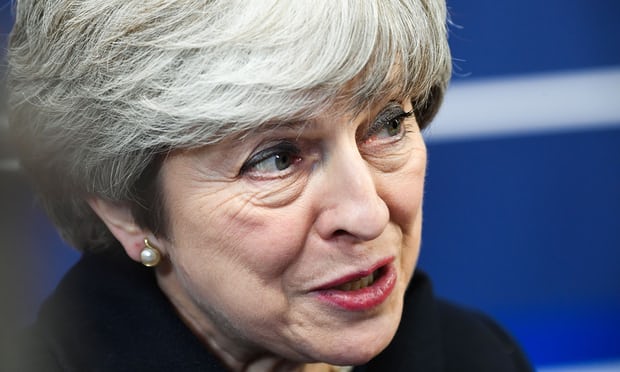
This is the result of a snap election called by Prime Minister Theresa May in a botched attempt to increase her majority and strengthen her hand for looming Brexit talks with the European Union. Instead she lost seats, forcing her to look for a coalition partner to get the parliamentary support she needs.
Enter the Democratic Unionist Party. It was founded by the firebrand Ian Paisley in 1971 at the height of the Northern Ireland conflict, which entailed some three decades of violence between the province’s largely Catholic nationalist minority and largely Protestant unionist majority. The nationalists sought to leave the United Kingdom and unite with Ireland; the unionists sought to keep Northern Ireland in the U.K., where it remains. Over 3,500 people died in the conflict between the two sides. The DUP emerged the biggest pro-British party in the province after a 1998 peace deal, the Good Friday Agreement, brought an end to most of the violence. The party is now seen as the voice of conservative unionist opinion.
For many in Britain, waking up to the election results to find the DUP on the verge of national power came as a shock.
The DUP, like Northern Ireland as a whole, has been largely out of sight and out of mind in Britain as long as the province remained peaceful. The first reports that May might invite the DUP to talks to form a government prompted a flurry of internet searches in Britain; the party became the most frequently looked up in the U.K. after the election, according to Google Trends. The DUP’s website crashed due to the demand.
British news organizations rushed out explainer articles to introduce the party to their readers; at least one journalist mistakenly referred to them as “Ulster Unionists”—a rival party.
Jon Tonge, a professor of politics at the University of Liverpool who co-authored a book on the DUP, suddenly found his expertise in demand. “No one really knew or cared about the DUP. But on election night as the arithmetic began to stack up, suddenly the DUP were the only people who could get the Conservatives over the line and everything changed,” said Tonge, who has been doing continual interviews since.
“A lot of places in England are utterly ignorant about Northern Ireland and its politics. People scrambling around to find out about who the DUP are. ... I mean, the DUP have been around since 1971. The level of ignorance is something else.”
Siobhan Fenton, a freelance journalist from Belfast, described being confronted by a surprising lack of knowledge in the moments before going live on a radio show for the BBC—Britain’s public broadcaster. “One of their researchers, who is very informed in politics and current affairs, asked me: ‘So: unionists are the Catholics, and nationalists are the Protestants, just to check just before we go live,’” Fenton recalled. (The opposite is the case.)
“I had to do a 20-second history of the Troubles and cross-community relations before it started, which was slightly stressful. I’ve had to explain to journalists what is the Good Friday Agreement,” Fenton added. “It can be slightly terrifying.”
Yet the party found itself the unaccustomed center of British attention, and perhaps not the kind it would like. The London-based media soon began raking up the DUP’s awkward aspects: an endorsement by loyalist paramilitaries; an environment minister who was a climate-change denier; an MP who called homosexuality “immoral, offensive and obnoxious.” Opposition lawmakers attacked May’s decision to court the party. Even a former Conservative prime minister, John Major, warned that a deal to bring the DUP into the government risked destabilizing peace in Northern Ireland.
It was an ironic turnaround to the lack of attention Northern Ireland got during the campaign. The DUP, like every other Northern Irish party, was not invited to take part in the flagship pre-election debate on the BBC, even though three other parties with fewer seats in parliament were included.
This has left Britain facing the prospect of a government supported by a party whose policies are largely unknown to the public.
So what does the DUP want? The party’s primary political motivation is defending Northern Ireland’s place within the United Kingdom—a position opposed by the region’s nationalist parties, which won 41 percent of the vote in Northern Ireland compared to unionist parties’ 46 percent. Theresa May has an affinity with the DUP here: Her party's official name is the “Conservative and Unionist Party.” The 2017 DUP manifesto also had much in common with the Conservative manifesto, calling for increases in the minimum wage and defense spending.