How Athens Neighborhoods and Squares Got Their Names
-
 Loading...
 - Perseus Halkias
- 29 Mar 2022
- 369 Views
- 0 Like
- 0 Comment
There are several famous –but strangely named — neighborhoods and squares in Athens and even Athenians don’t know how they first got their monikers.
Plateia Amerikis, or America Square, is an iconic square in Athens. The busy square was named in 1927, as the municipal council wanted to show its appreciation for the philhellenism shown by the United States.
Until then, it was called Agamon Square, or the “square of the unwed.” It was named so in 1887 after three middle-aged Athenians who had a café in the square and were all, apparently quite famously, unmarried.
Until the end of the 19th century, Ambelokipi (which means vineyards in Greek) was an area that was indeed full of vineyards and orchards, which were irrigated by the water of the Adrianian aqueduct that sprouted from Agios Dimitrios from the beginning of the 16th century, when the main pipeline was destroyed.
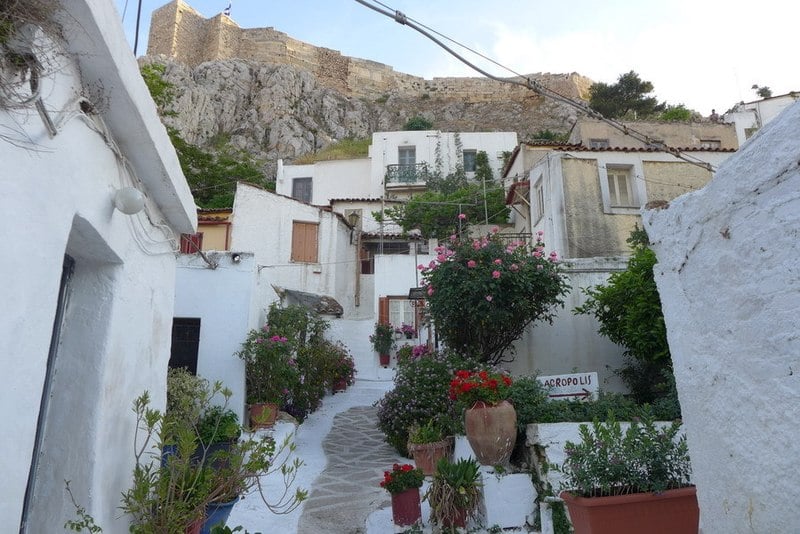
Anafiotika, the neighborhood in Athens that looks like an island
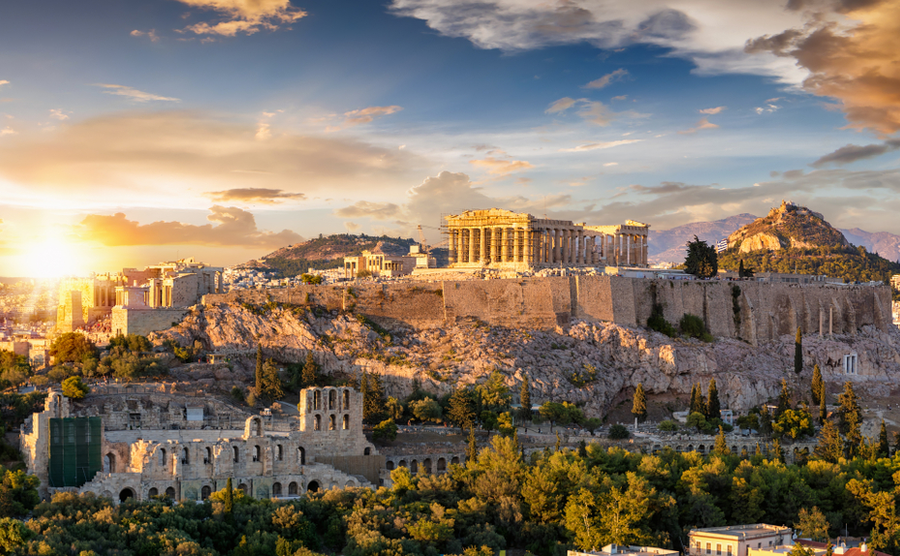
Anafiotika is an Athenian neighborhood on the north slope of Acropolis Hill. Particularly picturesque, with tiny houses and narrow streets resembling those of a Greek island, it was created around 1860 by craftsmen and laborers who had come from the island of Anafi to work on the excavations of the Acropolis, but also to build the capital, which was a relatively new city then.
One of them, on the pretense of building a small church, gathered materials and with the help of a carpenter, he made a house in one night and settled in. In a few days (or nights …) the builder helped the carpenter to make his own home. Thus the name Anafiotika, or Little Anafi, from these two masters from that island.
Vathi, or “deep,” Square, took its name from the lower are of the city, where the waters of the Cycloborus stream ended. Once the area was drained for construction works, Vathi Square was created in 1926.
Gazohori, or Gas Village, was a settlement of shacks and shelters which was cobbled together to the north and west of the gas factory during the first decades of the reign of King George I.
Originally, the poorest families of Athens lived there, and it had a seedy underbelly. Today it is called Gazi and it is a vibrant area full of bars and restaurants; the old gas factory has turned to a complex where exhibitions, concerts and other events are staged.
Votanikos Square was named after the Botanical Gardens, which since 1836 has been where trees were planted under King Otto’s order for the establishment of greenery in the city. The same order stipulated that the Botanical Garden be used by the Physical-Historical Society, medical schools and the institutions of higher education in the city. Read More...