How Is Egypt Facing the Global Crypto Wave?
-
 Loading...
 - Melissa Ajello
- 21 Jun 2022
- 221 Views
- 0 Like
- 0 Comment
The crypto wave is inescapable. Conversations on crypto are everywhere on the internet, from Twitter to Reddit to Instagram. Household superstars like Lebron James now star in advertisements for crypto companies. In the Middle East, Qatar is set to host the 2022 FIFA World Cup with popular crypto trading platform Crypto.com as the official sponsor.
It is nearly impossible to circumvent all the crypto talk, as its flourishing market surpasses USD 2 trillion in trade volume. So, what exactly is crypto and why has it become so big, and so controversial in countries like Egypt?
In short, crypto is an overarching term for blockchains and cryptocurrencies.
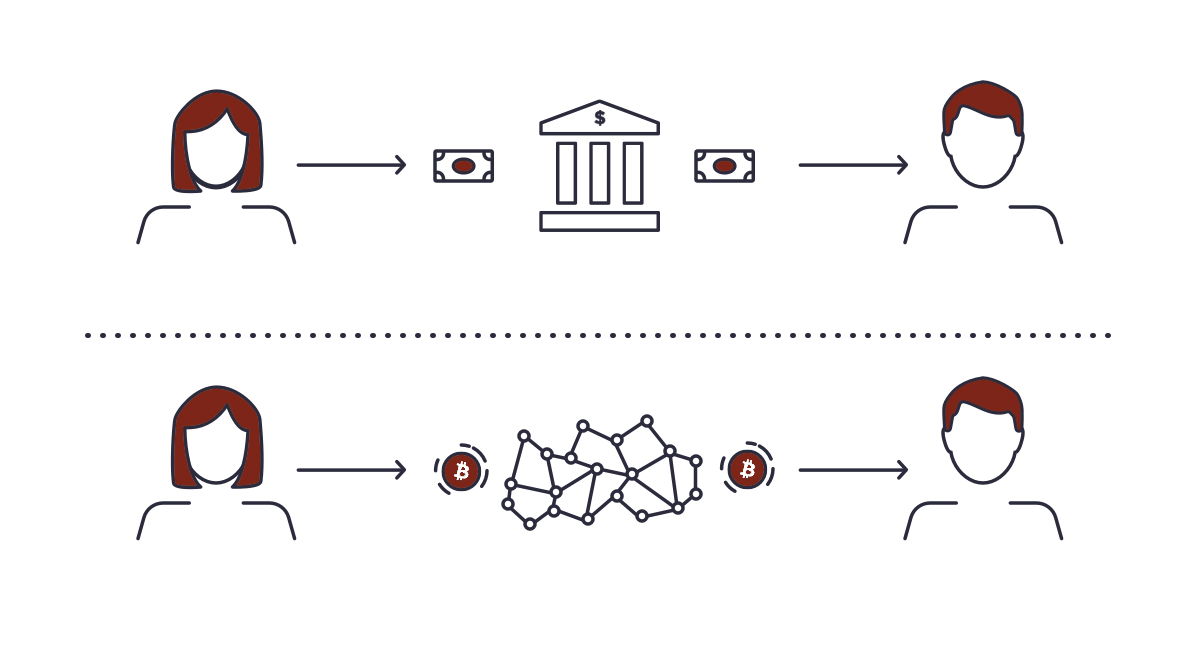
“Bitcoin, Ethereum, Dogecoin … these are all cryptocurrencies. And blockchain is the backbone of cryptocurrency. [Blockchain] is a decentralized ledger, which means no one owns it or decides what goes on it,” explains Cesare Fracassi, professor of finance at the University of Texas.
In a centralized economy, which all countries currently are, every transaction made is funneled and recorded through the ledger of a centralized authority – usually banks and the state. Blockchains and cryptocurrencies cut out such middlemen. For example, Bitcoin was minted as a digital currency in a way that transactions required no centralized authority.
From the perspective of Egypt’s government, which functions primarily in a centralized system, the crypto wave remains an obscure risk to its economy and security.
THE CRYPTO-CRIME CONUNDRUM
Despite being criminalized, crypto trading continues to exist in Egypt. A study conducted in 2021 by Triple A, a crypto consultancy firm, estimated that 1.7 million Egyptians own some form of cryptocurrency.
While a minuscule number within the overall Egyptian population, the statistic indicates an increasing trend in demand for digital currencies.
“The idea of a decentralized currency and investing in it is a bit like investing in the future,” says Ahmed Mostafa, a computer science graduate from the American University in Cairo.
Since cryptocurrencies are banned in Egypt, Ahmed uses a shared offshore account with a trusted friend, to invest in cryptocurrencies abroad.
“I know that stocks are a bit more stable and there are also tons of ways to invest money in general. But for me, someone who doesn’t have that much to invest, the best way was to invest in something that has had huge growth over the last couple of years, enough to make a decent amount of money back from a smaller amount of money invested than I would have in other forms,” Ahmed tells Egyptian Streets.
Ahmed notes that those who do not have the opportunity for an offshore account often use person-to-person (P2P) transfers.
“P2P is also a good substitute for those living local looking to invest, but they can’t really profit from it here as long as they’re in Egypt,” explains Ahmed.
In other words, there is no way for cryptocurrency holders in Egypt to monetize their investment without an offshore account. It is, then, idle in his cryptowallet until a solution occurs.
Nonetheless, Egypt could come to learn from the global crypto-mania and seize the opportunity for a digital era in their economy.
CASHLESS BUT NOT CRYPTO?
Egypt has clearly expressed its stance against cryptocurrencies. In a warning statement, The Central Bank of Egypt (CBE) highlighted that Egypt does not deal with cryptocurrencies due to their volatile nature and anonymity. From a security perspective, the Ministry of Foreign Affairs cites virtual and encrypted currencies as a security threat to Egypt.
There are also traces of truth to these statements. The global growth of crypto, which remains in its budding stage, has fueled crimes, from fraud to terrorist funding to money laundering.
Globally speaking, the process of creating cryptocurrencies like Bitcoin is severely detrimental to the environment. In Bitcoin’s case, the cryptocurrency requires a transaction confirmation known as ‘proof of work’. In other words, computers must solve compounding complex math problems – often requiring several computers to crack the code at the same time. Read More...