How Thai Youths are Blending Traditional Buddhism with Modern Pop Culture
-
 Loading...
 - Genji Cheng
- 07 Aug 2024
- 63 Views
- 0 Like
- 0 Comment
In Thailand, a fascinating phenomenon is emerging, where young people are combining traditional Buddhist beliefs with modern pop culture rituals. This blending of old and new is giving rise to a unique form of spiritual expression, one that is both intriguing and thought-provoking.
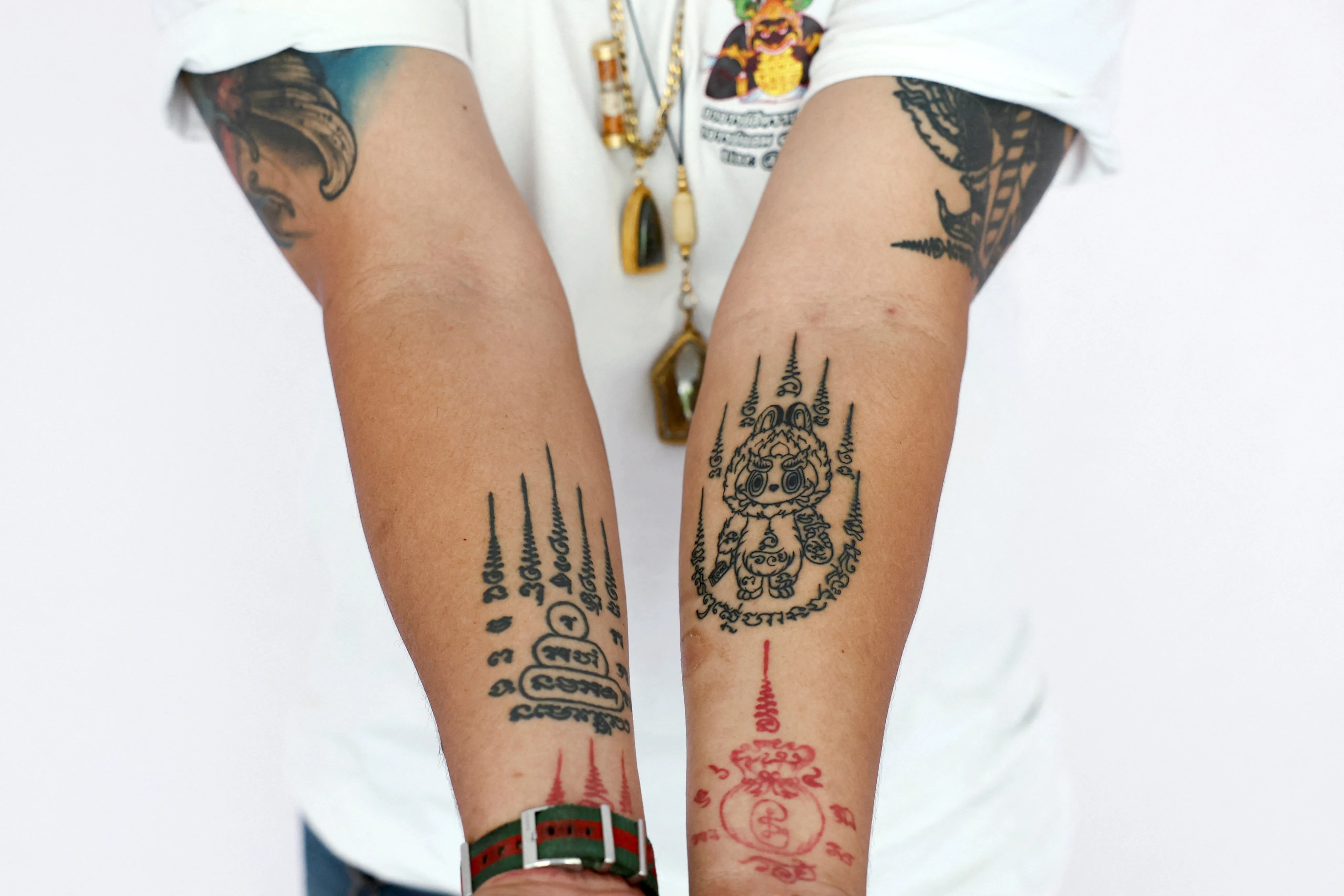
At the heart of this movement is the Labubu doll, a fuzzy, pointy-eared monster created by Chinese toy company Pop Mart. This unlikely symbol has become a sacred emblem for many young Thais, who are incorporating it into their spiritual practices. Master Am Sriphromyan, a renowned expert in Thailand's traditional Sak Yant tattoos, has seen a surge in requests for Labubu tattoos, which she believes carry great meaning for those who desire them.
A New Era of Spiritual Expression
Master Am's work has attracted attention from around the world, with people traveling to her suburban Bangkok home, which doubles as a shrine to a diverse array of deities, spirits, and icons. Her tattoos are not only a form of self-expression but also a way for individuals to connect with Buddhist principles and values.
The use of modern pop icons like Labubu and Molly, another popular figure from Pop Mart's blind box gifts, is helping to reinterpret faith in a modern context. This blending of old and new is providing a fresh perspective on traditional Buddhism, making it more appealing to young people who may have lost faith in organized religion.
A Flexible and Inclusive Approach to Faith
Thailand's religious landscape is characterized by a unique blend of Theravada Buddhism, animist practices, and other belief systems. This flexibility is seen as a strength by many, allowing individuals to incorporate different elements into their spiritual practices.
Surapot Taweesak, a prominent religious studies scholar, notes that Thailand's multi-faith engagement promotes respect for each other's beliefs. However, he also acknowledges that this openness can empower leaders of cults or faiths to exploit their followers.
The Rise of "Pop" Practices
The growing popularity of "pop" practices, such as Labubu tattoos and Leila amulets, reflects a declining interest in mainstream faith among the younger generation. These new forms of spiritual expression are seen as more appealing and relatable, offering a sense of connection and guidance in a rapidly changing world.
For individuals like Phathzichar Wimontsrinarrachai, collecting Leila amulets has become a way to stay connected to her spiritual roots while also embracing modernity. These amulets, which have been blessed by famous monks, serve as a symbol of faith and a reminder of the importance of living a good life.
Conclusion
The blending of traditional Buddhism with modern pop culture is a fascinating phenomenon that reflects the evolving nature of faith and spirituality. As young people in Thailand continue to explore new ways of expressing their beliefs, it will be interesting to see how this movement develops and what implications it may have for the country's religious landscape. One thing is certain, however – the future of faith in Thailand will be shaped by the creativity, innovation, and openness of its young people.