Home Upload Photo Upload Videos Write a Blog Analytics Messaging Streaming Create Adverts Creators Program
Bebuzee Afghanistan Bebuzee Albania Bebuzee Algeria Bebuzee Andorra Bebuzee Angola Bebuzee Antigua and Barbuda Bebuzee Argentina Bebuzee Armenia Bebuzee Australia Bebuzee Austria Bebuzee Azerbaijan Bebuzee Bahamas Bebuzee Bahrain Bebuzee Bangladesh Bebuzee Barbados Bebuzee Belarus Bebuzee Belgium Bebuzee Belize Bebuzee Benin Bebuzee Bhutan Bebuzee Bolivia Bebuzee Bosnia and Herzegovina Bebuzee Botswana Bebuzee Brazil Bebuzee Brunei Bebuzee Bulgaria Bebuzee Burkina Faso Bebuzee Burundi Bebuzee Cabo Verde Bebuzee Cambodia Bebuzee Cameroon Bebuzee Canada Bebuzee Central African Republic Bebuzee Chad Bebuzee Chile Bebuzee China Bebuzee Colombia Bebuzee Comoros Bebuzee Costa Rica Bebuzee Côte d'Ivoire Bebuzee Croatia Bebuzee Cuba Bebuzee Cyprus Bebuzee Czech Republic Bebuzee Democratic Republic of the Congo Bebuzee Denmark Bebuzee Djibouti Bebuzee Dominica Bebuzee Dominican Republic Bebuzee Ecuador Bebuzee Egypt Bebuzee El Salvador Bebuzee Equatorial Guinea Bebuzee Eritrea Bebuzee Estonia Bebuzee Eswatini Bebuzee Ethiopia Bebuzee Fiji Bebuzee Finland Bebuzee France Bebuzee Gabon Bebuzee Gambia Bebuzee Georgia Bebuzee Germany Bebuzee Ghana Bebuzee Greece Bebuzee Grenada Bebuzee Guatemala Bebuzee Guinea Bebuzee Guinea-Bissau Bebuzee Guyana Bebuzee Haiti Bebuzee Honduras Bebuzee Hong Kong Bebuzee Hungary Bebuzee Iceland Bebuzee India Bebuzee Indonesia Bebuzee Iran Bebuzee Iraq Bebuzee Ireland Bebuzee Israel Bebuzee Italy Bebuzee Jamaica Bebuzee Japan Bebuzee Jordan Bebuzee Kazakhstan Bebuzee Kenya Bebuzee Kiribati Bebuzee Kuwait Bebuzee Kyrgyzstan Bebuzee Laos Bebuzee Latvia Bebuzee Lebanon Bebuzee Lesotho Bebuzee Liberia Bebuzee Libya Bebuzee Liechtenstein Bebuzee Lithuania Bebuzee Luxembourg Bebuzee Madagascar Bebuzee Malawi Bebuzee Malaysia Bebuzee Maldives Bebuzee Mali Bebuzee Malta Bebuzee Marshall Islands Bebuzee Mauritania Bebuzee Mauritius Bebuzee Mexico Bebuzee Micronesia Bebuzee Moldova Bebuzee Monaco Bebuzee Mongolia Bebuzee Montenegro Bebuzee Morocco Bebuzee Mozambique Bebuzee Myanmar Bebuzee Namibia Bebuzee Nauru Bebuzee Nepal Bebuzee Netherlands Bebuzee New Zealand Bebuzee Nicaragua Bebuzee Niger Bebuzee Nigeria Bebuzee North Korea Bebuzee North Macedonia Bebuzee Norway Bebuzee Oman Bebuzee Pakistan Bebuzee Palau Bebuzee Panama Bebuzee Papua New Guinea Bebuzee Paraguay Bebuzee Peru Bebuzee Philippines Bebuzee Poland Bebuzee Portugal Bebuzee Qatar Bebuzee Republic of the Congo Bebuzee Romania Bebuzee Russia Bebuzee Rwanda Bebuzee Saint Kitts and Nevis Bebuzee Saint Lucia Bebuzee Saint Vincent and the Grenadines Bebuzee Samoa Bebuzee San Marino Bebuzee São Tomé and Príncipe Bebuzee Saudi Arabia Bebuzee Senegal Bebuzee Serbia Bebuzee Seychelles Bebuzee Sierra Leone Bebuzee Singapore Bebuzee Slovakia Bebuzee Slovenia Bebuzee Solomon Islands Bebuzee Somalia Bebuzee South Africa Bebuzee South Korea Bebuzee South Sudan Bebuzee Spain Bebuzee Sri Lanka Bebuzee Sudan Bebuzee Suriname Bebuzee Sweden Bebuzee Switzerland Bebuzee Syria Bebuzee Taiwan Bebuzee Tajikistan Bebuzee Tanzania Bebuzee Thailand Bebuzee Timor-Leste Bebuzee Togo Bebuzee Tonga Bebuzee Trinidad and Tobago Bebuzee Tunisia Bebuzee Turkey Bebuzee Turkmenistan Bebuzee Tuvalu Bebuzee Uganda Bebuzee Ukraine Bebuzee United Arab Emirates Bebuzee United Kingdom Bebuzee Uruguay Bebuzee Uzbekistan Bebuzee Vanuatu Bebuzee Venezuela Bebuzee Vietnam Bebuzee World Wide Bebuzee Yemen Bebuzee Zambia Bebuzee Zimbabwe
Blog Image

How the world's fastest muscle created four unique bird species

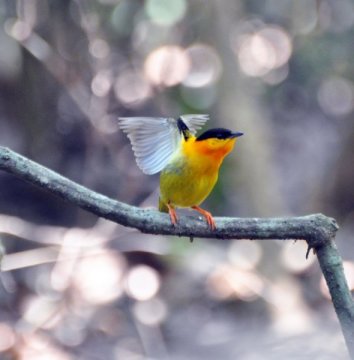
This is a golden collared manakin. Credit: Photo courtesy of Matthew Fuxjager

When the male bearded manakin snaps its wings at lightning speed, it's more than part of an elaborate, acrobatic mating ritual. The tiny muscle doing the heavy lifting is also the reason this exotic bird has evolved into four distinct species, according to new research published in the journal eLIFE by Wake Forest University biologist Matthew Fuxjager.

Fuxjager's previous research showed that the tiny bearded manakin, which measures a little more than four inches long and weighs about half an ounce, has one of the fastest limb muscles of any vertebrate. During an elaborate courtship dance, it uses this muscle -- the scapulohumeralis caudalis -- to make a unique "roll-snap" movement at speeds so fast it's undetectable to the human eye. The roll-snap creates a mechanical popping sound when the wings connect above the back, all to catch the female's attention.

"The ability of this muscle to develop different speeds has shaped the way these manakins have evolved -- allowed for one species to become two, and two to become four," said Matthew Fuxjager, one of the world's few experts on manakin physiology. "This is some of the first work that shows how this happens."

Fuxjager's new study, "Physiological constraint on acrobatic courtship behavior underlies rapid sympatric speciation in bearded manakins," is funded by the National Science Foundation. The research team includes Wake Forest doctoral student Meredith Miles.

Fuxjager, assistant professor of biology at Wake Forest and the study's principal investigator, looks at how the manakins shared a common ancestor 300,000 years ago, but then quickly split into four species: white-bearded manakins to golden-collared manakins, and then to white-collared and orange-collared manakins. The core goal of all his research is to understand how and why animals produce remarkable behaviors.

This study does something that others rarely if ever do: It examines not only how a small group of animals evolved, but also how they behave overall and how a specific muscle in these organisms performs. This three-pronged approach showed the researchers how muscle speed and performance influenced the split into four species.

Fuxjager traveled to Panama and Costa Rica to measure how fast the manakin's scapulohumeralis caudalis expands and contracts when stimulated, and compared recordings of the manakin roll-snap sound display to note variations in speed and duration among species. The patterns show changes in physiology led to changes in behavior -- and then the evolution of four manakin species.

The study of superfast muscles such as the bearded manakin's scapulohumeralis caudalis may inform research into how diseases such as ALS attack muscles in humans, Fuxjager said.

"Humans are interested in motor control and muscle performance -- what makes a muscle fast, what makes it strong, and what might make it both fast and strong," he said. "Understanding how the super-performing muscle in this bird works could lead us to a better understanding of muscle diseases and how to treat them."

Previous Post

Sweet discovery pushes back the origins of chocolate

Next Post

Giant flightless birds were nocturnal and possibly blind

Comments