How to Build a DIY T-Rex Stand for Macro Photography
-
 Loading...
 - Simona Alexandrov
- 15 Jun 2022
- 243 Views
- 0 Like
- 0 Comment
I do a fair bit of macro photography in the studio, for both scientific and artistic purposes. I’ve used tripods, boom poles, and large copy stands to get the camera in close. The setups were often complicated, and I sometimes felt I was concentrating more on the gear than the photograph.
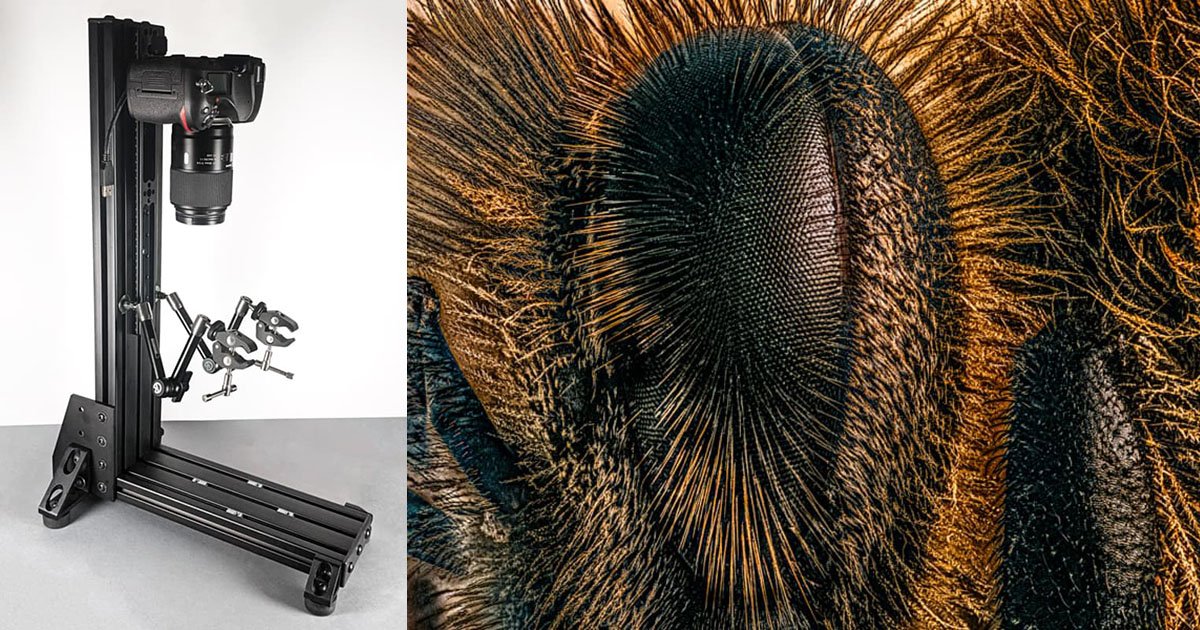
There are many macro and copy stands out there, but I wanted to build a better one, using only offâ€theâ€shelf parts, at a competitive price. I wanted it to be stable and have attachment points for staging and lights. After a few iterations, I had a design I liked. When I added a couple of articulating arms, it looked like a Tâ€Rex. So, that’s what I named it. And, given the stand uses Tâ€slot extrusions, the name seems apt.
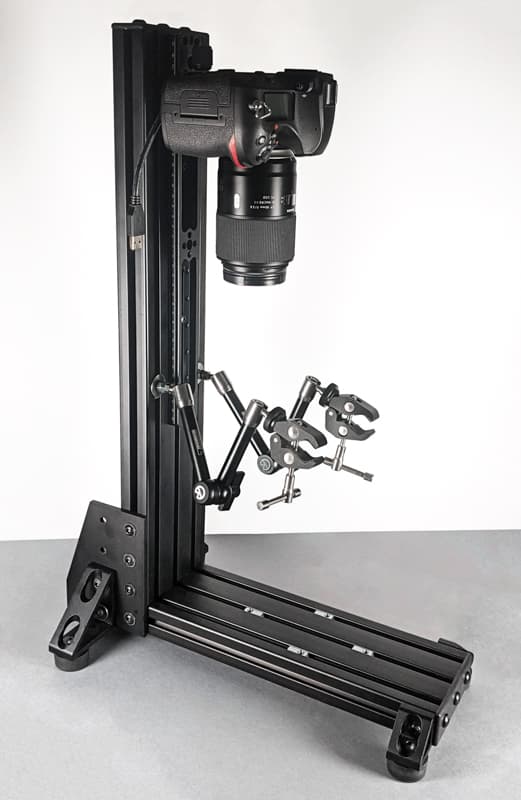
The Tâ€Rex in Action
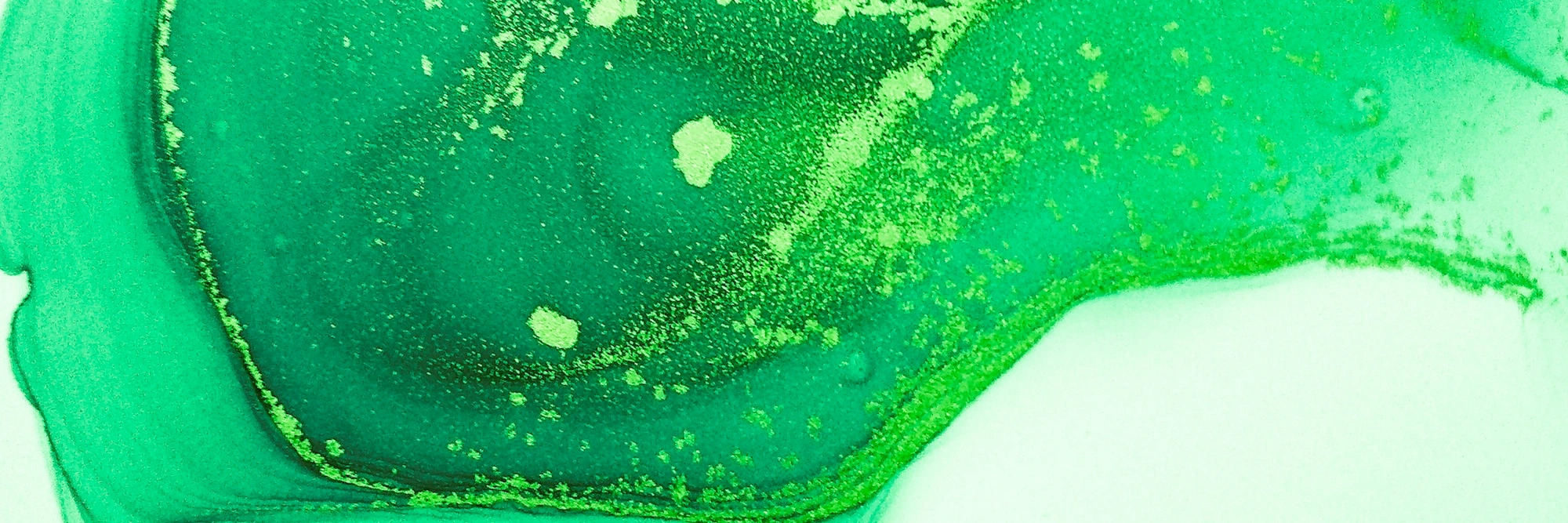
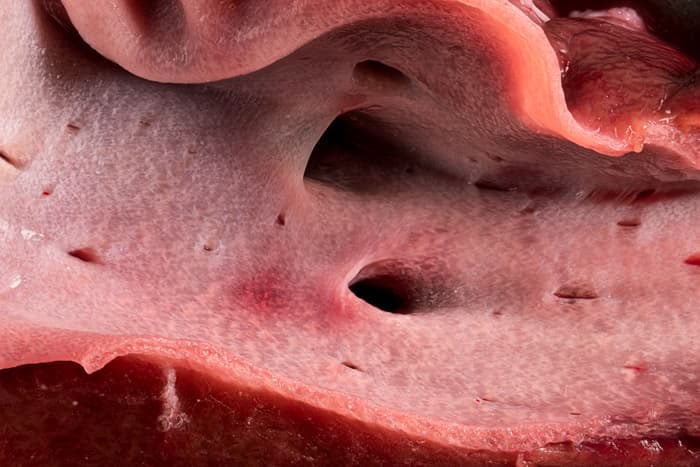
I have used the stand for photographing tissue samples for veterinary pathology This is an image of a bile duct in a sheep liver. The field of view is about 1.4” (35 mm) wide.
I prefer continuous lighting for my macro work; I’ve used small LED panels, LitraTorches, and even small LED flashlights. I attach them with an umbrella mount or on an articulating arm using Tâ€nuts. I’ll write about my lighting techniques in a future post.
You can stage most any small subject with this stand. I also use the stand when I’m not doing macro work. A 35 mm lens can give you about a 20” (50 cm) field of view. Sometimes I mount a ball head on the stand to get the camera farther out from the vertical rail, and to let me change the angle of the view. I’ve even used the stand to hold subjects for photographs while the camera was mounted on a tripod.
Stability
A priority for me is stability. I don’t want to worry about knocking over the setup while working. The bottom horizontal rail is over five pounds (2.3 kg), keeping the center of mass low. This allows the vertical rail to be 24” tall (610 mm), on a footprint that’s only 11” wide (280 mm). The stand is rock solid. If you want more height you might need a heavier or wider base.
Minimizing vibration is important. Because I use continuous lighting and apertures around ƒ/8, shutter speeds are slow. So, when I place the camera on the end of a boom or long post, even a small amount of vibration induces noticeable blur. The rigidity and mass of the stand, plus the vibration-dampening feet, go a long way towards controlling vibration. Also, it’s not possible to remove all vibration, so having your camera and subject firmly connected allows them to vibrate in sync.
Extreme Macro
I do some extreme macro photography, using microscope objectives mounted on the camera in place of the usual lenses. (I’ll write about that technique in another article.) It takes very little vibration to ruin an extreme macro photograph, and the solidity of the Tâ€Rex is crucial.
For extreme macro, I use the computer-controlled WeMacro rail to capture focus stacks, and the Swebo LS001â€4w XY stage to position the subject. I attach them to the Tâ€Rex using dovetail rails and clamps. Read More...