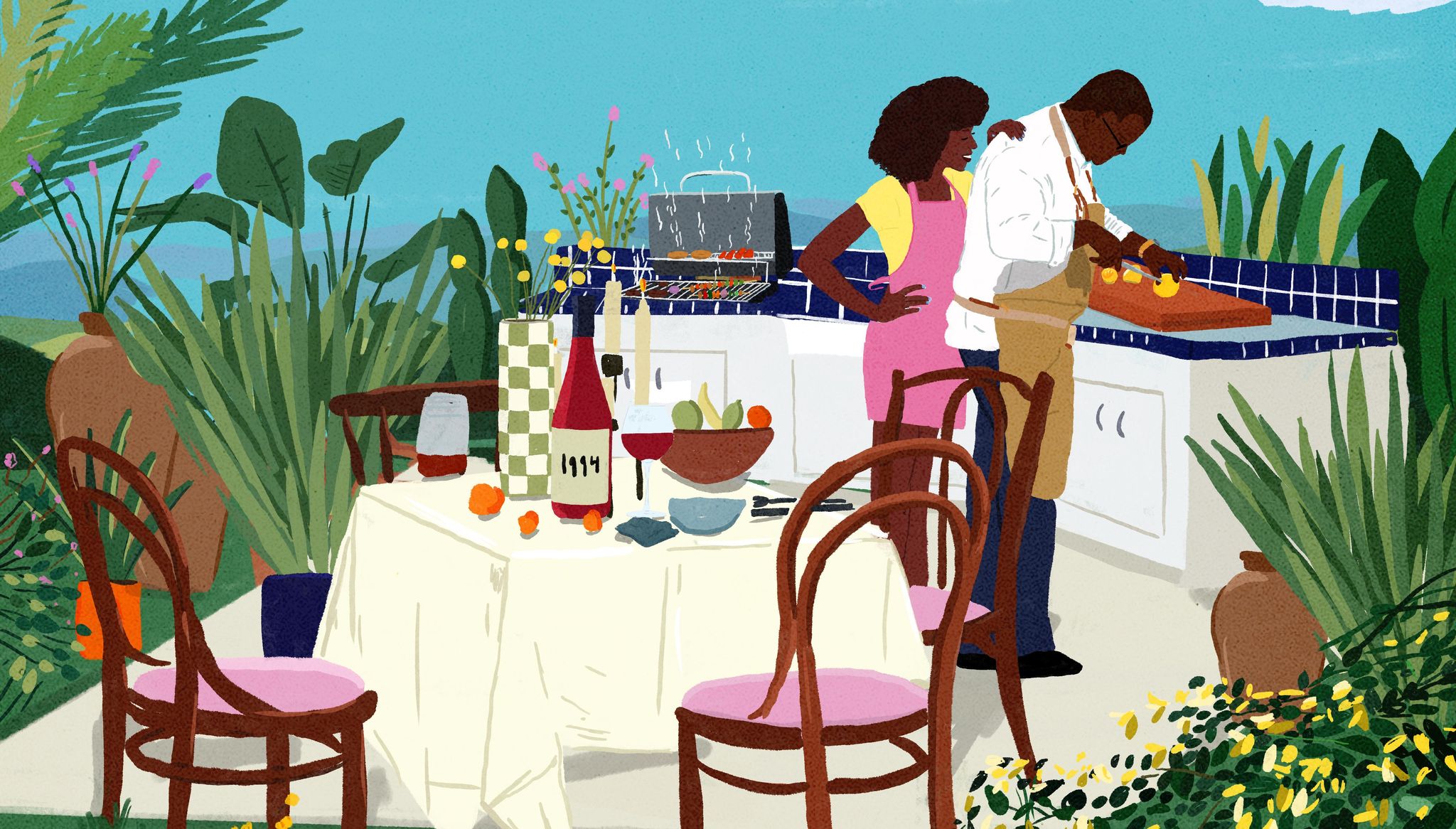
How to Create a Life-Changing Outdoor Kitchen at Home
-
 Loading...
 - Hakim Taleb
- 05 Aug 2022
- 92 Views
- 0 Like
- 0 Comment
Real estate agents report that outdoor kitchens are at the top of the wish list for nearly half of all home buyers. Picture it: freshly woodfired pizzas and ice-cold beverages doled out to your guests under a few strings of twinkly lights, and no one has to set foot indoors to make it possible. Making this a reality, however, is more involved than unfurling an outdoor rug and plopping a chaise on it. You've got to book contractors and shop for appliances as well as plan a thoughtful (and local-planning-board-approved) layout complete with plumbing, electrical, and plants. Kaitlin Petersen, editor in chief of trusted industry resource Business of Home, spoke with the experts to simplify the process. Read on to learn how to have an outdoor kitchen of your own—and boost your home's resale value in the process.
PLANNING
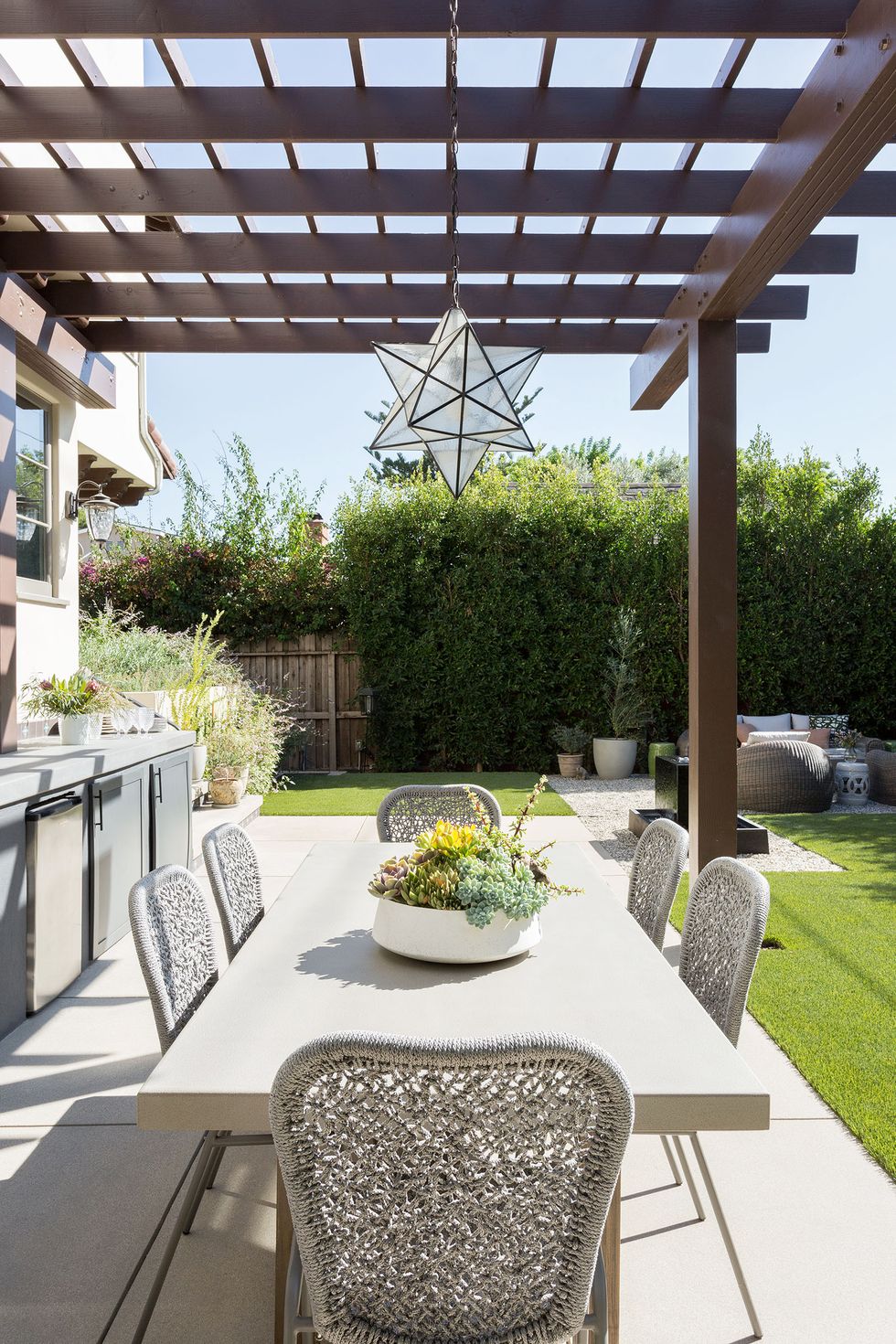
Design a layout. Indoors, your kitchen is confined by walls. But outside, the only limits are the confines of your imagination and your backyard (or zoning regulations about how far from the lot line your setup needs to be). “Build off the capacity the land has naturally given you while taking [into account] aesthetics, budget, square footage, the home’s architecture and how you want the space to function,” says designer Theresa Ory. Many of the design principles you’d use in your interiors still apply—for example, creating “zones” that maximize efficiency for food preparation.
Don’t forget about landscaping. “The surroundings play a major part in the feeling you get from being out there,” says designer Quintin Tate of Twenty Sevyn Interiors. What do you want to be looking at while you stand at the grill, or while your guests are bellied up to the island? If you’ve got an unsightly shed or a messy neighbor, it’s worth considering how to adjust the layout accordingly.

Budget strategically. The actual cost of adding an outdoor kitchen to your property depends on what you’re looking for, scope and design-wise. But the materials, labor (concrete doesn’t pour itself), and appliances for a hardscaped space can quickly add up: “Are we talking about a sweet cottage with a little outdoor vignette? That might be 20,000. Or is it a covered space, or more like an indoor kitchen in features and size? Better plan on spending at least 50,000, and probably more,” says Ory.
While clients often think of their outdoor spaces as secondary to the main house, designer Linda Hayslett says to expect to budget as much (or more) than the cost of your indoor kitchen. “While interior kitchens have hard surfaces, outdoor kitchens have really hard surfaces,” she explains. “Things like laying stone or [bringing in] trucks to lay the rebar for the concrete—it’s a big expense.” Appliances can also push the budget upward thanks to the extra costs associated with weatherproofing. (You’re not just asking that refrigerator to keep your drinks cold; it’s doing the work in the 90-degree sun, which requires extra insulation.) “I always advise budgeting for good barbecues and appliances, because they are outdoors, and the sun is going to do damage. You want to get the best product so it lasts as long as possible.”
If resale is top of mind and you’re leery of investing, take heart: More outdoor space has been a major driver for home buyers for the past few years, and real estate agents say that a full outdoor kitchen is at the top of the wish list for nearly half of all buyers—especially in warmer regions where outdoor entertaining is a year-round activity. Read More...