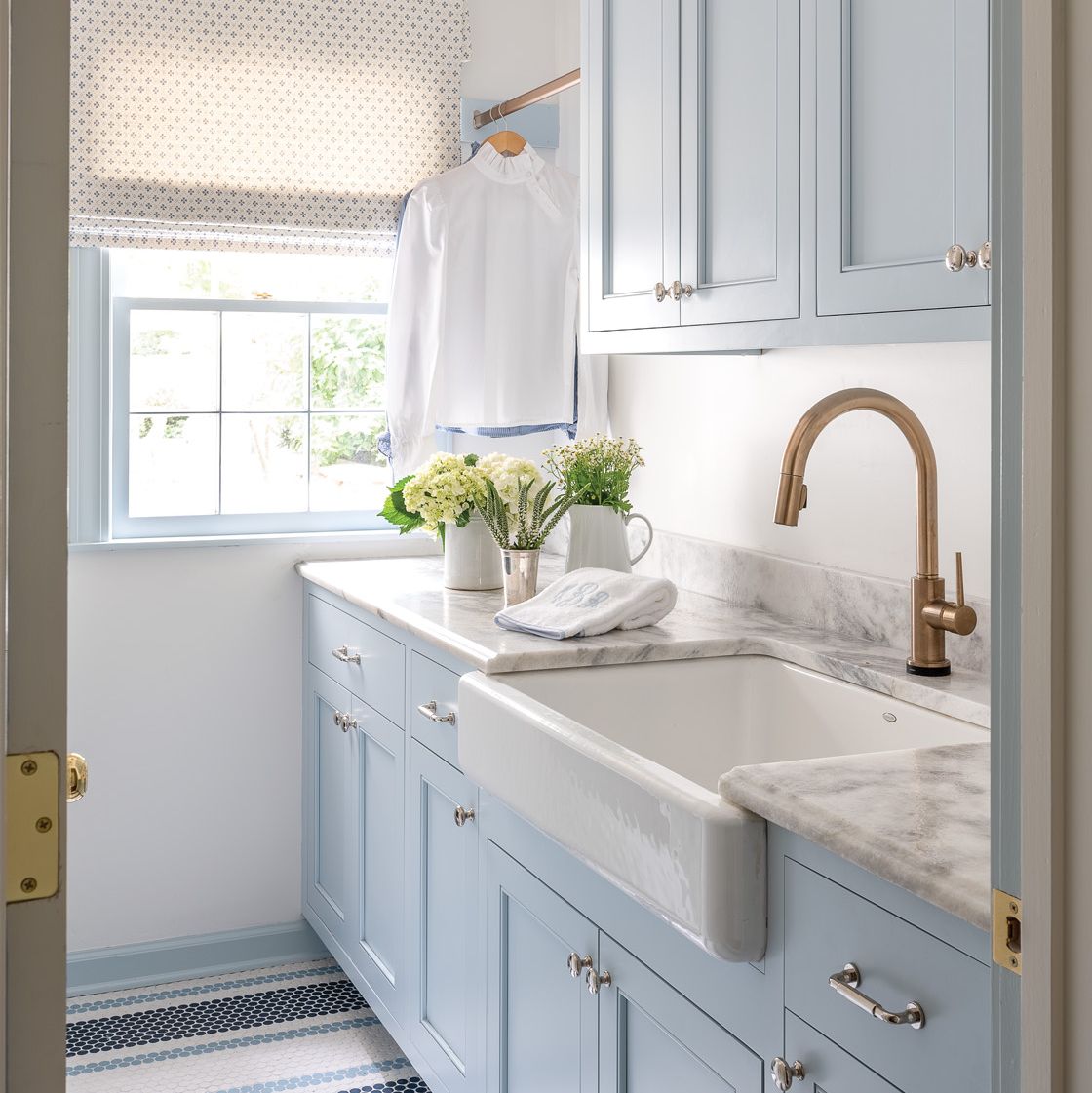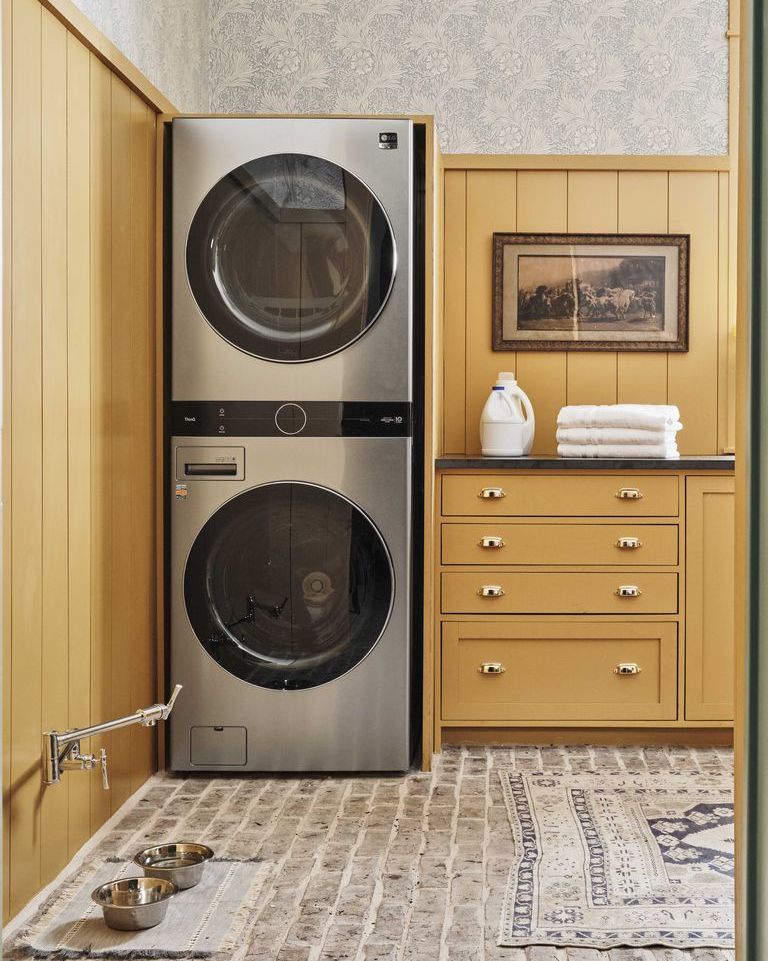
How to Design a Laundry Room That's Both Functional and Stylish

If you were to ask anyone what house chores they least like doing, I'd bet that laundry would be among the most popular answers. Between washing, drying, and folding, it can feel like a daunting and seemingly endless task. But unless you're in the habit of tossing out your clothes whenever they get dirty, it's a chore that has to get done. Luckily, a well-functioning laundry room can make the work feel seamless. Whether you're building a laundry room from the ground up or renovating an existing space, there's a lot to consider between location, layout, appliances, materials, design, and organization (told you it was a lot!). With a process that can feel as daunting as the chore itself, we thought we'd make it easier for you. Ahead, hear from designers and experts about how to add a laundry room to your house—or renovate an existing one.
Picking the Right Location
Location is crucial. "The most important thing to consider is how you live!" says designer Maggie Dillon. Sure, throwing your washer and dryer in the basement might work from a functionality standpoint, but is it practical? "The laundry room is the most key player in day-to-day family life apart from the kitchen," adds designer Katherine Melvin. "If the laundry is easily accessed, it keeps things running smoother."
Melvin argues, "the laundry should be as centrally located as possible." Other designers suggest selecting a location closer to messes, like designer Katie Rosenfeld, who says, "it should go where the dirty things emanate!" If you ask designer Kelly Finley of Joy Street Design, she finds that her clients prefer their laundry within arms-reach of the bedrooms. "Then it's not a huge hassle to move your clothing from the laundry room and back," she says. "If we're lucky, we can put it in two places."
While it might sound luxurious to have two laundry set-ups, designers argue that it's actually a creative no-reno solution. "If your existing laundry room isn't in the perfect spot, add secondary machines in an area that's more convenient for you," suggests Dillon.
But if you're limited by an existing floor plan, a lack of space, or budget concerns, perhaps the best location is wherever you can squeeze it in. "If there's no dedicated laundry room, many people will have their washer and dryer in the kitchen, under the counter, or in a bathroom," says Laura Johnson, Research & Development Analyst for LG Electronics USA. "There's already existing plumbing set up in these areas, which allows homeowners to save more money." If none of these areas work, try incorporating your laundry into your design. "See if you can figure out a way to hide the machines. Can you build out a surrounding cabinet that looks like storage or a built-in credenza?" says Dillon. "I don't see a wrong answer!" In any case, whatever space you choose will need to meet certain technical requirements.
What Does a Laundry Room Need?
1.Water
You can't wash your clothes if you don't have power or water. It may seem obvious, but making sure your laundry room is set up with access to both is essential. While you'll want to call an electrician and a plumber before making any decisions, you can get an idea of possible locations by checking out your existing floorplan. Situating a laundry room near a room that already has plumbing, like a bathroom or kitchen, will make it easier (and more affordable!) for a plumber to hook up your appliances. (For those without a designated laundry room, save money by converting an unused pantry or closet in these areas.)
2. Power
Similarly, you'll need to make sure your outlets can handle the electrical needs of larger appliances. According to the National Electrical Code, a laundry room requires at least one 20-amp circuit for receptables serving only laundry equipment. This can service both a 120-volt washer and gas dryer. An electric dryer will require it's own 30-amp, 240-volt circuit with four conductors.
3. Ventilation
It's also important that the room has proper ventilation. Washers and dryers produce a lot of humidity, which can be a breeding ground for allergens, like mold and mildew. "Mildew builds up when moisture is allowed to stay around the room," says laundry expert and host of HGTV's Laundry Expert, Patric Richardson. Not only will you need a dryer vent with direct access to the outdoors, but you'll also want a window or exhaust fan to help reduce humidity in the air. If you don't have a window, try adding a fan or dehumidifier to rid the space of excess moisture.
Picking the Right Layout

Laundry room layouts are similar to kitchen layouts in that the right one can make a space run more efficiently. Your layout will largely depend on the size of the space you're working with. If you're adding a dedicated laundry room, Melvin suggests a size of 8' x 14'. "I've found these dimensions to be ideal," she says. Of course, not everyone has the luxury of creating a room according to the perfect specifications, so you'll want to pick a layout that makes sense for the space you do have (more on that below!).
Aside from space, you'll also want to take your lifestyle into account. Some homeowners might want room to fold clothes, so they'll opt for a layout that prioritizes counter space. If storage is what you're after, pick a layout that has plenty of vertical space for shelving and cabinetry. As celebrity designer Brigette Romanek tells us, "a good room layout will make all the difference. Read More...