How to Make DIY Foldable V-Flats for Photography Lighting
-
 Loading...
 - Adonis Vera
- 28 Jul 2022
- 89 Views
- 0 Like
- 0 Comment
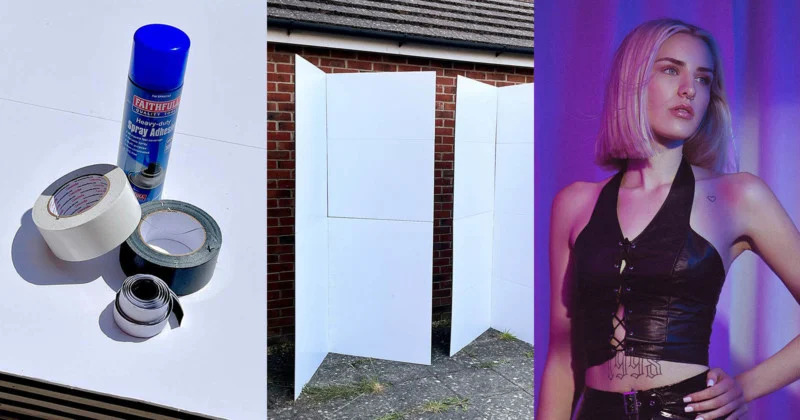
I’ve used poly-boards, bounce-boards, and even white sheets and white walls as lighting modifiers to soften the light in the past, but arguably the quickest and most efficient way to instantly achieve beautifully soft light, is the V-Flat.
What is a V-Flat?
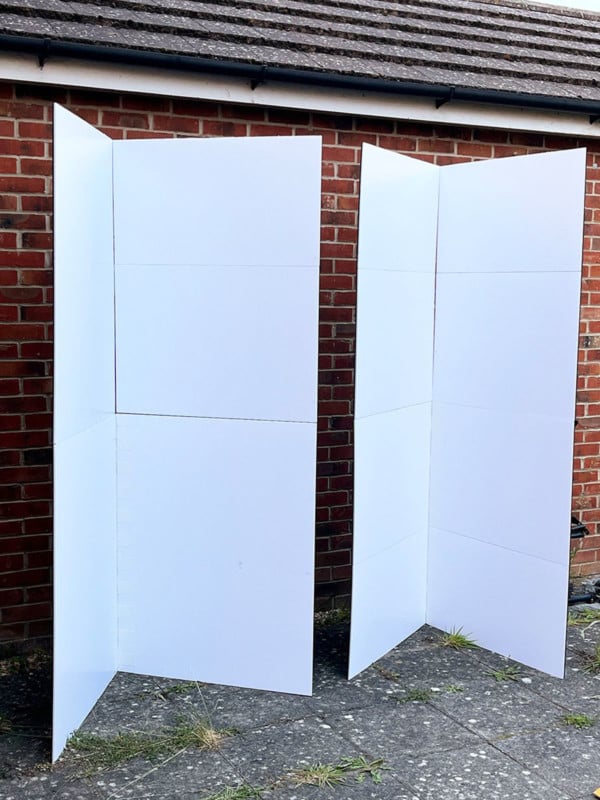
In its simplest form, a V-Flat is 2 large sheets of white board joined together on the long edge. Imagine two regular white doors hinged together at the sides and it’s this resulting ‘V’ shape that allows them to stand by themselves without the need for further stands and supports. Fancy V-Flats are even black on the other side and the ultra-supremo ones are even foldable for storage too!
What Does a V-Flat Do?
A V-Flat can do several things in the studio, but they’re best used as a way to spread light over a wide area. This resulting light from this is often extremely soft and flat, and although some photographers will use this as a key light, you’ll more likely find this very soft light being used as a fill for portraits.
The other popular use for V-Flats is to take advantage of their black reverse side. Inverting the V and using the black sides of the V-Flat will help reduce bounced light in a studio and is referred to as ‘negative-fill’. This is a useful technique for adding contrast to a shot where you want the light to fall off very quickly from the brighter side of the subject. This is especially useful in those very bright studios with white walls, ceilings, and floors where light ordinarily bounces everywhere.
How Do You Use a V-Flat?
There are several ways to use a V-Flat, but ultimately the most popular way is to position your V-Flat open at a 45-90 degree angle and then place your light between the sides pointing back into the white V. The light will bounce off of the big white walls you’ve created and result in a beautifully soft light that is surprisingly controllable thanks to how you position and angle your V.
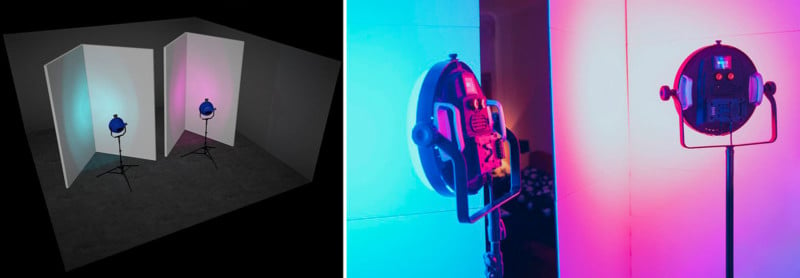
I’ll discuss other ways to use your V-Flat later, but for now, let’s look at how to make our own DIY foldable V-Flat.
Making your DIY Foldable V-Flat
Before we jump in, there are a couple of things you need to ask yourself and check before we start cutting and sticking…
How Tall Do You Want Your V-Flats?
Mine ended up being 84”/214cm tall. It started out being a little taller, but I wanted to use it in my home studio, so I cut it down to its current height for that. My V-Flat height consists of two A0 sheets of foam board stacked atop one another, this resulted in a height of 92”/237cm which was a tight fit at home for the ceiling, so I simply cut a little off the top.
Regardless of the size I ended up with, if I was to make these again, I’d still have made the larger version and cut it down afterward as you’ll likely be saving money by buying standard-size foam board, even if that’s bigger than you need. So buying larger and cutting afterward will likely still be cheaper than a custom size to begin with. It’s still worth bearing in mind now though. Read More...