How to see Thailand's temples, rainforests and reefs on a budget

However, the cost of a trip can vary wildly depending on where you go and the levels of comfort you insist on when you get here. Spend too much time in Bangkok, rack up the scuba dives, take lots of tours and drink lots of bottled beer, and your budget will shoot northward.
Here are our top tips for traveling further for less in Thailand.
What are cheap times to visit Thailand?
Prices for accommodation and transport shoot up from November to March, coinciding with the driest weather and travel-friendly temperatures. The July to September low season is the rainiest time of year; some ferry routes and island resorts close down completely, but accommodation prices drop significantly. Hotel rates also dip during the spring and fall shoulder seasons, which can be a rewarding time to visit without the winter crowds.
Air travel into Thailand can be surprisingly low
Bangkok is one of Asia’s cheapest destinations to reach by air, particularly if you come with Qatar Airways, Etihad or another Gulf carrier, but prices creep upwards during the peak winter season. If flights to Bangkok are looking costly, investigate flights to Singapore, Kuala Lumpur and other Asian hubs, and see if you can find a cheap connection to Bangkok on Air Asia or another budget carrier.
Alternatively, connect to Bangkok by train. Regular trains run from Johor Bahru – just over the causeway from Singapore – to KL, Butterworth (for Penang) and north along the isthmus to Bangkok, for around US$80 one way. It’s one of Asia’s most enjoyable rail journeys.
Get out of the airport without breaking the bank
Most new arrivals fly into Bangkok’s busy Suvarnabhumi International Airport, 30km (19 miles) east of Bangkok, though a few budget carriers still use Don Mueang International Airport near Chatuchak Weekend Market. At either hub, eager agents will try to talk you into expensive airport taxis.
Instead, take public transport: Suvarnabhumi has Airport Rail Link trains that connect with the downtown Skytrain and MRT network, and a free shuttle bus to a local transport terminus with cheap city buses into the center. Don Mueang has regular overground trains and slow but inexpensive local buses to the middle of Bangkok.
At airports all over Thailand, you can often find a cheap taxi ride by flagging down a cab on the highway outside the airport-terminal complex, avoiding airport charges. Just remember to check if any highway tolls apply for the journey into town.
Stay in homestays or hostels
Accommodation prices in Thailand have been climbing steadily for years, in line with rising standards. Many backpacker places are edging into boutique-hotel territory, with cafés, bars, Wi-Fi and pools, and the US$5 box rooms of old are a dying breed.
To keep a lid on costs, sleep in dorms; rates start around 250B (US$7.50). For not too much more, you can find basic rooms and bungalows with shared bathrooms and fans rather than A/C (or central air-conditioning instead of a unit in every room). Sharing triple and quad rooms can be a great way to save if you’re traveling with friends.
Camping can be astonishingly cheap, with rates at many national parks starting from 30B (US$0.90) per person. Homestays are another inexpensive option in rural areas; rooms tend to be rustic but comfortable, and you get authentic home cooking and cultural immersion into the bargain. Also look out for discounted rates at hostels and budget hotels via booking sites such as Booking.com and Agoda.
Skip internal flights and tourist minivans for local buses and trains
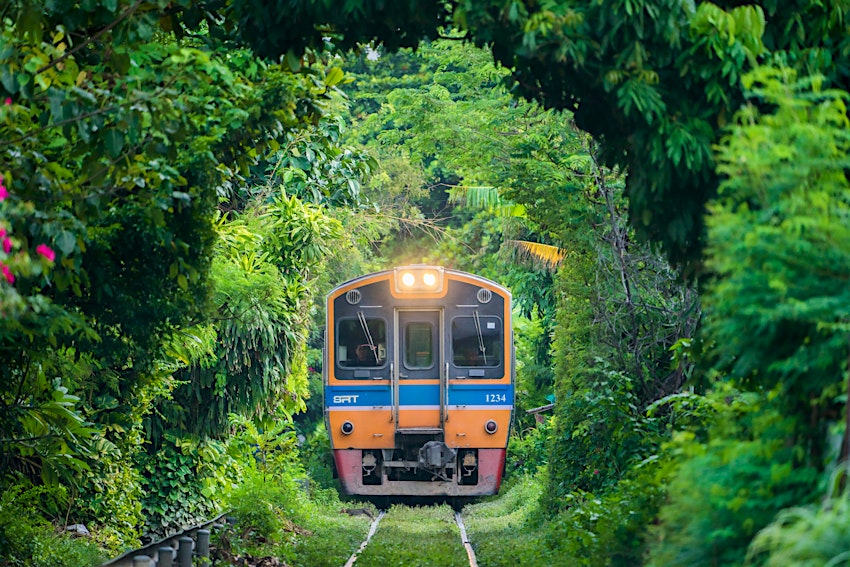
Even if you stick to budget airlines, flying internally in Thailand and making use of those oh-so-convenient tourist minivans will ratchet up your travel costs. Instead, use public buses or travel in second- or third-class carriages on the trains.
If you don’t mind sleeping in a reclining seat, you can save the cost of a berth (and a hotel room) by taking a slow overnight train or overnight bus. Buy tickets directly from bus and train operators to avoid travel-agent fees.
Buses run by the state transport company Baw Khaw Saw (BKS) are usually cheaper than private buses. Most bus stations have ticketing halls where all the companies advertise their destinations, so you can compare fares. Ordinary and express buses are cheaper (but less comfortable) than VIP buses or luxury VIP24 or VIP32 buses, named for the number of seats on board. Read More…