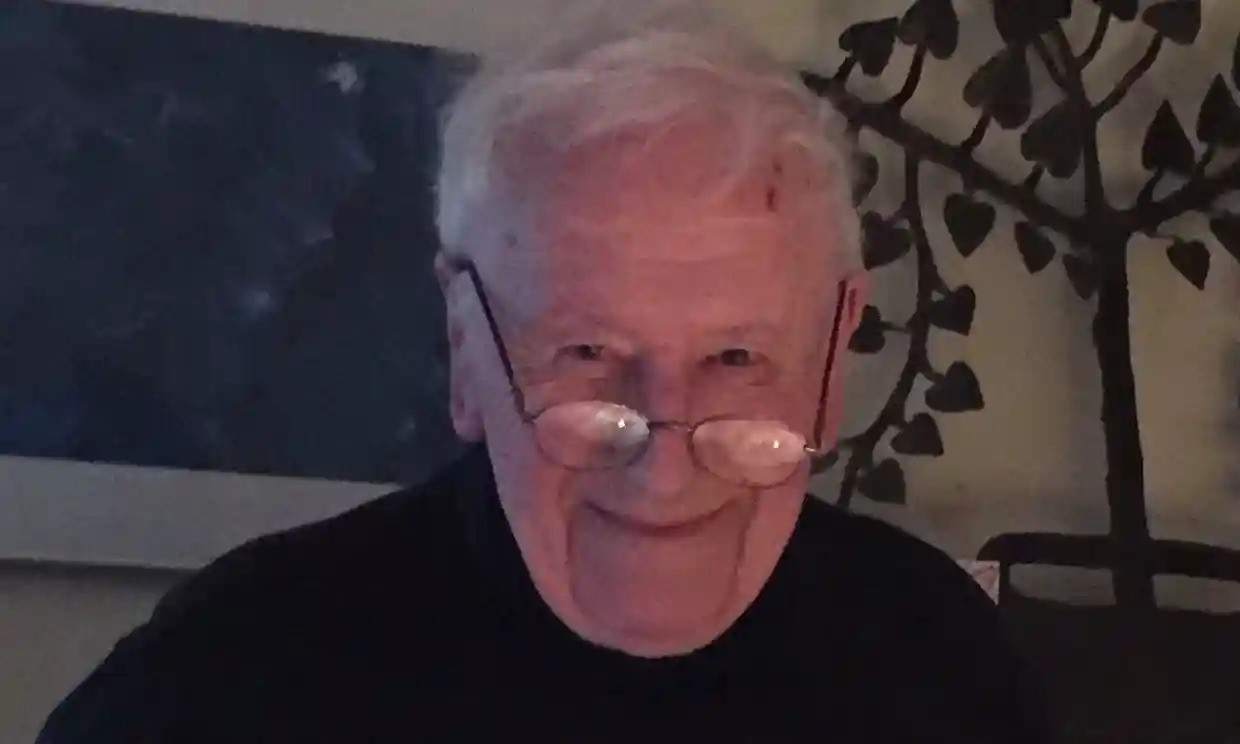
Hugh O'Shaughnessy obituary
-
 Loading...
 - Vicente Gonzalez
- 16 Mar 2022
- 381 Views
- 0 Like
- 0 Comment
As the coup against President Salvador Allende in Chile unfolded on 11 September 1973, Hugh O’Shaughnessy was one of the few foreign correspondents in the capital, Santiago, and was able to give an eyewitness account of the seizure of power by the armed forces, and the death of the president.
Forty years later, O’Shaughnessy recalled that he walked back to his hotel through the deserted streets, hands in the air, to find Pinochet’s rich supporters already celebrating victory: “They whooped as he announced on television the closing down of congress, the political parties, the trade unions and the judges.”
In order to report as a freelance journalist on Latin America, O’Shaughnessy, who has died aged 87, had taken the typically bold step of uprooting his family to the Chilean capital in 1966, when he first met and became friends with Allende, then the Socialist party leader. O’Shaughnessy’s view that the 1973 coup was engineered by the US made him a trenchant critic of that country’s role in Latin America from then on.
In October 1983 he again found himself at the centre of events on the island of Grenada in the Caribbean when US forces moved in to overthrow the revolutionary government – the only occasion when there was direct confrontation between US and Cuban troops. He later published a book about his experiences there: Grenada: Revolution, Invasion and Aftermath (1984).
For 30 years, O’Shaughnessy seemed to appear everywhere, from Argentina to Mexico, usually properly suited and booted, and taking advantage of his vast network of friends and contacts to send perceptive reports back for the Financial Times, and in later years the Observer and the Guardian, as well as being a regular contributor to the Tablet, the Catholic weekly.
A lifelong Catholic, he also wrote regularly about the church, in particular its poor record on human rights in Argentina, Chile and elsewhere. He was a staunch supporter of the leftwing clergy in Nicaragua’s revolutionary Sandinista government, and of Oscar Romero, archbishop of El Salvador, and wrote a biography of Fernando Lugo, the Roman Catholic bishop who was president of Paraguay from 2008 until 2012 (The Priest of Paraguay: Fernando Lugo and the Making of a Nation, 2009).
At the same time, he was scathing in his contempt for more reactionary elements in the church, such as Marcial Maciel Degollado, the founder of the Legionaries of Christ, whom he memorably described thus: “The pushy Mexican priest [was] the bisexual pederast, drug-addicted lover of several women and father of three who hoodwinked a succession of popes.” Read More...