IMF sees global economy growing faster than expected
-
 Loading...
 - Bright Makeme
- 01 Feb 2023
- 83 Views
- 0 Like
- 0 Comment
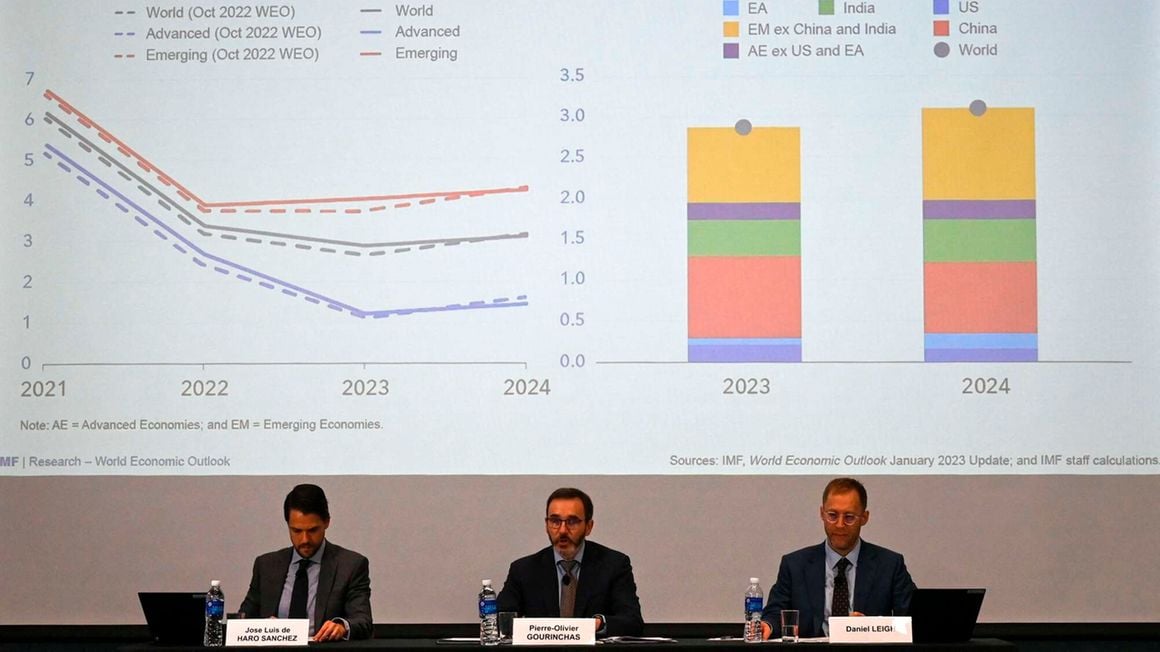
The International Monetary Fund (IMF) has revised global growth projections upwards by 0.2 percent, following China’s reopening and monetary tightening in most economies worldwide, which has slowed down inflation.
The multilateral lender said the global output (gross domestic product) growth projections will, however, remain below the historical average of 3.8 percent, recorded between 2000 and 2019, compounded by the prolonged war in Ukraine, before rebounding to 3.1 percent in 2024.
“The outlook is less gloomy than in our October forecast, and could represent a turning point, with growth bottoming out and inflation declining,” IMF’s Chief Economist Pierre-Olivier Gourinchas said at a press conference on Tuesday.
In its World Economic Outlook report released last October, IMF had forecasted the global economy to decelerate to a 2.7 percent growth rate from the 3.2 percent expected for 2022, due to the continued war in Ukraine, rising inflation and reduced economic activity in China following Covid-19 lockdowns.
Less supply chain disruptions
But with China reopening its economy to both domestic and international trade, the IMF said in the WEO (WEO) update released Tuesday that less supply chain disruptions are anticipated in 2023, production will increase and demand will rise, resulting in a higher GDP growth rate than anticipated.
“The restrictions and Covid-19 outbreaks in China dampened activity last year. With the economy now re-opened, we see growth rebounding to 5.2 percent this year as activity and mobility recover,” Mr Gourinchas said.
“Our estimates suggest that for every percentage point of higher growth in China, there is a spill over effect of about 0.3 percent to the rest of the world, which is quite significant.”
The widespread wave of central bank rate hikes witnessed last year globally has also paid off, with headline inflation already showing signs of slowing down in most countries, after peaking late last year, even though food and energy prices are yet to peak in several regions. Read More…