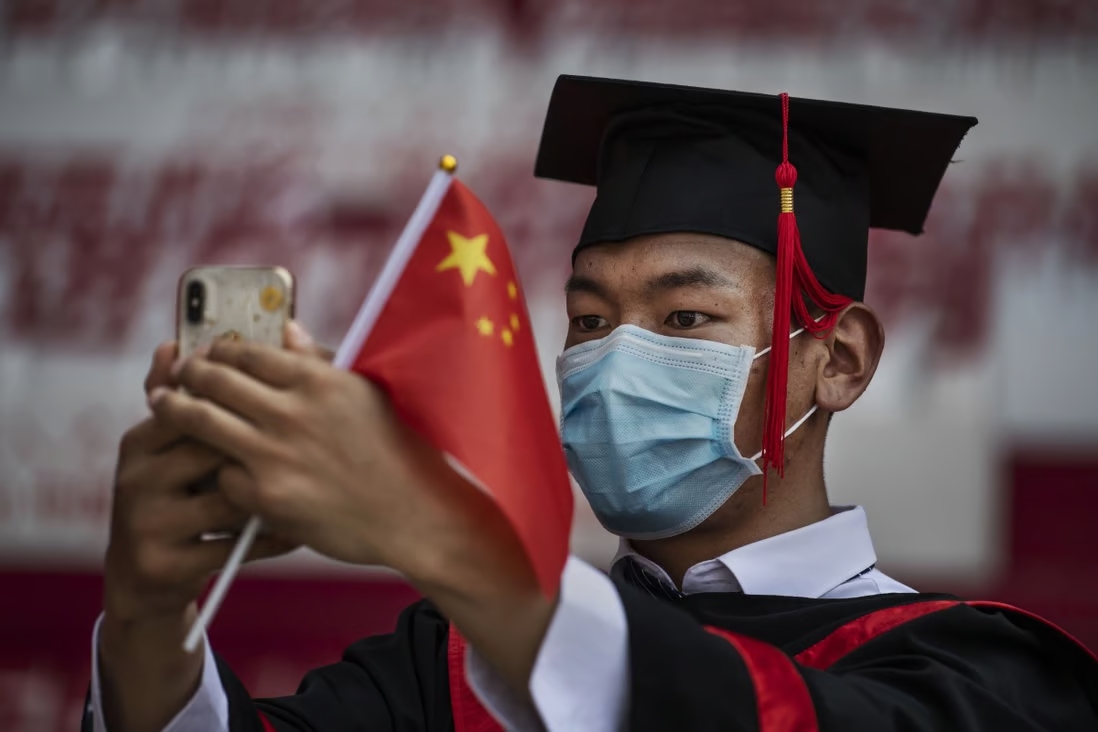
In a first, more postgrads than undergrads are set to graduate in Beijing this year

The academic landscape in China is rapidly evolving, and recent reports have revealed a significant shift in the demographic makeup of university graduates. For the first time in history, more postgraduates than undergraduates are set to graduate in Beijing this year, a milestone achievement that underscores the growing demand for advanced education and specialized skills in the country. In this article, we will delve deeper into the reasons behind this trend, the implications for China's economy and society, and what it means for the future of education in the country.
According to the Beijing Municipal Education Commission, over 70,000 postgraduate students are expected to graduate from universities in the capital this year, surpassing the number of undergraduate students for the first time in history. This trend is not unique to Beijing, as other major cities in China are also reporting a similar shift in the educational landscape. The reason behind this trend can be attributed to several factors.
Factors behind the shift
1. Changing job market
With the rise of automation and the increasing adoption of artificial intelligence in various industries, the demand for highly specialized skills is on the rise. This has led to an increased demand for postgraduate programs that offer advanced training in specific fields. Employers are looking for candidates who possess not only a degree but also practical skills and hands-on experience in their area of expertise.
2. Government policies
The Chinese government has been investing heavily in research and development, with the aim of transforming the country into a global leader in innovation and technology. To achieve this goal, the government has introduced policies that incentivize universities to prioritize postgraduate education and research. For instance, universities receive higher funding for postgraduate programs than for undergraduate programs, and postgraduate students are often given priority in terms of scholarships and research opportunities.
3. Changing attitudes toward education
Traditionally, Chinese society has placed a high value on education, and obtaining a degree from a prestigious university was considered a ticket to success. However, in recent years, attitudes towards education have evolved, and there is now a greater emphasis on the practical applications of knowledge. Many students are now choosing to pursue postgraduate degrees to gain practical skills and experience that will enable them to succeed in the job market.
Potential Impact on China's Economy and society
The shift towards postgraduate education has the potential to have a significant impact on China's economy and society. Here are some potential implications:
1. Increased innovation and productivity
Postgraduate education is often focused on research and innovation, which can lead to the development of new technologies and products. This can contribute to economic growth and productivity, as well as enhancing China's reputation as a global leader in innovation.
2. Increased competitiveness
By prioritizing postgraduate education, China is positioning itself to be more competitive in the global job market. Graduates with specialized skills and practical experience are more likely to secure high-paying jobs and contribute to the growth of the country's economy.
3. Widening education gap
However, the shift towards postgraduate education could also widen the gap between the rich and poor, as postgraduate programs are often more expensive and selective than undergraduate programs. This could lead to a situation where only the wealthy and privileged have access to high-quality education and job opportunities, while those from lower socioeconomic backgrounds are left behind.
FAQs
Q1. What are some of the challenges facing postgraduate students in China?
A1. Postgraduate students in China face a range of challenges, including intense academic pressure, high tuition fees, and a highly competitive job market. Additionally, many postgraduate programs are conducted in Mandarin, which can be a barrier for international students who do not speak the language.
Q2. What are the most popular postgraduate programs in China?
A2. The most popular postgraduate programs in China are in the fields of science, technology, engineering, and mathematics (STEM), as well as business and management. These programs offer students advanced training in areas that are in high demand in the job market.
Q3. How does the shift towards postgraduate education affect undergraduate programs in China?
A3. The shift towards postgraduate education could potentially lead to a decrease in the number of students pursuing undergraduate degrees. However, it could also lead to the development of more specialized undergraduate programs that prepare students for postgraduate study and careers in specific fields.
Q4. What are the potential implications of the shift towards postgraduate education for international students in China?
A4. The shift towards postgraduate education could potentially make it more difficult for international students to compete for job opportunities in China, as employers may prioritize candidates with specialized skills and practical experience gained from postgraduate programs. However, it could also lead to the development of more international postgraduate programs that cater to the needs of international students.
Q5. How does the shift towards postgraduate education in China compare to other countries?
A5. The shift towards postgraduate education is not unique to China and is a trend that is being observed in many countries around the world. In the United States, for example, the number of students pursuing postgraduate degrees has been steadily increasing over the past few decades.
Q6. What are some potential challenges facing China's education system in the future?
A6. Some potential challenges facing China's education system in the future include ensuring equal access to high-quality education for all students, addressing the widening gap between the rich and poor, and developing a more innovative and flexible curriculum that prepares students for the changing demands of the job market.


