In Serbia, Cooperation with Kosovo Scientists Can Bring Threats of Violence
-
 Loading...
 - Radmila Cerovic
- 28 Mar 2023
- 54 Views
- 0 Like
- 0 Comment
A Serbian academic says she won’t be intimidated after being branded a “traitor” for conducting academic research with counterparts in Kosovo.
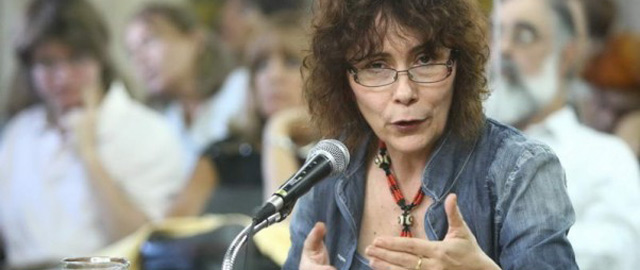
A week ago, Jelena Loncar, was due to address an event in the Faculty of Political Sciences of Belgrade University, where she works as an assistant professor. The event was titled Academic Exchanges between Kosovo and Serbia, and was supposed to present the results of a research exchange between Loncar’s faculty and the Faculty of Philosophy in Pristina.
The presentation, however, never happened; instead, posters were plastered at the entrance to the faculty featuring photos of Loncar and two of her colleagues, who were also due to speak at the event, and the word ‘TRAITOR’, written in red in capital letters. Next to Loncar’s face was the emblem of the Kosovo Liberation Army, an ethnic Albanian guerrilla army that fought Serbian security forces in the late 1990s to end a decade of repression in Kosovo under then strongman Slobodan Milosevic.
Serbian tabloids had already accused the faculty of effectively recognising Kosovo, but Loncar, 37, said the posters left her “honestly shocked.” “I’d never have thought it could go that far,” she told BIRN.
Warned that extremists would attack the event if it went ahead, the faculty cancelled. Loncar said it sent a chilling message, at a moment when emotions are running high over European Union-led efforts to prod Serbia and its former Kosovo province to settle their relations 15 years after the latter declared independence with the backing of the major Western powers. There is a “wider dimension” to it, said Loncar. “It is the issue of academic freedom and in a way the disciplining of all of us who dare, in the public space, to speak critically or to deal with topics that are not to the liking of certain extremist groups.”
“It is a kind of message – you know what will happen if you dare to criticise or to deal with this.” Majority-Albanian Kosovo broke away from Serbia during a 1998-99 war when NATO intervened with 11 weeks of air strikes to drive out Serbian forces accused of ethnic cleansing and atrocities carried out against ethnic Albanian civilians. It was swiftly recognised by the major Western powers, but not by UN Security Council veto-holders Russia and China, nor by five of the EU’s 27 member-states or by Serbia itself.
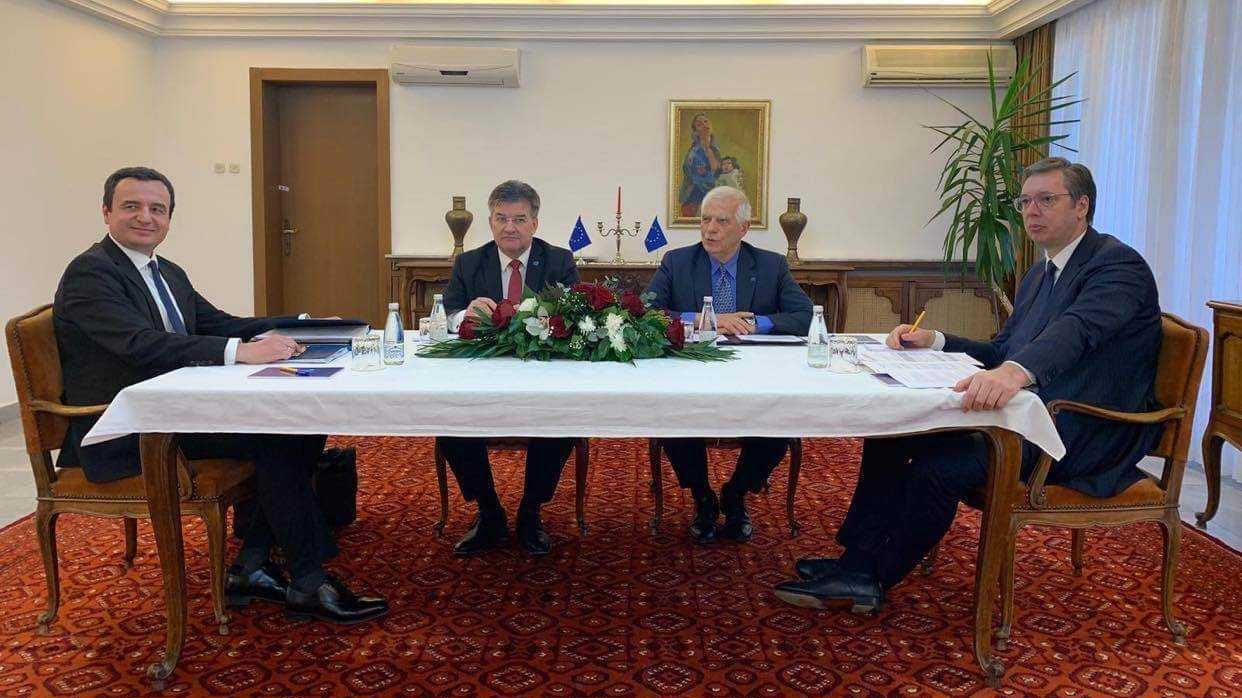
But while Serbia’s government has vowed never to recognise Kosovo as a state, President Aleksandar Vucic has been negotiating with Kosovo Prime Minister Albin Kurti – under EU auspices – the terms of a ‘normalisation’ of relations that experts say amounts to recognition in all but name. Read More…