Is NH4OH soluble in water? Everything you need to know

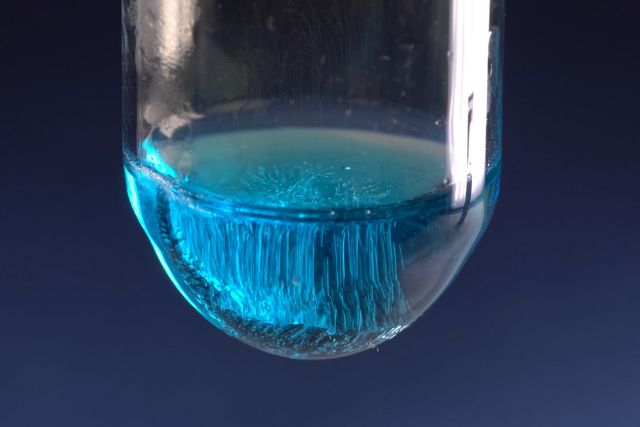
Ammonia dissolved in water has the chemical formula NH4OH. This liquid goes by several other names, including ammonia water, ammonium hydroxide, ammonia liquor, and aqueous ammonia. “NH3 (aq)” is a common shorthand for NH4OH.
Ammonia dissolves in water because each water molecule gives the NH3 molecule one of its proton. This results in the creation of ammonium cation (chemical formula: NH4+) and hydroxide ion (OH–). An illustration of this is the equilibrium reaction shown below.
NH3 + H2O ⇌ NH4+ + OH–
It turns out that 0.42 percent of the ammonia in a 1M ammonia-water solution becomes ammonium cation. In the presence of H+, a solid base undergoes complete ionisation. This indicates that OH- will be totally ionised in the presence of H+, resulting in the formation of water and the corresponding salt. Take the case of a NaOH base diluted in water as an illustration. NaOH is easily generated by H2O and NaOH in the presence of H+ ions (from water OH- and H+), since the positively charged sodium rapidly interacts with the negatively charged OH- from water, and Na+ interacts with OH- from Na+OH-.
Ammonia gas can be produced by simply heating a concentrated ammonium hydroxide solution. The acid-base and water-solubility properties of ammonia gas will be tested in this demonstration. The outcome is a colourful indicator that’s easy on the eyes.

Making an NH4OH solution requires:
- Remove about 1 centimetre of stem from the bulb of four giant pipets and discard the rest. The huge pipet bulb containers will be used to store gas.
- Two to three millilitres of an acid-base indicator (see the Materials section) should be added to half a litre of distilled water in four 100-milliliter beakers. The first hue of each indicator solution in cold water should be recorded.
- Third, using a hot plate on a medium setting, fill a 100-mL beaker halfway with tap water and heat it to 70-80 °C (6–8). Read More…