Is Stranger Things even TV any more?
-
 Loading...
 - Valentina Alvarez
- 01 Jul 2022
- 134 Views
- 0 Like
- 0 Comment
The plot of the upcoming two-part Stranger Things finale remains a great mystery. Netflix isn’t giving away a single detail; nor, for that matter, are the cast, production team or publicity department. But nature abhors a vacuum so, in lieu of any official details, I will tell you what I want from the season finale. And what I want is a bloodbath.
I mean it. I want the Red Wedding in an ironic period-era baseball cap. I want it to be a cross between the first part of Saving Private Ryan and the last part of The Wild Bunch. When the credits roll on episode nine, I want a maximum of four primary characters still alive.
If you have seen any of season four, you will know why. Stranger Things may have started off as a cute little sci-fi show about kids battling a monster, but the thing has got ungainly. The initial crew remains, but so does just about everyone they have met along the way, and they all need tending to. Brett Gelman’s character? He needs a plot. Erica, Lucas’s smart-alec little sister? She needs a plot. Steve, the antagonist turned self-perpetuating meme generator? He needs a plot, and so does his co-worker from season three. Anyone who appeared even fleetingly in any previous Stranger Things episode is now a fully fledged character, which has made this season a ponderous slog at times.
Will things tighten up for the finale? Hardly. It has already been announced that episode nine alone will be two and a half hours long (as long as The Dark Knight, if you are counting), but that running time could easily be filled by the cast patiently standing in line and saying hello to the camera one by one.
Why does Steve’s co-worker from season three need her own plot?
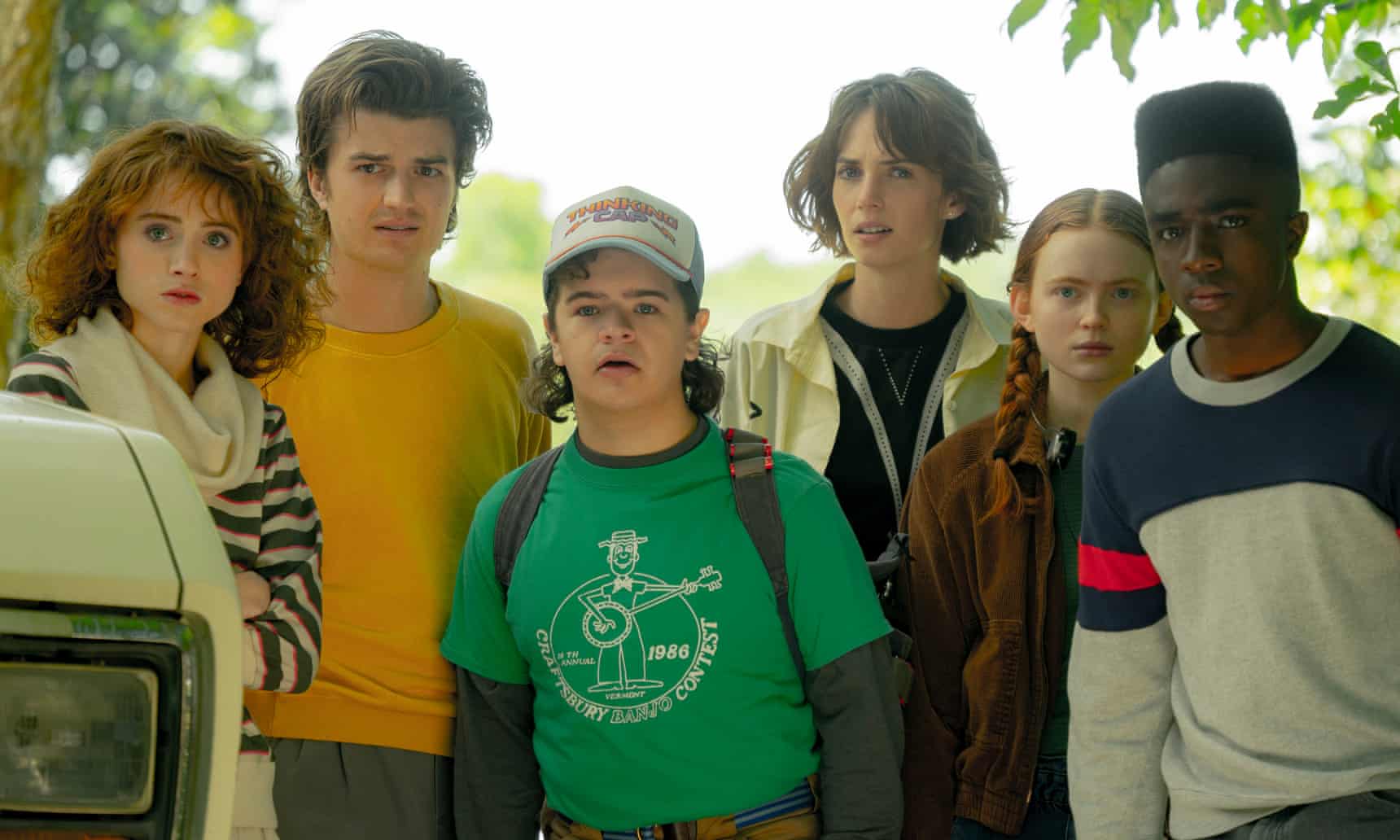
What I am trying to say is that somewhere along the line, Stranger Things stopped being a TV show. It has become something else entirely. One equivalent is Harry Potter; a book series that lost its ability to self-edit as it went along. I might be wrong, but I heard that Harry Potter and the Deathly Hallows is so huge that each copy technically qualifies as a continent.
Or maybe it’s better to look at it like the Marvel Cinematic Universe. Like Marvel, Stranger Things is wildly popular. Like Marvel, it offers its content in vast, interconnected chunks. Like Marvel, it revolves around a mythology that has got out of hand. Like Marvel, it operates a strict no-spoiler policy that is regularly undone by its own merchandise. It has a huge cast, and most of the characters are apparently impervious to death. Perhaps it’s time to start thinking of Stranger Things as a franchise rather than a TV show. Read More...