Italy itinerary: Following the Appian Way
-
 Loading...
 - Willow Morrison
- 03 Mar 2022
- 401 Views
- 0 Like
- 0 Comment
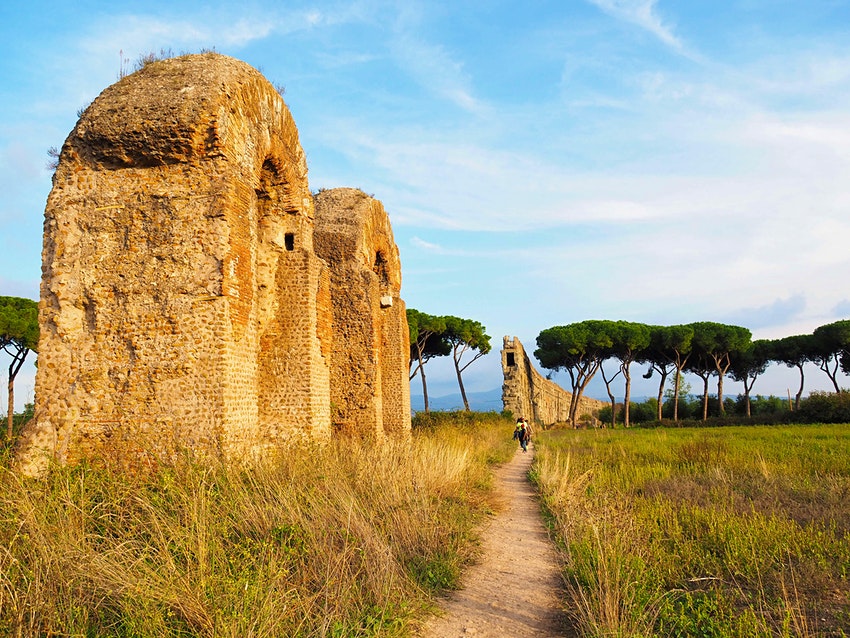
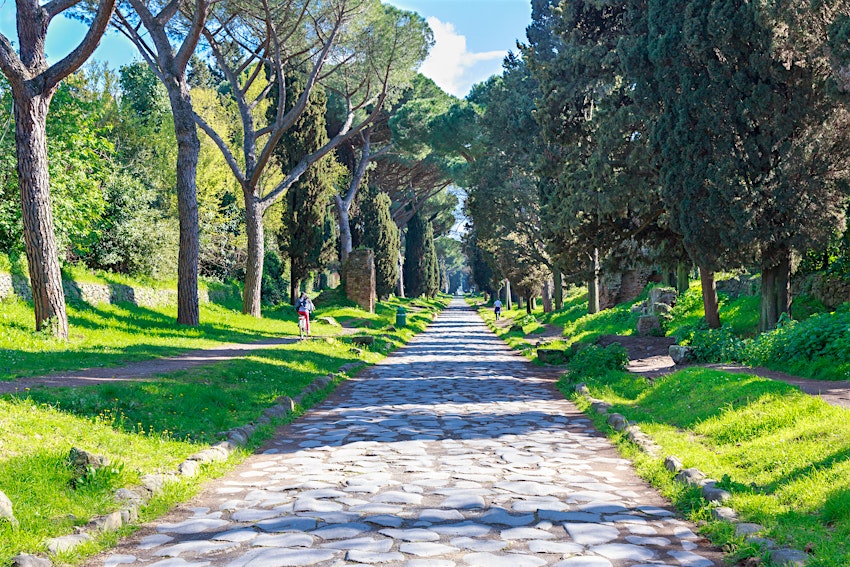
Monuments and milestones flank the ancient road as it arrows south from Rome, surrounded by flat-topped pine trees, green fields and Roman ruins. Below ground, kilometers of creepy catacombs weave through the dank underworld.
What is Via Appia Antica?
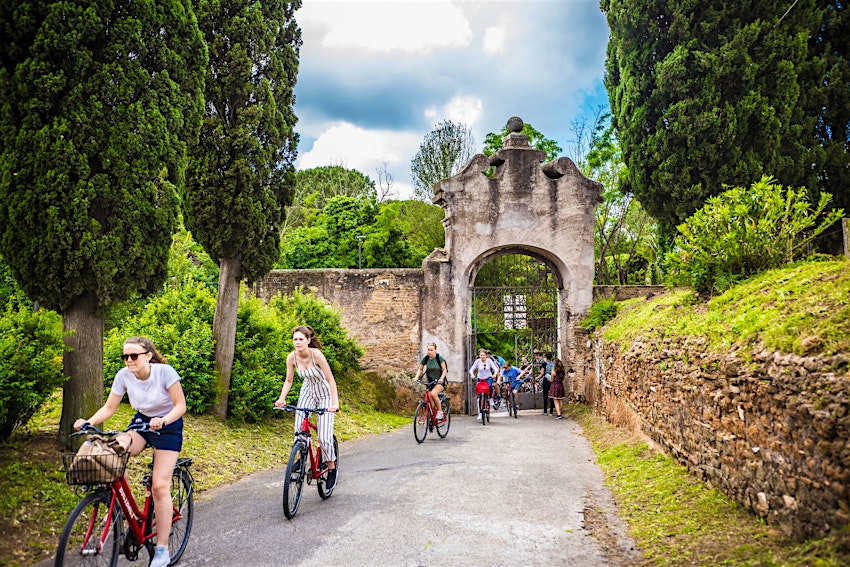
Via Appia Antica, known to the ancients as the regina viarum (queen of roads), is the most celebrated of ancient Rome's consular roads. Completed in 190 BCE, it was a key strategic artery, linking Rome with the port of Brindisi on the southern Adriatic coast. Nowadays it's a favorite haunt of sightseers, walkers and cyclists, as well as one of Rome's most sought-after addresses.
Begin at Porta San Sebastiano and the Aurelian Walls
The start of the Via is heralded by Porta San Sebastiano. This imposing gateway is the largest of the gates in the Aurelian Walls, the massive defensive barrier that the emperor Aurelian built in the late 3rd century CE. To learn more about the mura (walls) and their long history, stop by the small Museo delle Mura housed in the Porta.
Visit a church honoring an apostle's vision of Jesus
About 1km (.6 miles) south of Porta San Sebastiano, the pint-sized Chiesa del Domine Quo Vadis is said to stand on the spot where St Peter encountered a vision of Jesus. The apostle, fleeing Rome at the time, asked, ‘Domine, quo vadis?’ (Lord, where are you going?), to which Jesus replied, ‘Venio Roman iterum crucifigi’ (I am coming to Rome to be crucified again). On hearing this, Peter reluctantly returned to the city, where he was promptly arrested and executed.
Commune with the dead at the Catacombs
There are thought to be some 300km (186 miles) of catacombs beneath Via Appia Antica and the surrounding countryside. Much of this subterranean network was built by the early Christians, who needed somewhere to bury their dead outside the city walls.
As you follow the Via south, the first you come to are the Catacombe di San Callisto, where scores of martyrs, thousands of Christians and up to 16 popes lie buried. A short hop further on, the Catacombe di San Sebastiano extend beneath the 4th-century basilica of the same name.
A third complex, the Catacombe di Santa Domitilla lies about 500m (.3 miles) west of San Callisto. It features the evocative remains of a 4th-century church and some exquisite wall art.
See remnants of villas where Rome's elite lived
Above ground, there's plenty to take in on the Via. South of the catacombs, Villa di Massenzio is the 4th-century palace of the emperor Maxentius. In its grassy grounds you’ll find Rome’s best-preserved chariot racetrack, the Circo di Massenzio, and a mausoleum Maxentius built for his 17-year-old son, the Mausoleo di Romolo.
Further down the Via are the remains of two more villas: Capo di Bove, and 3km (2 miles) beyond that, Villa dei Quintili. This aristocratic 2nd-century villa was once one of the area’s most lavish and its towering remains remain a stirring sight in the lush green meadows.
Explore above-ground tombs and mausoleums
Back near the Villa di Massenzio, the Mausoleo di Cecilia Metella is one of the Via’s signature sights. A crenelated drum-shaped tower, it started life as a 1st-century BCE tomb before being recycled as a fort in the 1500s and used to collect tolls from passing traffic.
A few kilometers further on, the ruins of a 1st-century BCE tomb known as the Casal Rotondo mark the end of the road for many visitors.
Where to eat
For a quick panino or light snack, the tree-shaded garden of the Appia Antica Caffè is perfectly placed in the heart of the action at No 175. You can eat in or pick up picnic provisions to take away.
For a more leisurely meal, head to Il Giardino di Giulia e Fratelli at No 176. This bucolic garden restaurant near the Mausoleo di Cecilia Metella provides a memorable setting for traditional Italian cooking with al fresco tables set under colorful orange trees. Read More…