Home Upload Photo Upload Videos Write a Blog Analytics Messaging Streaming Create Adverts Creators Program
Bebuzee Afghanistan Bebuzee Albania Bebuzee Algeria Bebuzee Andorra Bebuzee Angola Bebuzee Antigua and Barbuda Bebuzee Argentina Bebuzee Armenia Bebuzee Australia Bebuzee Austria Bebuzee Azerbaijan Bebuzee Bahamas Bebuzee Bahrain Bebuzee Bangladesh Bebuzee Barbados Bebuzee Belarus Bebuzee Belgium Bebuzee Belize Bebuzee Benin Bebuzee Bhutan Bebuzee Bolivia Bebuzee Bosnia and Herzegovina Bebuzee Botswana Bebuzee Brazil Bebuzee Brunei Bebuzee Bulgaria Bebuzee Burkina Faso Bebuzee Burundi Bebuzee Cabo Verde Bebuzee Cambodia Bebuzee Cameroon Bebuzee Canada Bebuzee Central African Republic Bebuzee Chad Bebuzee Chile Bebuzee China Bebuzee Colombia Bebuzee Comoros Bebuzee Costa Rica Bebuzee Côte d'Ivoire Bebuzee Croatia Bebuzee Cuba Bebuzee Cyprus Bebuzee Czech Republic Bebuzee Democratic Republic of the Congo Bebuzee Denmark Bebuzee Djibouti Bebuzee Dominica Bebuzee Dominican Republic Bebuzee Ecuador Bebuzee Egypt Bebuzee El Salvador Bebuzee Equatorial Guinea Bebuzee Eritrea Bebuzee Estonia Bebuzee Eswatini Bebuzee Ethiopia Bebuzee Fiji Bebuzee Finland Bebuzee France Bebuzee Gabon Bebuzee Gambia Bebuzee Georgia Bebuzee Germany Bebuzee Ghana Bebuzee Greece Bebuzee Grenada Bebuzee Guatemala Bebuzee Guinea Bebuzee Guinea-Bissau Bebuzee Guyana Bebuzee Haiti Bebuzee Honduras Bebuzee Hong Kong Bebuzee Hungary Bebuzee Iceland Bebuzee India Bebuzee Indonesia Bebuzee Iran Bebuzee Iraq Bebuzee Ireland Bebuzee Israel Bebuzee Italy Bebuzee Jamaica Bebuzee Japan Bebuzee Jordan Bebuzee Kazakhstan Bebuzee Kenya Bebuzee Kiribati Bebuzee Kuwait Bebuzee Kyrgyzstan Bebuzee Laos Bebuzee Latvia Bebuzee Lebanon Bebuzee Lesotho Bebuzee Liberia Bebuzee Libya Bebuzee Liechtenstein Bebuzee Lithuania Bebuzee Luxembourg Bebuzee Madagascar Bebuzee Malawi Bebuzee Malaysia Bebuzee Maldives Bebuzee Mali Bebuzee Malta Bebuzee Marshall Islands Bebuzee Mauritania Bebuzee Mauritius Bebuzee Mexico Bebuzee Micronesia Bebuzee Moldova Bebuzee Monaco Bebuzee Mongolia Bebuzee Montenegro Bebuzee Morocco Bebuzee Mozambique Bebuzee Myanmar Bebuzee Namibia Bebuzee Nauru Bebuzee Nepal Bebuzee Netherlands Bebuzee New Zealand Bebuzee Nicaragua Bebuzee Niger Bebuzee Nigeria Bebuzee North Korea Bebuzee North Macedonia Bebuzee Norway Bebuzee Oman Bebuzee Pakistan Bebuzee Palau Bebuzee Panama Bebuzee Papua New Guinea Bebuzee Paraguay Bebuzee Peru Bebuzee Philippines Bebuzee Poland Bebuzee Portugal Bebuzee Qatar Bebuzee Republic of the Congo Bebuzee Romania Bebuzee Russia Bebuzee Rwanda Bebuzee Saint Kitts and Nevis Bebuzee Saint Lucia Bebuzee Saint Vincent and the Grenadines Bebuzee Samoa Bebuzee San Marino Bebuzee São Tomé and Príncipe Bebuzee Saudi Arabia Bebuzee Senegal Bebuzee Serbia Bebuzee Seychelles Bebuzee Sierra Leone Bebuzee Singapore Bebuzee Slovakia Bebuzee Slovenia Bebuzee Solomon Islands Bebuzee Somalia Bebuzee South Africa Bebuzee South Korea Bebuzee South Sudan Bebuzee Spain Bebuzee Sri Lanka Bebuzee Sudan Bebuzee Suriname Bebuzee Sweden Bebuzee Switzerland Bebuzee Syria Bebuzee Taiwan Bebuzee Tajikistan Bebuzee Tanzania Bebuzee Thailand Bebuzee Timor-Leste Bebuzee Togo Bebuzee Tonga Bebuzee Trinidad and Tobago Bebuzee Tunisia Bebuzee Turkey Bebuzee Turkmenistan Bebuzee Tuvalu Bebuzee Uganda Bebuzee Ukraine Bebuzee United Arab Emirates Bebuzee United Kingdom Bebuzee Uruguay Bebuzee Uzbekistan Bebuzee Vanuatu Bebuzee Venezuela Bebuzee Vietnam Bebuzee World Wide Bebuzee Yemen Bebuzee Zambia Bebuzee Zimbabwe
Blog Image

James Webb Space Telescope in final stretch

James Webb, astronomy's new super space telescope, has taken another major step to full operational capability.

The $10bn successor to the Hubble Space Telescope is now fully focused and aligned. Light bounces perfectly off its mirrors to form pin-sharp imagery in all four of its instruments.

It just remains to check that the instruments are properly calibrated - that they are delivering their data in a way that's expected and understood.

This should take a couple more months.

Once this is done, James Webb will be ready to wow us with vistas that will be every bit as compelling as those produced by Hubble these past three decades.

"We've now reached the end of the telescope alignment phase - we've delivered perfectly focussed images to all of the science instruments," explained Prof Mark McCaughrean, senior science advisor for the European Space Agency.

"Now we're ready to check the many complicated ways each of them can catch the telescope's light and do the amazing science we dreamed of more than 20 years ago," he told BBC News.
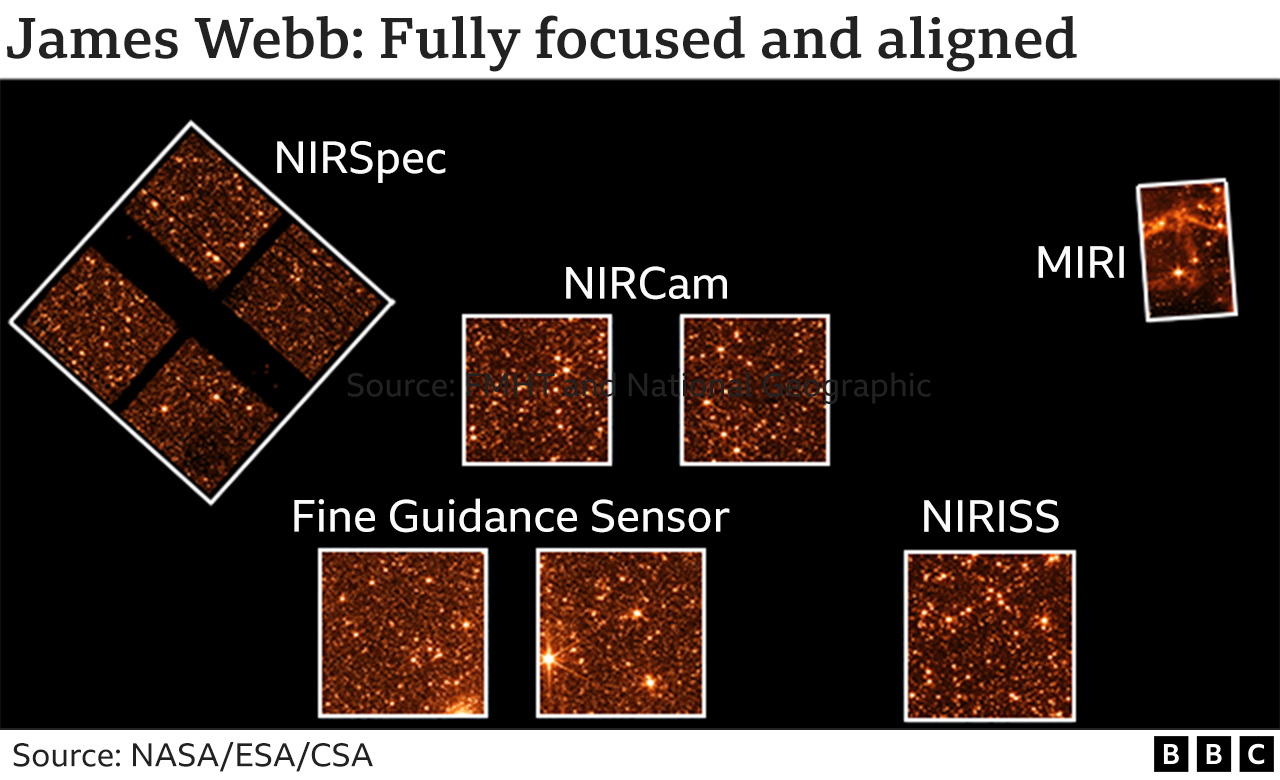
The US space agency Nasa, which leads the Webb project, released a set of engineering pictures on Thursday.

They're not intended to be exciting; they're merely a demonstration that all the hardware is working as it should.

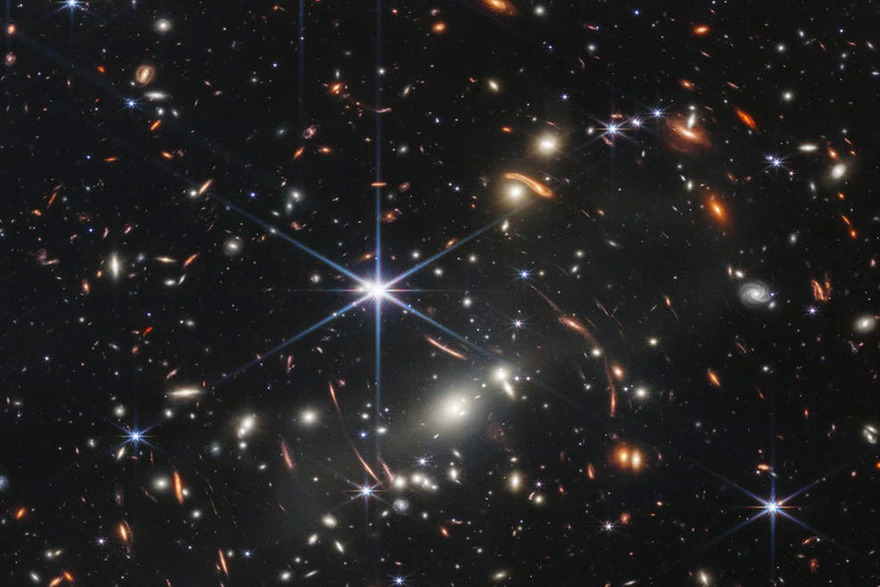
The images show slightly different views of the Large Magellanic Cloud, a small satellite galaxy of our Milky Way.

In view are the points of light made by hundreds of thousands of stars.

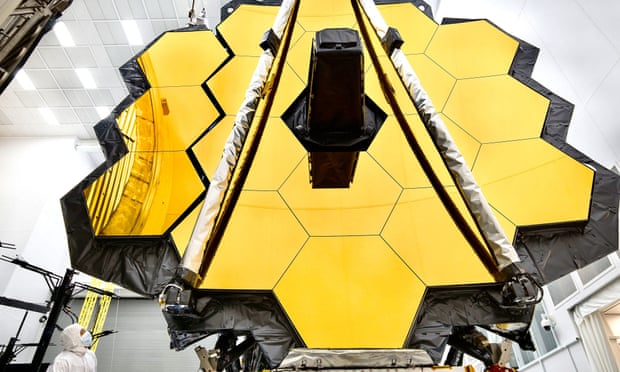
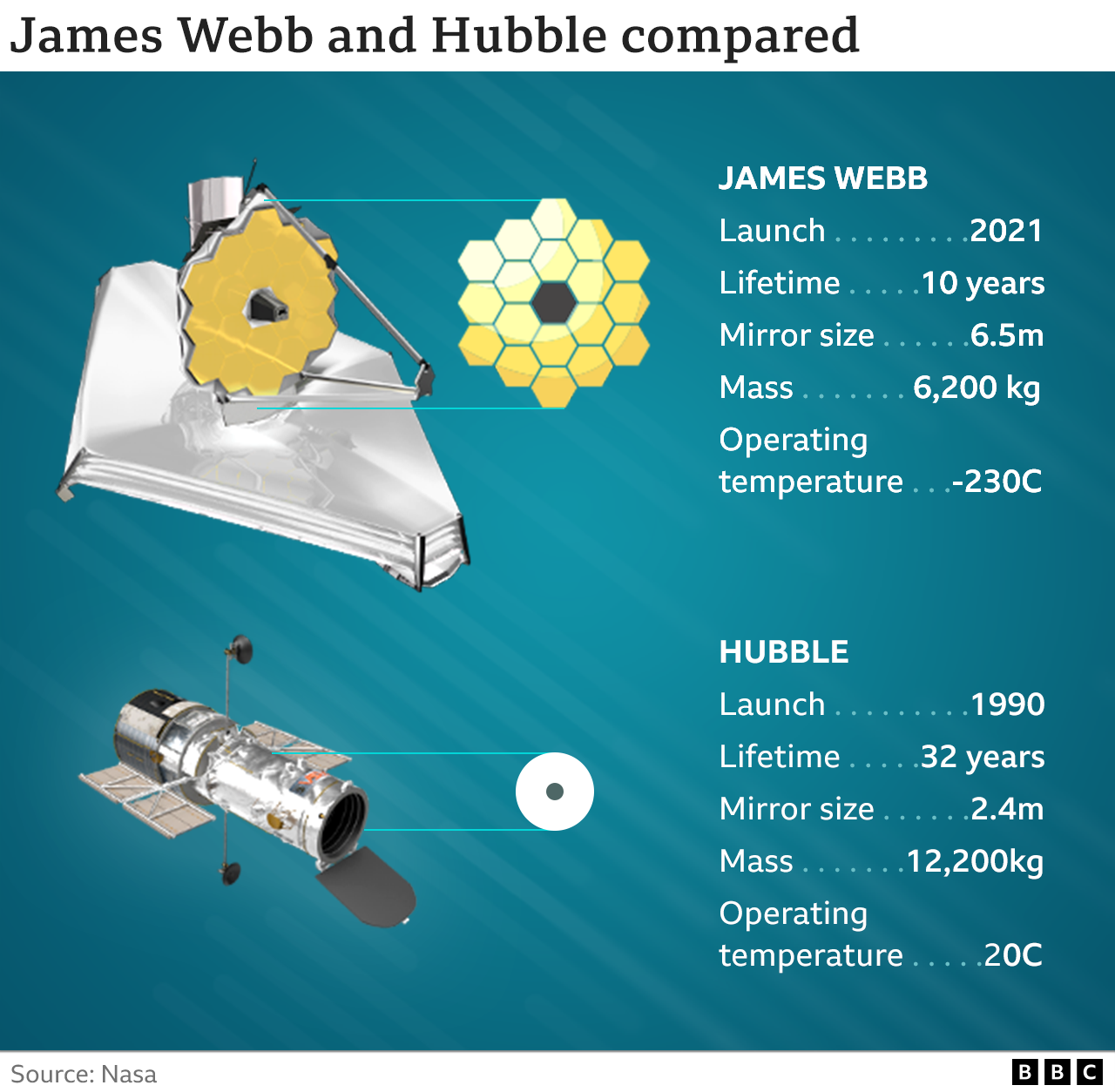
The sizes and positions of the images depict the relative arrangement of each of Webb's instruments as they pick up the light coming from the telescope's golden mirrors, including from its 6.5m-wide primary reflector.

Nasa had previously released a sample of this type of imagery for the NIRCam instrument. NIRCam, which is Webb's main camera system, was used to do the initial focusing of the observatory's optics. When that job was complete, engineers had to work through each of the other three instruments (NIRSpec, MIRI and FGS/NIRISS) to confirm that NIRCam's alignment worked just as well for them.
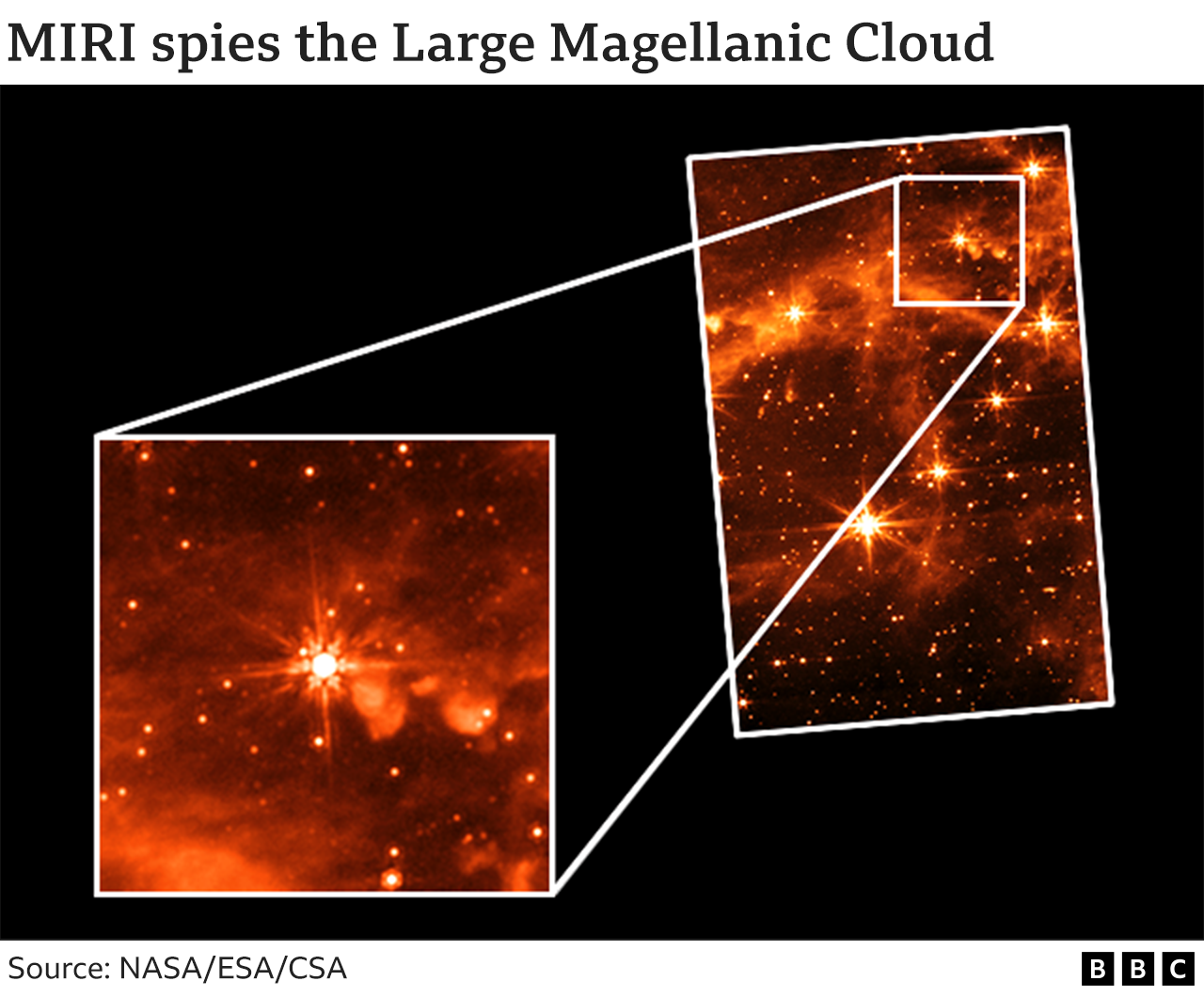
The last instrument to go through this process was MIRI, the Mid-Infrared Instrument whose development was led in part from the UK.

There will be elation today across a host of contributing British institutions to see MIRI's first published image.

If the picture looks slightly fluffy compared with those from the other instruments, it's because MIRI works at longer infrared wavelengths. The puffiness that surrounds the stars is the glow from carbon-rich (organic) molecules in the Large Magellanic Cloud. MIRI's particular sensitivity allows it to tease out different features in the field of view from its instrument counterparts.

Scientists intend to use Webb and its remarkable 6.5m-wide mirror to capture events that occurred just a couple of hundred million years after the Big Bang. They want to see the very first stars to light up the Universe.

They'll also train the telescope's big "eye" on the atmospheres of distant planets to see if those worlds might be habitable.

A joint endeavour of Nasa, Esa and the Canadian Space Agency, Webb is the biggest telescope ever sent into space. Read More…
Previous Post

Vietnamese scientists successfully restore expired satellite

Next Post

China sets up world's highest weather station at altitude of 8,830m

Comments