Japan hopeful of sharing military intelligence again with S Korea
-
 Loading...
 - Masami Beppu
- 14 Jun 2022
- 251 Views
- 0 Like
- 0 Comment
Japan's defense minister on Tuesday expressed hope that military intelligence would be smoothly shared again with South Korea after its foreign minister said an accord once on the brink of termination under a previous administration should be normalized.
"I hope there will be exchanges between the two sides toward smoother operation" of the General Security of Military Information Agreement, Defense Minister Nobuo Kishi said.
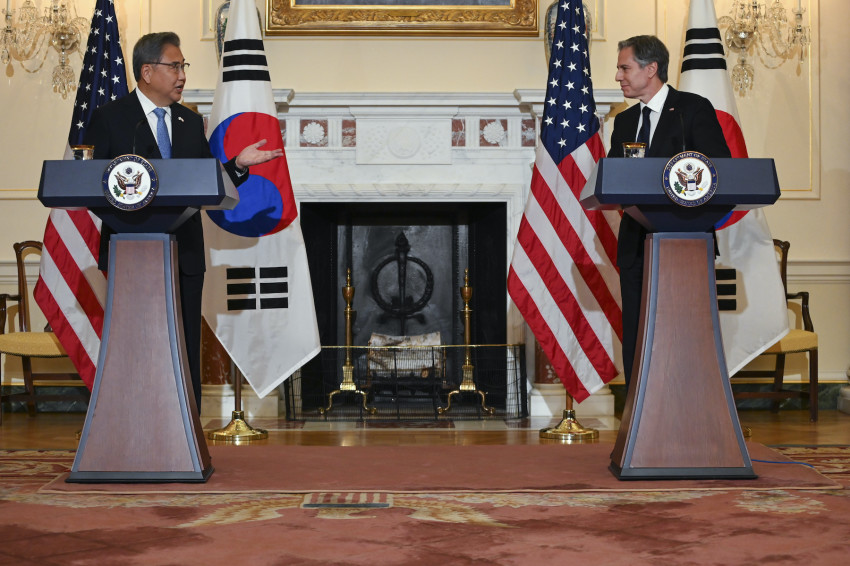
His comments at a press conference came after South Korean Foreign Minister Park Jin said in Washington, "We want GSOMIA to be normalized as soon as possible together with the improvement of Korea-Japan relationship. In order to deal with the threat from North Korea, we need to have a policy coordination and a sharing of information between Korea and Japan and with the United States."
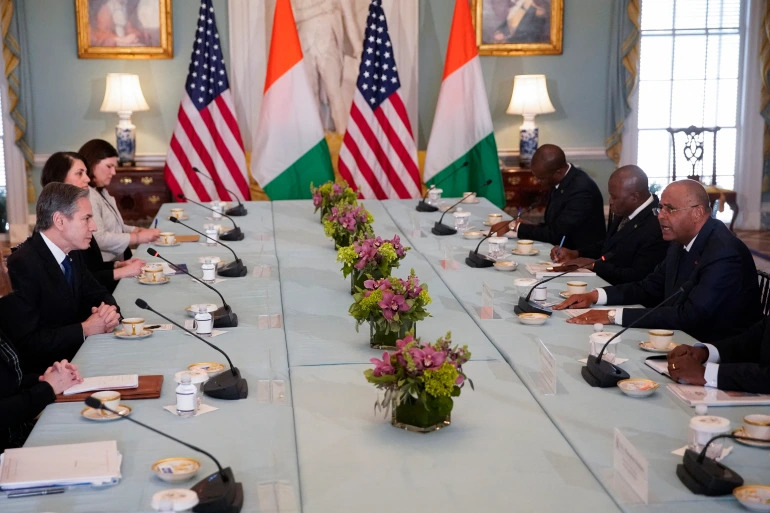
The remarks, which Park made after meeting with U.S. Secretary of State Antony Blinken in Washington, were the latest sign of an improvement in the soured Tokyo-Seoul ties under new South Korean President Yoon Suk Yeol and came amid concerns North Korea may carry out what would be its seventh nuclear test, or the first since 2017.
The two neighboring countries are harboring hopes of mending their political ties after they were badly damaged by disagreements over wartime issues.
Japan's top government spokesman Hirokazu Matsuno also underscored the significance of the agreement, saying it "strengthens cooperation and partnership in the field of security between Japan and South Korea, and contributes to regional peace and stability."
"Given the severe security environment, including North Korea repeatedly firing ballistic missiles, the stable operation (of GSOMIA) is important," he said.
North Korea has fired a slew of missiles this year and it is feared it may soon conduct its first nuclear test since 2017.
GSOMIA has allowed Japan and South Korea, which have no military alliance, to directly share sensitive intelligence information.
While Tokyo and Seoul averted the termination of GSOMIA, the agreement has been left in an unstable state as bilateral ties were strained under the previous administration of Moon Jae In, who had made clear the pact could be scrapped anytime.
Park is making his first visit to the United States as foreign minister of Yoon, a conservative who has signaled a tougher stance on Pyongyang than his liberal predecessor Moon Jae In. He is also seeking better relations with Japan after they became marred by wartime disputes.
Park and Blinken warned North Korea of the consequences of moving ahead with a possible nuclear test, with Park saying Pyongyang is at a "crossroads" of either isolating itself or returning to dialogue toward denuclearization.
"We affirmed that any North Korean provocations, including a nuclear test, will be met with a united and firm response from our alliance and the international community," Park said.
Blinken said the United States is "extremely vigilant" over the possibility of North Korea's seventh nuclear test and that it is preparing "for all contingencies" in close coordination with South Korea and Japan.
"Until the regime in Pyongyang changes course, we will continue to keep the pressure on," he said.
But Blinken also reiterated the U.S. government's position that Washington has "no hostile intent" toward Pyongyang and is "open to dialogue without preconditions."
The U.S. government has recently been warning that a nuclear test by North Korea could take place at "any time," citing preparations at its Punggye-ri test site.
North Korea has been testing ballistic missiles this year at an extremely rapid pace.
Should Pyongyang proceed with the testing of a nuclear device, it would only lead to a strengthening of deterrence efforts by the South Korea-U.S. alliance and international sanctions, resulting in further isolation, the South Korean minister said.
He also called on China to play "a very positive role" to persuade North Korea that "maintaining peace and stability on the Korean Peninsula requires their new thinking."
In May, China, along with Russia, vetoed a U.N. Security Council resolution drafted by the United States seeking to impose tougher sanctions on North Korea following a series of missile tests. Read More...