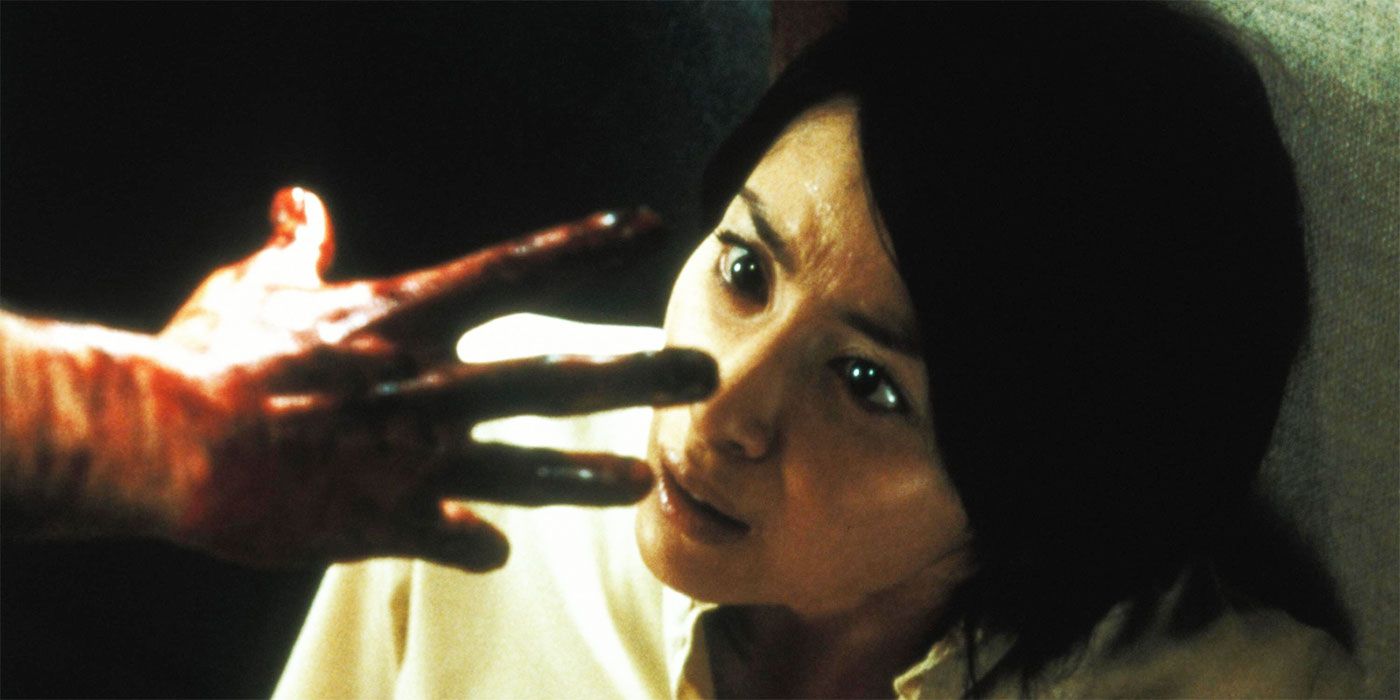
'Ju-on: The Curse' Is a More Effective Horror Movie Than 'Ju-on: The Grudge'
-
 Loading...
 - bakti Yanti
- 13 Jun 2022
- 295 Views
- 0 Like
- 0 Comment
It was the late-1990s when Hideo Nakata’s pioneering masterpiece Ringu sparked a global interest in Japanese horror. In the immediate years that followed, movies like Pulse, Dark Water, and One Missed Call continued the worldwide success of Japanese horror cinema, but the one that had arguably the biggest impact was Takashi Shimizu’s Ju-on: The Grudge. There have been thirteen movies in the Ju-on franchise since 2000, as well as several short films, comics, novels, and a Netflix TV series. While many assume the franchise began with The Grudge in 2002, the first feature in the franchise was actually Ju-on: The Curse, released direct-to-video in 2000.
The Curse followed two short films by Shimizu – Katsumi and 4444444444. While he was a student at the Film School of Tokyo, he was taken under the wing of Japanese filmmaker Kiyoshi Kurosawa, director of Pulse, one of the finest J-horrors of its time. Kurosawa aided Shimizu during his filmmaking debut, but few could have predicted the immense creation Shimizu had up his sleeve. The two three-minute shorts are true prequels to the Ju-on movies, and even though it would be four years until international success came to the franchise, it is enthralling to see them show Takako Fuji as Kayako for the first time if just for a few seconds. Fuji went on to reprise the iconic role five more times, all the way up until The Grudge 3, the second American sequel. These two short films also marked the first appearance of Toshio, the pale-faced boy who went on to become an iconic horror figure.
When The Curse was released two years after Shimizu’s short films, it impressed audiences for its establishment of mood and build-up of tension, and this high praise spread through word-of-mouth in Japan. The Curse is uniquely told in six short segments shown out of order. Shimizu relishes in this experimental presentation of the story and is quick to instill confusion in his audience. He also sets a very clear, moody tone immediately and offers subtle hints of unseen horror in ostensibly ordinary circumstances. Early on, there is a flashback sequence with schoolteacher Mr. Kobayashi (YÅ«rei Yanagi) looking back on an encounter with Toshio and his mother, Kayako. This brief but significant moment is shot with a dreamlike bright tint and an unnerving score, and Shimizu wisely keeps Kayako and Toshio out of focus for this seconds-long scene. The rumble of music abruptly stops as the flashback ends, first posing the mystery surrounding the mother and son. Though brief, Shimizu does more than enough to make their first appearance alarming.
In The Curse’s opening segment, Shimizu opts not to reveal anything, and instead, chooses to keep dialing up the tension. The segment concludes with Mr. Kobayashi investigating the meows of cats from outside the window of the house, but it turns out, the sounds are coming from Toshio sitting behind him. This is unexpected, and astoundingly creepy, with Toshio blurred in the background of the shot. The opening segment to The Grudge, while still very tense in its own right, lasts much longer and does not shy away from explicitly showing the imposing shadow of Kayako in full. Shimizu’s use of foreground and background is far stronger in The Curse, which makes many shots more memorable in the long run. Those obscured appearances of Kayako and Toshio in their human form in the opening establish something ‘off’ about each of them even before they take a more demonic form. Shimizu makes brilliant implications and suggestions in The Curse, whereas the larger budget in The Grudge provided a temptation to overtly show the horror to a lesser effect.
It is not until fifty-three minutes into The Curse when Kayako makes her first proper appearance. Prior to this, her only real screen time is shadowed or blurred. By the time we see her in full, the movie only has seventeen minutes left. The build-up to her first appearance in her more recognizable ghostly form is well worth it though, in a scene where she slowly and methodically crawls down the staircase, her weary bones cracking and her mouth spewing out a horrifying croak. Complete with the presence of Toshio, this scene is terrifying beyond belief. It is very closely recreated in The Grudge, however, due to unfittingly bright lighting, it does not work as well. It is strange that Shimizu chose to shoot the scene this way, as Kayako coming out of the shadows is a far scarier sight than her in a lighter setting. Read More...