Judgement Days
-
 Loading...
 - Juan Delgado
- 13 Apr 2022
- 314 Views
- 0 Like
- 0 Comment
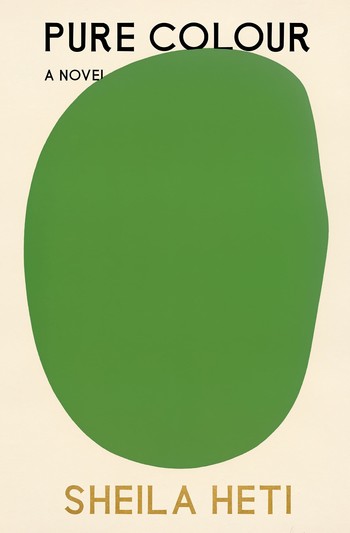
It is technically possible to write about Sheila Heti’s new novel, Pure Colour, by following the rising action. Such a review might track Heti’s main characters—father and daughter—through his death, her long mourning, their reunion in a leaf (it’s a sort of limbo), and her learning to live without him. The idea would be to shepherd readers through the novel by focusing on its most legible story line, in the hopes of making it all make sense. At the end, three or four sentences would remain to pronounce one or two judgments on how Heti perverts or expands the nature of the father-daughter relationship (his spirit is said to be “ejaculated” into her after his death). But there is much more to this novel than daddy issues, including: art criticism, the narcissism of large differences, the end of the world, and Manet.
The above might sound like the usual dilemma of writing about weird novels in far fewer words, so allow me a few on Heti’s ornate frame. Unlike her last two novels, Motherhood and How Should a Person Be?, Pure Colour does not allow us the luxury of assuming that Heti is writing about a version of herself in a recognizable setting, despite the fact that her father died while she was working on the book. Her initial plan had been to write about art critics, but as she recently said on a podcast, after this loss “the whole world sort of wobbled,” and from there the novel “felt more like a surprise.” Enter God. Here, the Creator is likened to a painter stepping back from a canvas. Contra Genesis, Heti’s God immediately finds his efforts lacking, and steels himself to scrap the world as we know it and “get it more right” next time. As any omniscient being in this position might, he takes advantage of multiple perspectives to learn where his first draft went wrong, humbly creating three critics to assess his handiwork. There is a bird (artist-aesthete who judges from on high), a bear (better described as a teddy—a wife guy, an empath), and a fish (champion of the common good). Heti draws on these holy archetypes to introduce a father, a daughter, and an orphan who seem to have been made in the critics’ images. Each character cherishes a different value system: beauty, fairness, and intimacy. Clearly this is not autofiction.
Instead, the new book marks a welcome return to an earlier, more improvisational sensibility of Heti’s, one more concerned with princesses and giants than the warts-and-all realities of birthing artworks and babies. As the author has said of her debut, The Middle Stories: “There’s something about being told bedtime stories that a parent is making up as they go along that’s in this book.” This one too: Pure Colour changes tack and narration often, and there can be a deus ex machina feel to the weightiest scenes. (The hints of incest in particular feel strangely bestowed rather than earned.) For a novel that seems at the outset to run on clashing worldviews, there’s a lot of accretive world-building. Heti has claimed in interviews that she wrote the “contemporary fables” of The Middle Stories in about fifteen minutes each: writing ceaselessly, changing the subject when she got bored, and hoping that some tales would come out perfect. She describes wanting to turn herself into a “machine that wrote stories,” understanding that the by-product will be a glut of stories that aren’t good enough.
The God of Pure Colour might nod at this. Throughout the novel, characters muse about what life might be like in the next draft of the world. And they have some specific notes. Perhaps next time, everybody should be given “the exact same face,” to avoid the tragedy of wasting one’s entire life “all because another person has a really great face.” Or what if we just did away with fathers? Surely art will look different—maybe it will all be situational. People workshop the future: “We crafted our own second drafts—stories and books and movies and plays—polishing our stones to show God and each other what we wanted the next draft to be.” As novelist, Heti is the creator of the Creator of the creators. What’s her benevolent plan? It’s helpful to zoom out. In How Should a Person Be?, Heti scrambled notions of what counts as literature by writing about real people from the real world to make a novel “from life.” Her wily evocation of the everyday was both funny and true (and much more original than the accusations of navel-gazing she faced). Pure Colour involves more conspicuously made-up characters’ qualms about how their world isn’t artful enough.
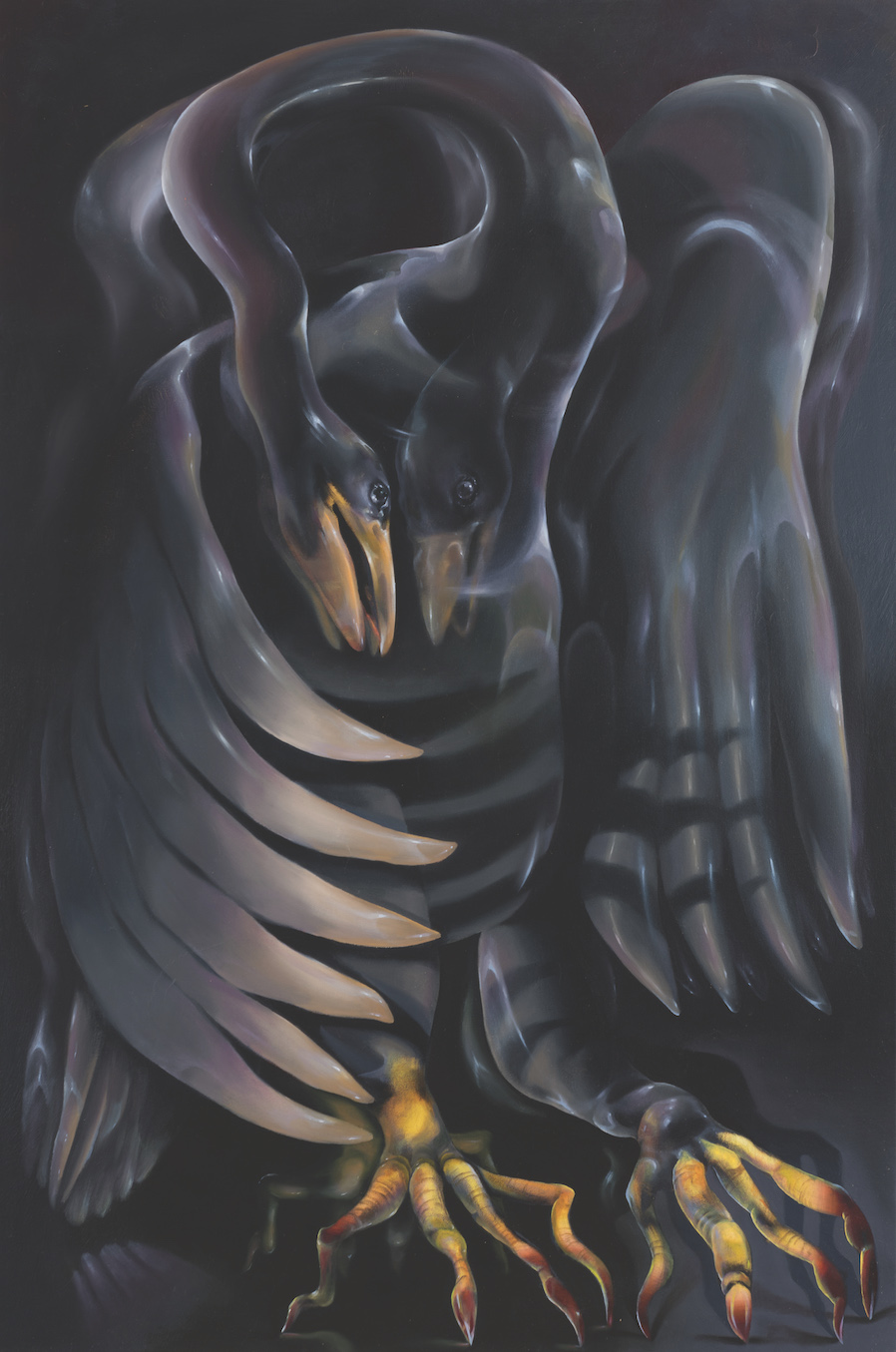
Mira, a “birdlike woman,” is the novel’s main critic, and our best bet for figuring out what Heti is going for with this oddly baroque book. Mira lives in God’s rough draft, and Pure Colour is, for the most part, her life story. Heti introduces Mira’s unnamed father as “the most bearish bear,” and indicates their differences simply: he imparts “warm values,” but his daughter seeks the “cool head” and “cold heart” that “are needed to help art prevail.” Spoiled by his devotion, Mira cherishes notions of “an existence hard up against the sharp knife-edge of life,” and leaves home as a teenager to pursue her vision at an academy for art critics. This school is for the birds—discerning, aloof—who are made to practice Tai Chi every morning and believe the future will be shaped by their acid pens.
As it turns out, Mira’s most coveted object of study is an egalitarian older woman named Annie, a grown-up American orphan apparently named after the musical. (“She told them stories about what the orphans got up to . . . wondering if their parents were out there; if they remembered the child they gave up, and if they were rich or pretty or kind.”) Despite a disastrous dinner party orchestrated to woo her—peanut soup is served, bread is thrown, a vegan is victimized—Annie seems to reciprocate. The two share a tenuous but intense bond, and only once is Mira so “genuinely overtaken” that she acts on her feelings: she “hadn’t meant to kiss Annie on the back of the neck, so sensually, the first time they were alone together, outside.” The commas here, the appendments, the unmistakable oops—this is headlong syntax, and lovely. Typically, Heti’s plain language—feverish punctuation or not—matches the documentary aspect of her work, but here it has found its truest calling: shepherding secondhand embarrassment. Nothing much comes of the kiss; Annie slips a photo of herself into a book she borrowed from Mira, who only finds it years later, alone but still in love. Like Heti’s God stepping back from his canvas, Mira requires distance to see clearly. Read More...