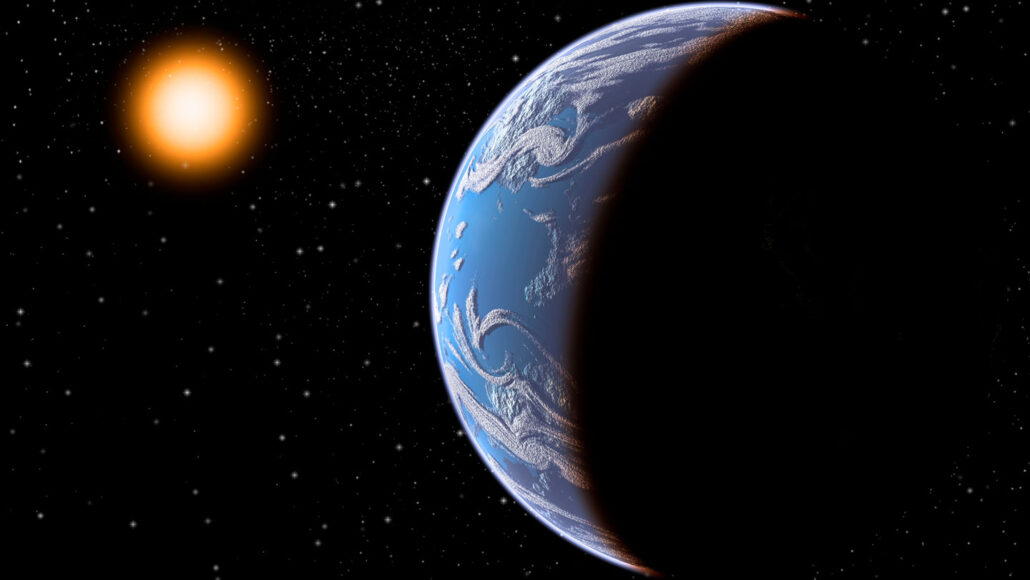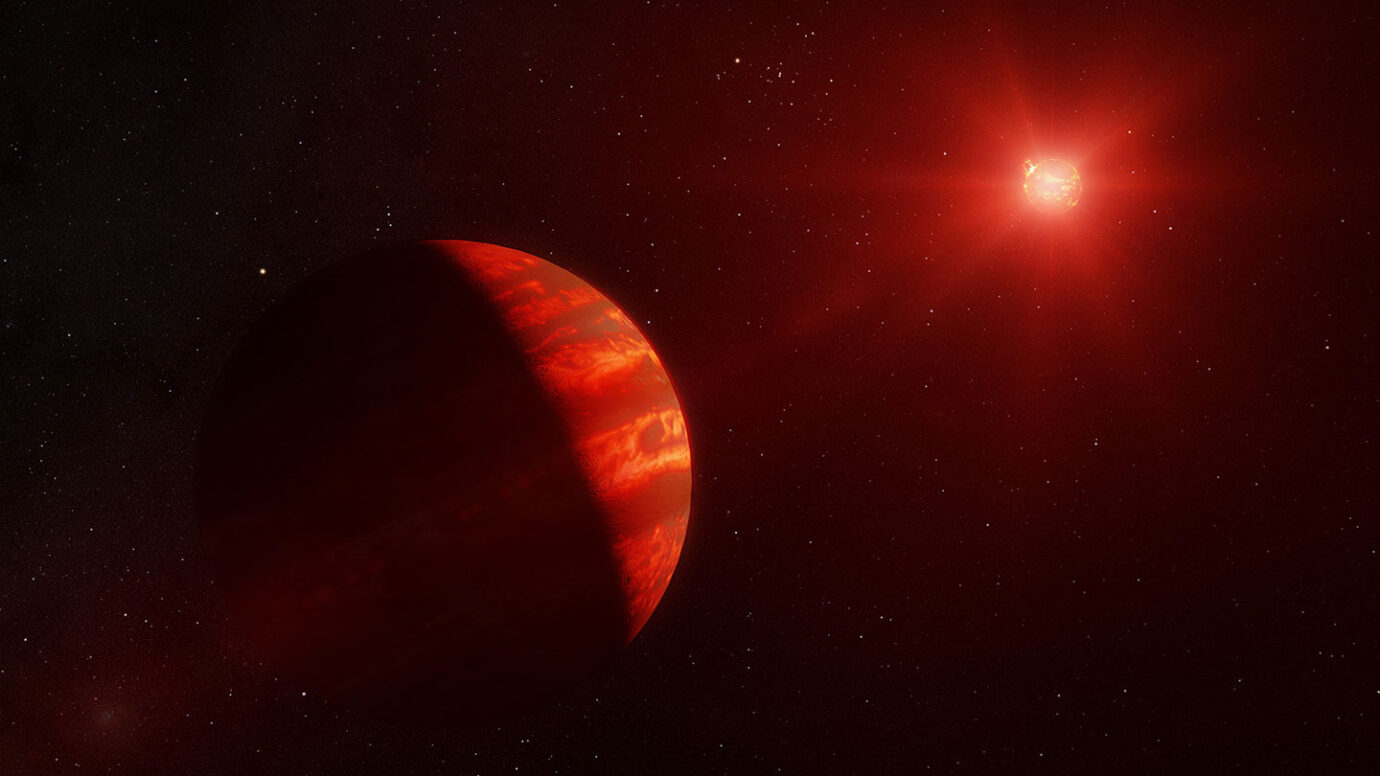
Jupiter-sized planets are very rare around the least massive stars
-
 Loading...
 - Abam Danso
- 13 Jun 2023
- 69 Views
- 0 Like
- 0 Comment
In the vast expanse of our universe, astronomers have been captivated by the discovery of exoplanets—planets that exist outside our solar system. These distant worlds have opened up new frontiers in our understanding of planetary systems and the potential for extraterrestrial life. Among the countless exoplanets discovered, the prevalence of Jupiter-sized planets around the least massive stars has remained a fascinating subject of study. This article delves into the rare occurrence of such giant planets and explores the secrets they hold.
What Are Jupiter-Sized Planets?
Jupiter-sized planets are gas giants that share similarities in size and composition with our solar system's largest planet, Jupiter. They typically have a mass ranging from 1 to 10 times that of Jupiter and are primarily composed of hydrogen and helium. These immense worlds exhibit remarkable gravitational pull, making them distinct celestial objects within their respective planetary systems.
The Least Massive Stars: An Unlikely Host
Stars, like planets, come in various sizes and masses. The least massive stars, also known as low-mass stars or red dwarfs, have a significantly smaller mass than our Sun. These stellar objects are often faint and relatively cool compared to their more massive counterparts. Due to their characteristics, the least massive stars are considered unlikely hosts for Jupiter-sized planets.
The Challenges of Detection
Detecting exoplanets is a complex task that requires meticulous observation and advanced technology. When it comes to Jupiter-sized planets orbiting the least massive stars, the challenges are even more significant. The gravitational influence of these stars is relatively weak, making it difficult to detect the subtle wobbles or dips in brightness caused by the presence of such massive planets. However, with the advancement of observational techniques and the use of sophisticated instruments, astronomers have managed to uncover intriguing insights.
Shedding Light on the Mystery: Research and Discoveries
The Frequency of Jupiter-Sized Planets
Research has indicated that Jupiter-sized planets are indeed rare around the least massive stars. Several observational studies, including the Kepler mission, have focused on identifying exoplanets within a specific range of sizes and orbits. These studies have revealed that while Jupiter-sized planets are prevalent around larger stars, their occurrence diminishes significantly around low-mass stars.
The Role of Stellar Formation
The scarcity of Jupiter-sized planets around the least massive stars may be attributed to the nature of stellar formation. It is believed that the formation process of low-mass stars differs from that of more massive stars. The disks of gas and dust from which stars and planets emerge may have different properties around low-mass stars, affecting the formation and growth of massive planets. The exact mechanisms behind this phenomenon are still being explored.
Orbital Dynamics and Habitability
The presence of Jupiter-sized planets in a planetary system can influence the dynamics of other celestial bodies, including smaller, potentially habitable planets. The gravitational interactions between a gas giant and its neighboring planets can lead to orbital instabilities and perturbations, making the existence of habitable worlds more challenging. The rarity of Jupiter-sized planets around the least massive stars suggests that the chances of discovering Earth-like exoplanets in these systems may be higher.
FAQs About Jupiter-Sized Planets and Least Massive Stars
Q1: Are Jupiter-sized planets the largest type of exoplanets?
A1: No, there are even larger exoplanets known as super-Jupiters, which have masses greater than that of Jupiter. Super-Jupiters can range from several times the mass of Jupiter up to dozens or even hundreds of Jupiter masses.
Q2: Can Jupiter-sized planets support life?
A2: Jupiter-sized planets are primarily composed of gas and lack solid surfaces, making them inhospitable for life as we know it. However, their moons or other celestial bodies within their systems may potentially harbor conditions suitable for life.
Q3: How do astronomers detect exoplanets around low-mass stars?
A3: Astronomers employ various detection methods, including the transit method and radial velocity method, to identify exoplanets around low-mass stars. These methods involve observing changes in the star's brightness or measuring its radial velocity caused by the presence of an orbiting planet.
Q4: Can low-mass stars have other types of exoplanets?
A4: Yes, low-mass stars can have a variety of exoplanets, including smaller rocky planets similar to Earth or Mars. These planets, often referred to as "super-Earths" or "mini-Neptunes," may be more common around low-mass stars compared to Jupiter-sized planets.
Q5: What are the implications of finding Jupiter-sized planets around low-mass stars?
A5: Discovering Jupiter-sized planets around low-mass stars can provide valuable insights into the formation and evolution of planetary systems. It helps refine our understanding of the conditions necessary for planet formation and the factors influencing habitability in different stellar environments.
Jupiter-sized planets are indeed rare around the least massive stars, captivating astronomers and researchers alike. Through dedicated research and cutting-edge technology, we continue to unravel the secrets of these enigmatic celestial objects. The prevalence of such giant planets in different stellar environments provides us with invaluable insights into the formation, dynamics, and habitability of planetary systems. As we delve deeper into the mysteries of exoplanets, the journey to understanding our place in the universe becomes ever more fascinating.