Kazakhstan is in turmoil and regional troops have been sent to quell unrest. Here's what you need to know
-
 Loading...
 - Adam Harris
- 06 Jan 2022
- 401 Views
- 0 Like
- 0 Comment
It's the biggest challenge to autocratic President Kassym-Jomart Tokayev's rule, with initial public anger over a spike in fuel prices expanding to wider discontent with the government over corruption, living standards, poverty and unemployment in the oil-rich, former Soviet nation, according to human rights organizations.
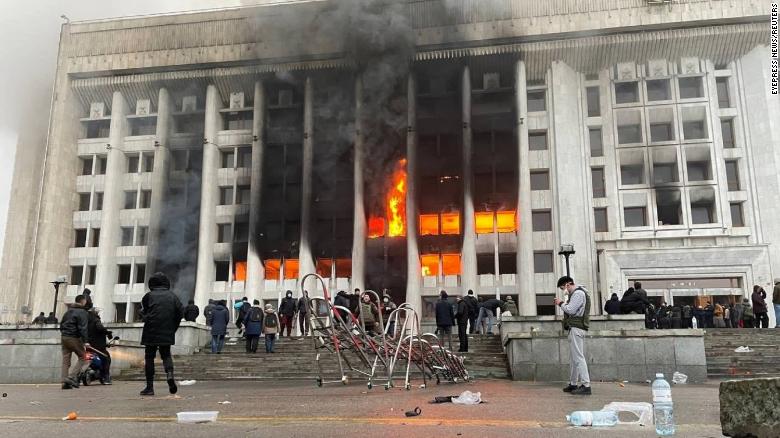
On January 5, protesters reportedly stormed the airport in the country's biggest city, Almaty, forcibly entered government buildings, and set fire to the city's main administration office, local media reported. There were also reports of deadly clashes with police and military, a nationwide internet blackout and buildings damaged in three major cities.
Local media reported eight police officers and national guard personnel were killed and more than 300 officers injured. It is unclear to what extent civilians have been killed or injured. The country's Interior Ministry said more than 200 people have been arrested.
Here's what you need to know about the unrest and why it matters.
What led to the protests?
The demonstrations were ignited in the oil-rich western Mangystau region, when the government lifted price controls on liquefied petroleum gas (LPG) at the start of the year, Reuters reported. Many Kazakhs have converted their cars to run on the fuel because of its low cost.
Oil-producer Kazakhstan, the world's ninth-largest nation by landmass, has attracted billions in foreign investment and maintained a strong economy since its independence 30 years ago.
But LPG subsidies had created a situation where Kazakhstan regularly faced oil shortages, Reuters reported. The lifting of the price caps was a means by the government to ease those deficits and ensure supplies went to the domestic market. However, the plan backfired and LPG prices more than doubled following the lifting of caps -- protests then spread quickly around the country.
There are also longstanding issues driving the protests, including anger over endemic corruption in government, income inequality and economic hardship, which have all been exacerbated during the coronavirus pandemic, according to Human Rights Watch.
While the country's natural resources have made a small elite vastly wealthy, many ordinary Kazakhs feel left behind.
Amnesty International said the protests are "a direct consequence of the authorities' widespread repression of basic human rights."
"For years, the government has relentlessly persecuted peaceful dissent, leaving the Kazakhstani people in a state of agitation and despair," said Marie Struthers, Amnesty's director for Eastern Europe and Central Asia in a statement.
What has been the government's response?
Authorities declared a nationwide state of emergency with a curfew and movement restrictions until January 19, local media reported. Internet cuts have been reported nationwide and President Tokayev said military personnel had been deployed.
In an effort to curb the unrest, Tokayev ordered the government to reduce the price of LPG to 50 tenge ($0.11) per liter "to ensure stability in the country."
He said a number of measures aimed "to stabilize the socio-economic situation" had also been put into place, including government regulation of fuel prices for a period of 180 days, a moratorium on increasing utility tariffs for the population for the same period, and the consideration of rent subsidies for "vulnerable segments of the population." Read More…