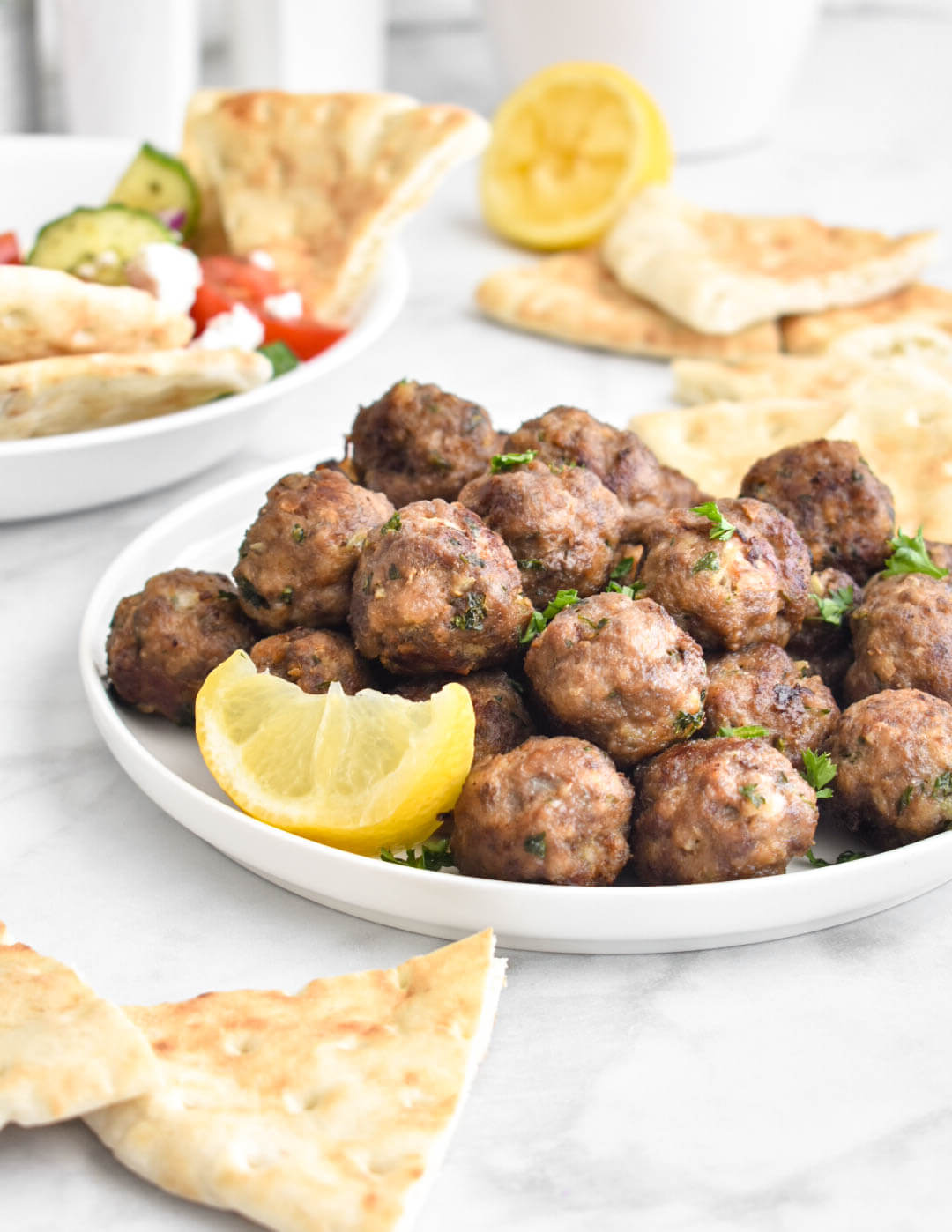
Keftedakia – Greek Meatballs
-
 Loading...
 - Claire Lavigne
- 06 Mar 2023
- 58 Views
- 0 Like
- 0 Comment
Keftedakia (pronounced keh-fteh-tha-key-a) are Greek comfort food at its best. These fried little meatballs are a popular component in Greek cooking. Made throughout Greece, they are served often as a mezze but also can be turned into a meal. They are versatile, easy to make, and full of flavour, owing to the addition of grated onion and fresh herbs.
My recipe is my mother’s recipe and easily one of the most-used recipes she has passed down to me. We make keftedakia often for meals and they are always included in all our holiday mezze spreads! I use this recipe to also make soutzoukakia, a Greek dish consisting of oval-shaped meatballs and potatoes baked in a tomato sauce.
These Greek meatballs are tender and juicy, owing to the ingredients included in this recipe. Moisture is added straight into the mixture through the use of milk, lemon juice and grated onion (which released much more juices than finely chopping ever could).
My favourite part of this recipe is how easy it is to do. Just mix all of the ingredients into a bowl, form the meatballs and fry them up! They can also be made ahead of time which is great for meal prepping, pot lucks, or preparing your mezze platter ahead of time!
Ingredients in Keftedakia – Greek Meatballs
The ingredients for keftedakia are simple and easy to find. To make keftedakia, you will need:
- ground beef
- bread crumbs
- milk
- egg
- onion
- garlic
- parsley
- mint
- lemon
- salt and pepper
How to make keftedakia:
- Mix up all the ingredients: Place all of the ingredients in a large mixing bowl and mixing until combined.
- Form into balls: Scoop out a portion of the mixture into your hands (a heaping tablespoon) and form it into a ball. Repeat with the remaining mixture and set them aside.
- Fry them in batches: Heat oil in a skillet over medium heat. Add the meatballs, being careful not to overcrowd the pan (you will need to cook them in batches). Cook the meatballs until they are done, flipping them to ensure that they are cooked evenly all the way around. [Tip: use a meat thermometer to test that they are cooked through]. Read More…